

Ending & Zack Explained! [2/3] - FFVII Remake Mysteries [4/4] | Game Analysis #27
The ending of Final Fantasy VII Remake created many questions about the future of several characters—Zack's survival above all. Let's dive into those lingering mysteries and make sense of them all.

Table of Contents
Article 1
Article 2 ⟵ you are here
Article 3
Timelines, Lifestream & Realities
Introduction
Greetings fellow Scholars of the Lifestream!
I’m Vyzzuvazzadth from the Cosmo Canyon Observatory and today, we continue our analysis of Remake part 1’s ending and the mysteries around Zack. If you haven’t read that one already, we highly encourage you to do so before you continue.
Still here? Fantastic! Strap in and enjoy the second part of this fourth and last journey through the mysteries of Final Fantasy VII Remake.
⚠️As always, spoilers ahead.⚠️
Last time, we spoke about the Avalanche Trio, the Shinra board of executives, and Marlene, and then proposed the possibility of resurrecting the Cetra through teaching children their ways, effectively bringing back an extinct people.
Mysteries around Zack
Speaking of bringing back, we know somebody else who is supposed to be dead who somehow managed to survive: our happy-go-lucky SOLDIER puppy Zack Fair.
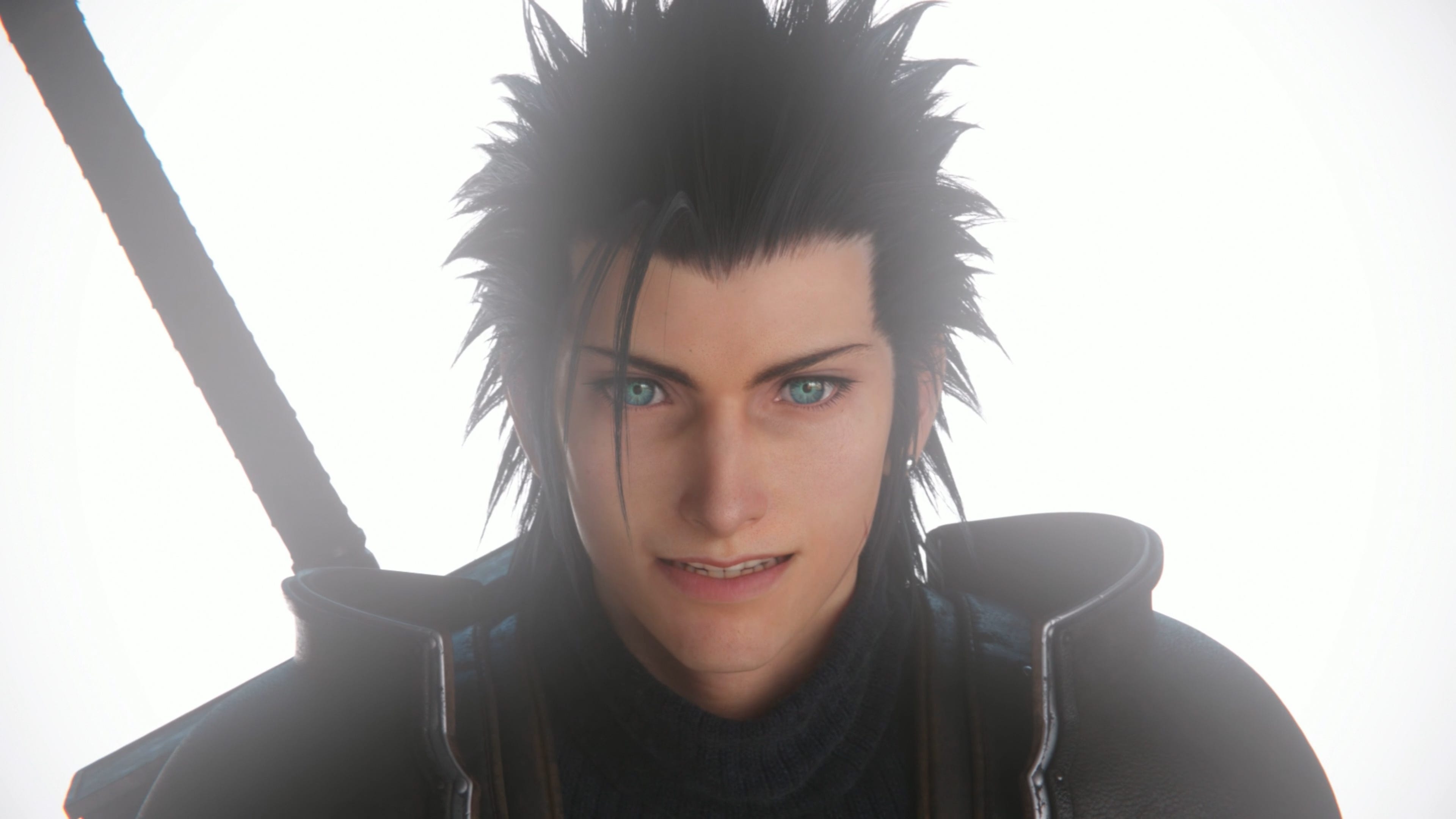
His survival took players by surprise and threw fans and especially us theorists for a series of trippy loops. It was and probably still is one of the most debated topics in the fan base as it is practically impossible to predict where the ramifications of this new twist will lead to. But when has this ever stopped us from trying anyway? Let’s first recap what happened in the game.
Survival
At the end of the unfinished highway, after the Whisper dome forms around Midgar, several individual Whispers circle around the party. According to our conclusion in a previous analysis, they seem to search for a memory which can act as a fail-safe in case Sephiroth manages to realize his plans. They then find and choose Zack to be their “living” legacy.
That’s one interpretation at least and we’ll get back to it later on.
The scene itself depicts the beginning of Zack’s last stand and plays out literally the same as in Crisis Core with the addition of the Whisper dome in the distance and the four Whispers flying through the enemy ranks.
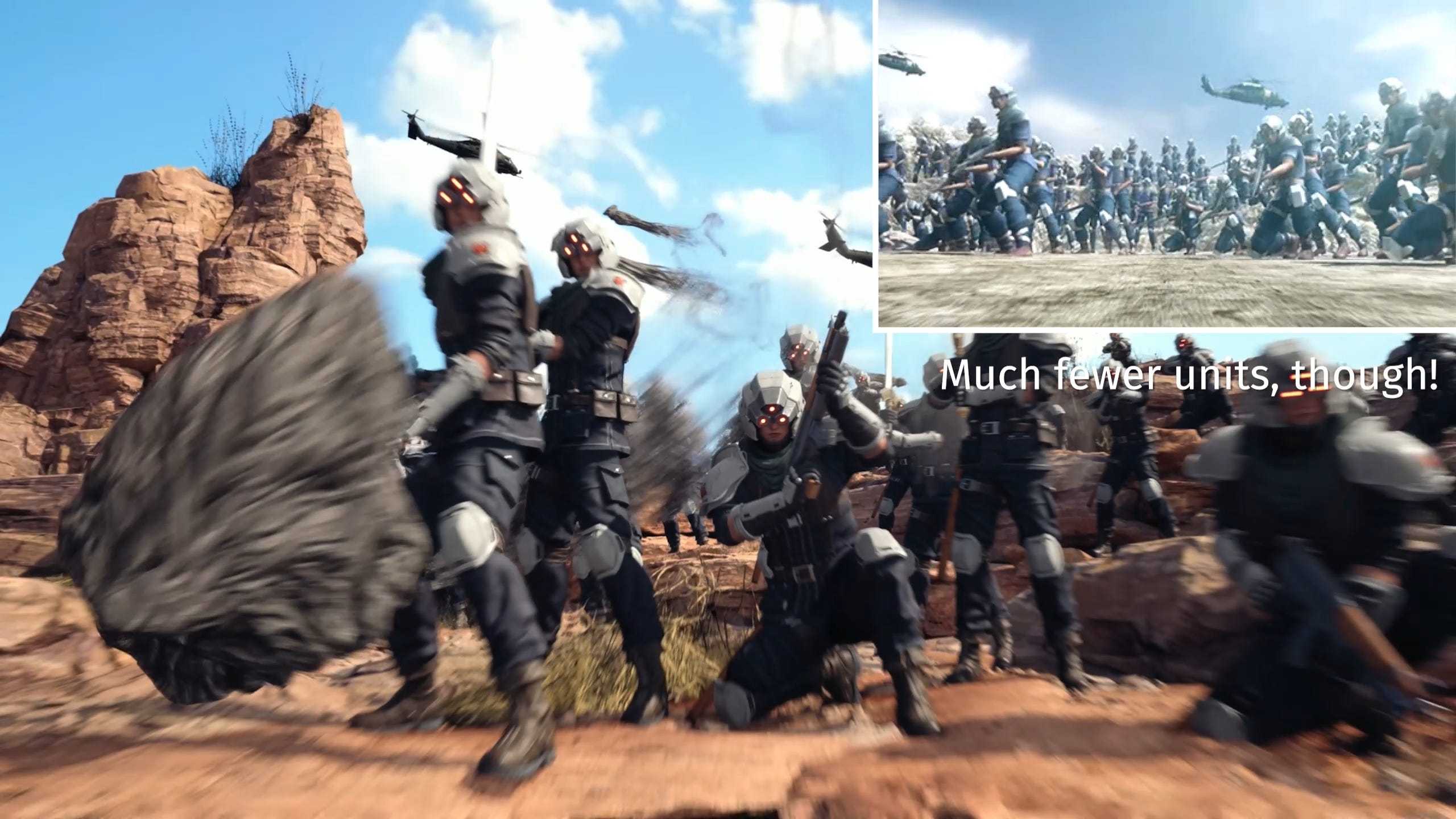
This is the factor which led Zack to eventually survive the battle. To his own surprise by the way. Even he didn’t expect to make it out alive it seems. Quite meta, isn’t it? He then continues the journey to Midgar together with Cloud, contrary to the original storyline.
The following symbolism is also very important to bring up: how the game begins and ends. The first imagery we see in the original game, besides generic space, is Aerith looking through particles of Mako. The game also ends with the same imagery, just with Aerith additionally opening her eyes.


In Remake, the first thing we see is a cliff very similar to the one Zack died on (1) while the last thing we see is the same cliff again (2, 3). But instead of Zack dying (4) or Cloud sticking the rusty Buster Sword into Zack’s grave (5), Cloud is now surrounded by his friends and allies (2) and Zack survived his presumed last stand (3).


The original shows an Aerith transitioning from the world of the living to the world of memories but Remake shows Zack making the exact opposite transition. Curious…
What’s more, Episode INTERmission adds yet another parallel between beginning and end. Remake does not just begin by showing that fateful cliff but also a dark grey eagle flying over the wasteland towards Midgar.


In one of episode INTERmission’s numerous post credit scenes, a gigantic Condor flies over the wasteland and towards Midgar as well. Although it eventually veers off towards Fort Condor instead.


It almost seems like birds are showing us the way. We will have to look out for more birds in future instalments.
How is Zack still alive?
This symbolism is great and all, but how is Zack still alive?
The details are not yet known to us but the only difference between the Remake and Crisis Core version of Zack’s last stand are the Whispers flying across the battlefield. The simplest assumption is that they reduce the lethality and efficiency of the Shinra battalion, enabling Zack to eventually overcome this adversity.1 His survival grants Zack another chance, a new purpose. One he and we, the players, still have to learn about. This new purpose will eventually be revealed, possibly in the next installment, if we’re lucky.2
Crossing Paths
Upon reaching the end of the cliff, Zack and Cloud from the past seem to cross paths with the real Cloud and Aerith from the present.
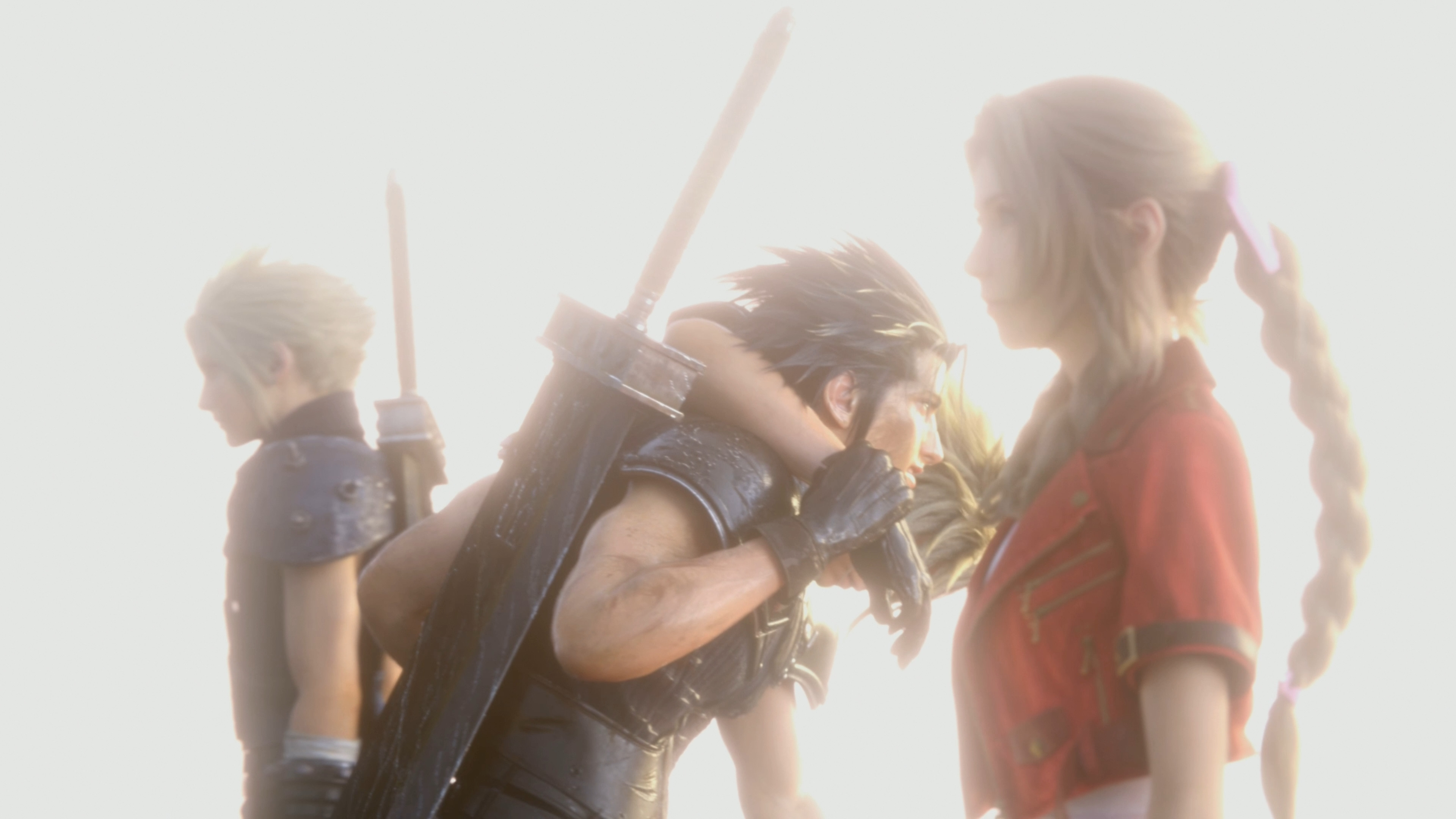
Interestingly, only Cloud and Aerith can be seen during the white light shots, even though Barret, Tifa, and Red XIII were following Cloud close behind and are located in front of Aerith in the shot right afterwards. This connection between past and present seems to only exist for Zack, Cloud, and Aerith, and only the latter notices that something is off but doesn’t seem to have seen anything either.
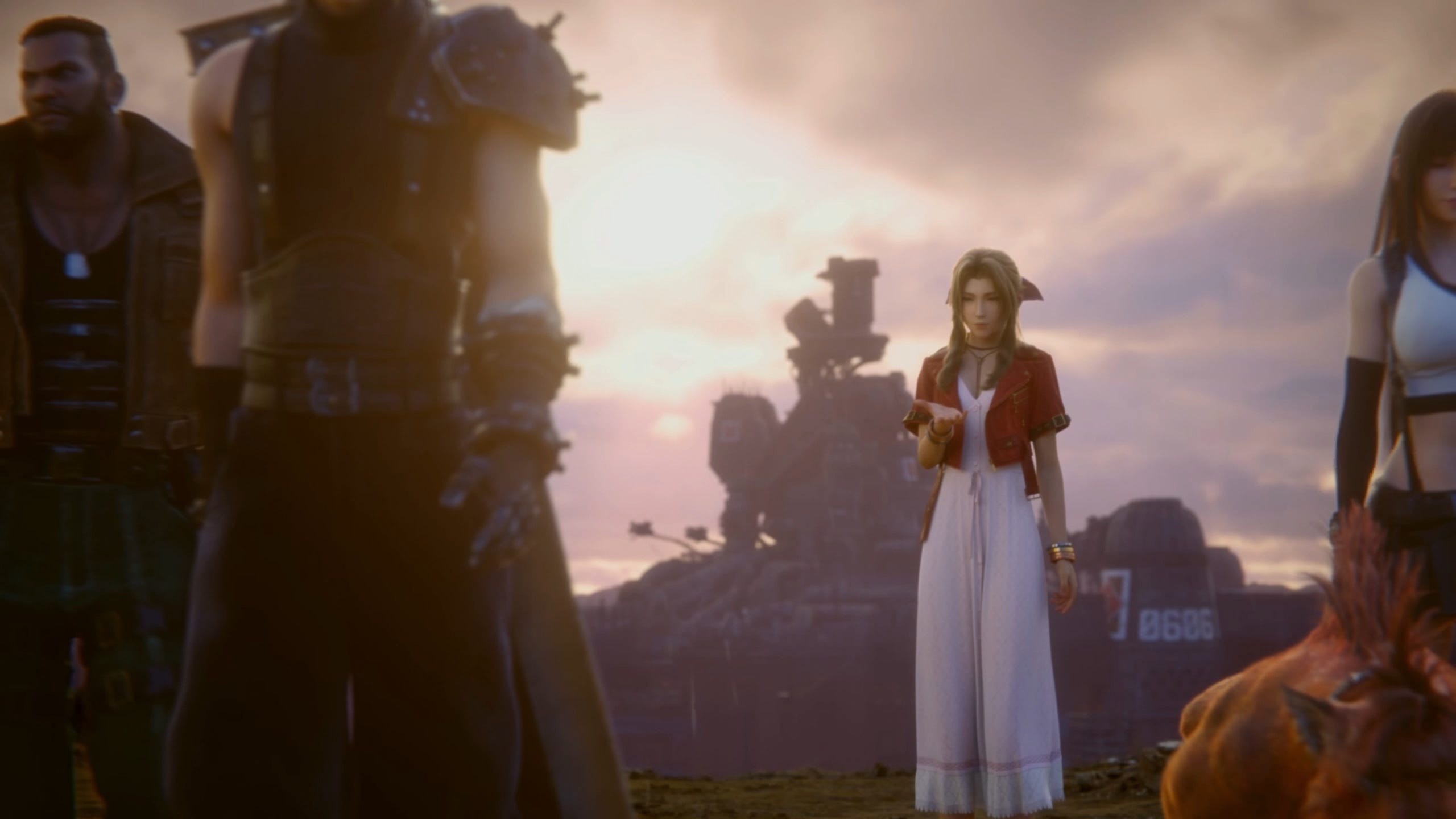
As explained in Game Analysis #24, this disturbance in the Lifestream reminds Aerith of why she dislikes the sky. It’s what took away people she loved: Zack and her mother, Ifalna.
There is a lot to unpack in this very short sequence, so let’s get to it.
Two Buster Swords
Naturally, duplicates of Cloud and the unique Buster Sword cannot exist simultaneously at the same time in the same space, so we’re dealing with more of a symbolic crossing with clues to what’s actually going on. The first Ultimania book confirms this and says that they should not exist in the same space and time.
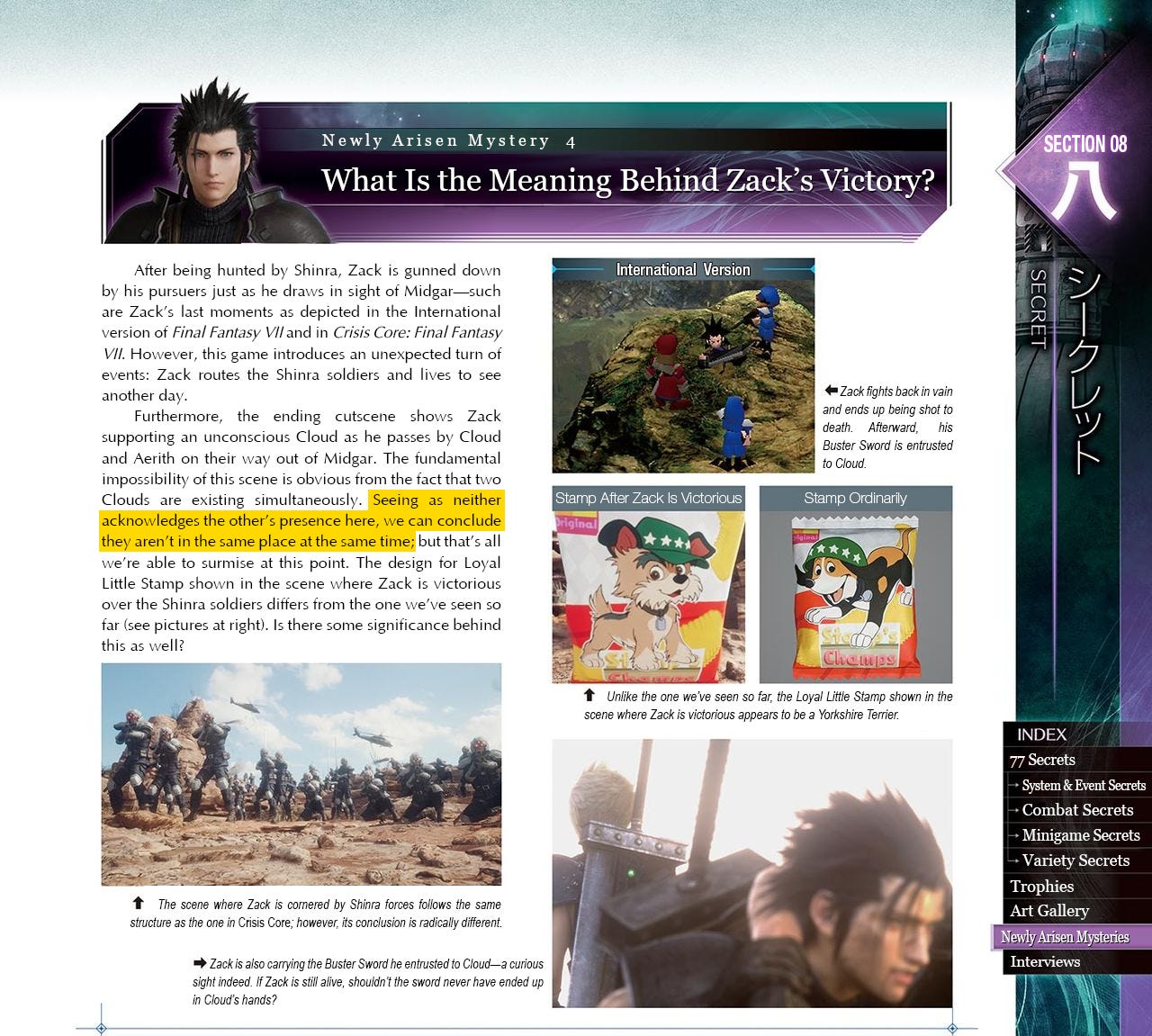
“Not in the same time” is a no-brainer as Zack’s last stand happened in September, two to three months before the first bombing mission on December ninth. Those two groups literally exist at different points in time.
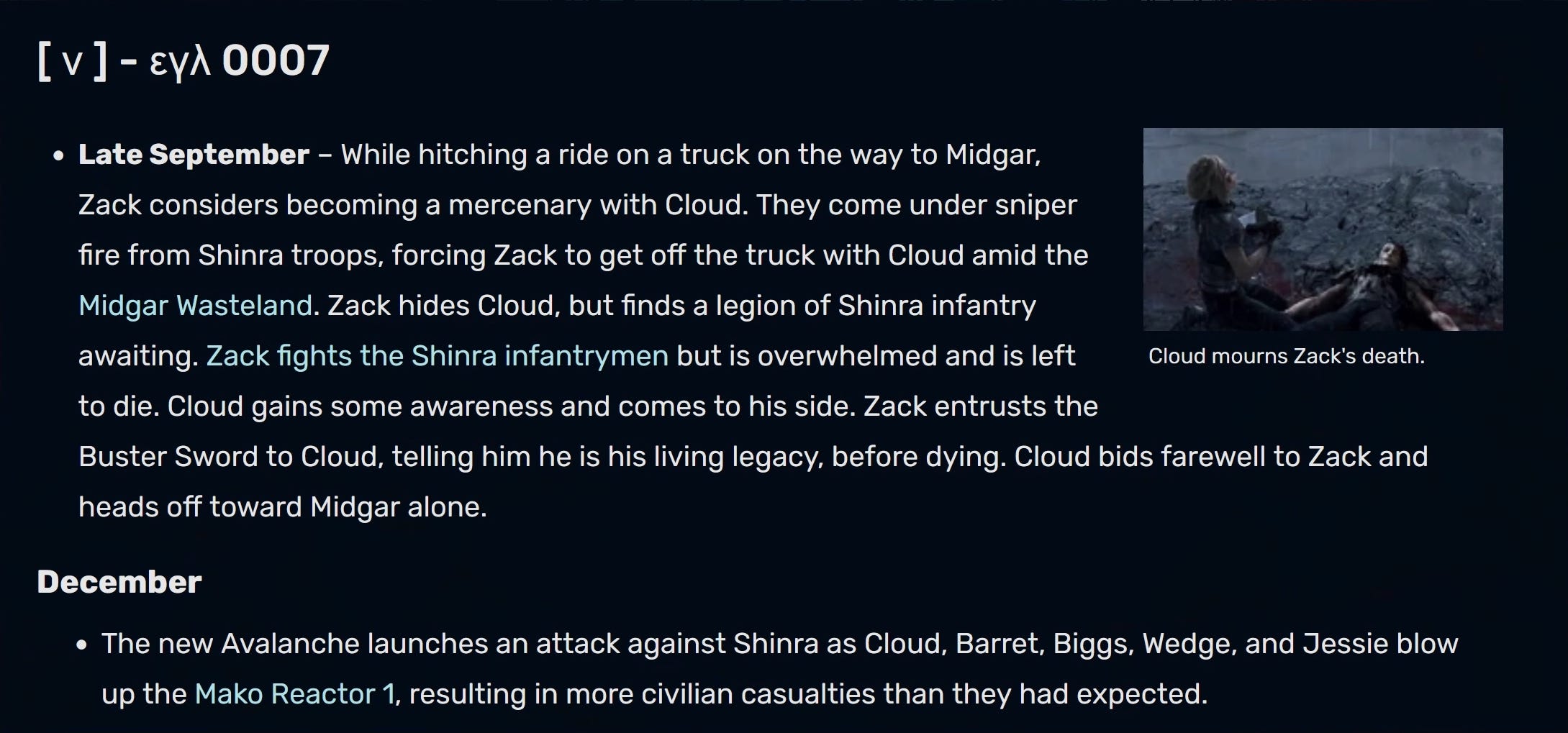
“Not in the same space” is the tricky part here, but when we take note of the details telegraphed to us in this scene, it’s pretty obvious what this statement entails, but we’ll get to that. We don’t see two different Buster Swords or a duplicate. It’s the very same one from different points in time.
However, Zack surviving would not lead to Cloud receiving the sword and neither to the events in Midgar we just played through. The Whispers’ interference in Zack’s last stand has basically split the continuity, but not in the way one would think. But for this to make sense, we’ll need to find out how this path crossing even came to be.
How can Zack and Cloud “cross paths” with the others?
They don’t actually cross paths and the following observations make this clear: While we do see Zack and past Cloud in the distance with present Cloud’s foot in the foreground, we don’t see the present group in front of Zack in the next shot. Zack and past Cloud are also nowhere to be found after the crossing.


Plus, the crossing itself is overexposed through a bright white light, completely eliminating everything besides Zack, both Clouds and Aerith, the entities relevant for this connection of memories.
But what does this white background represent? It basically visualizes a communication between memories and reality. We have seen this multiple times already. In Remake as well as in Advent Children:
When suppressed True Cloud talks to active Fake Cloud in the church after his fall,
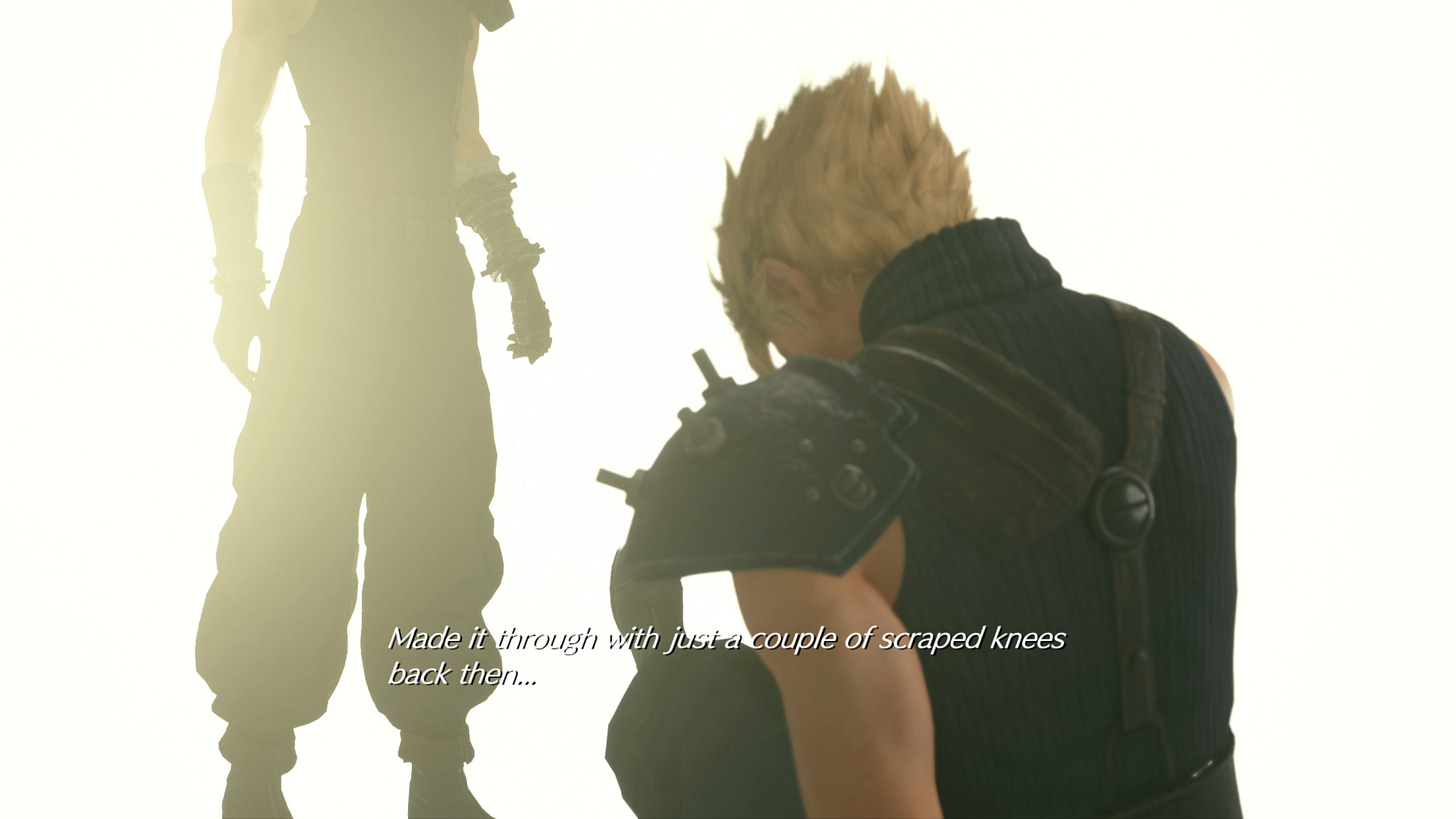
FFVII Remake chapter 8 When Cloud remembers Sephiroth telling Zack about being the heir to the planet,
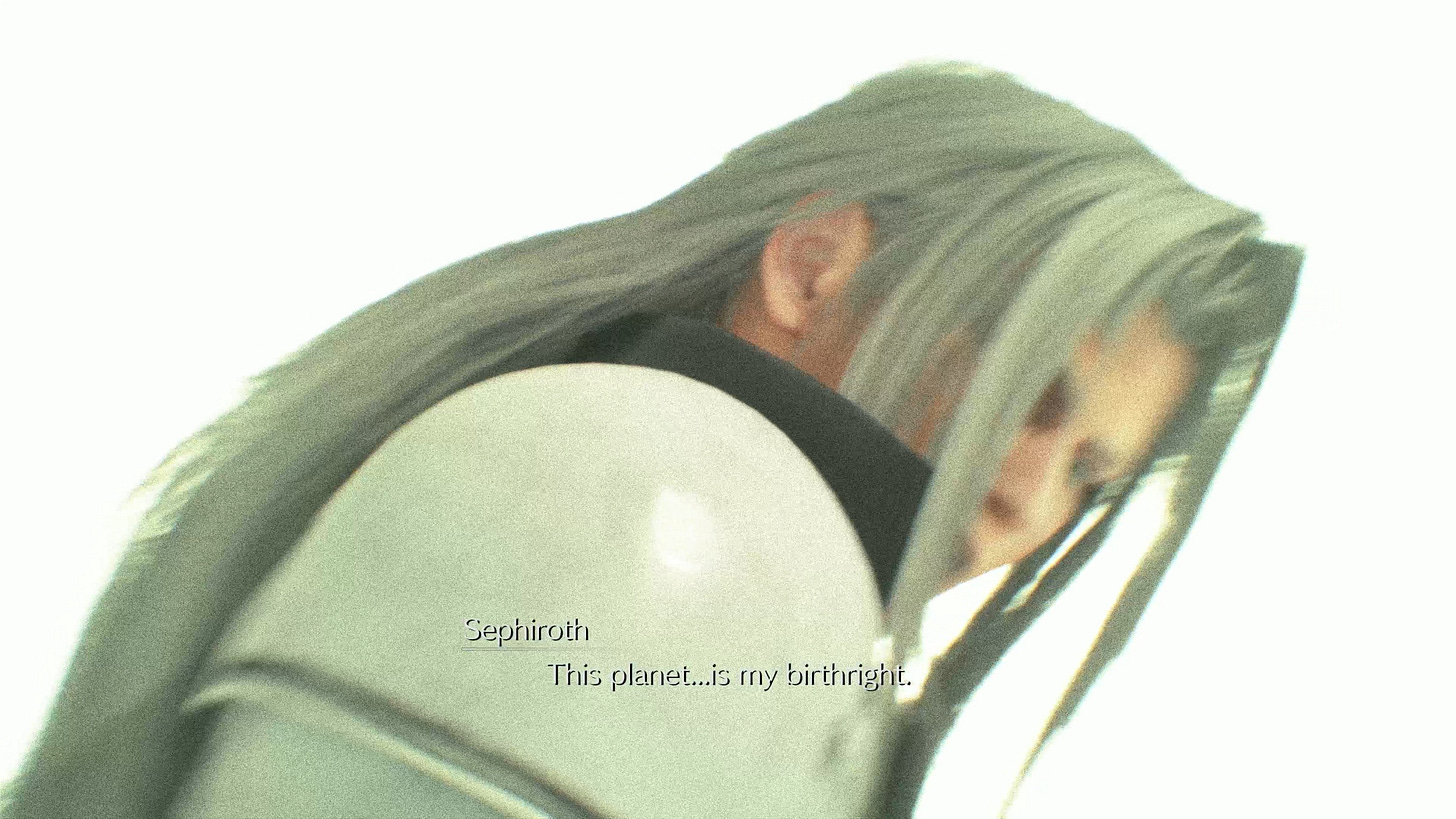
FFVII Remake chapter 13 During Cloud’s conversation with Aerith while on his way to the Forgotten Capital,
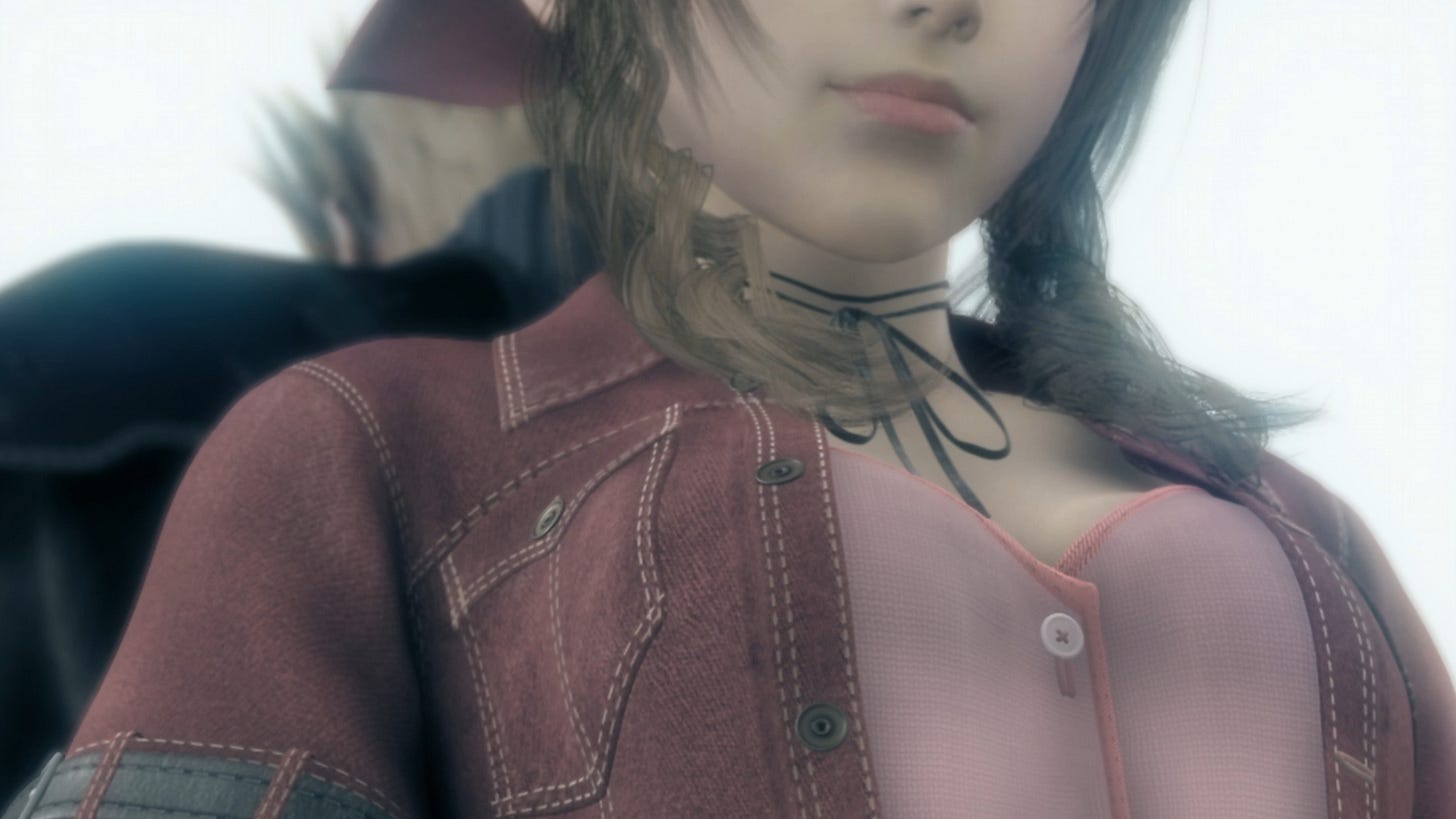
Advent Children During Zack’s motivational speech during Cloud’s fight against Sephiroth,
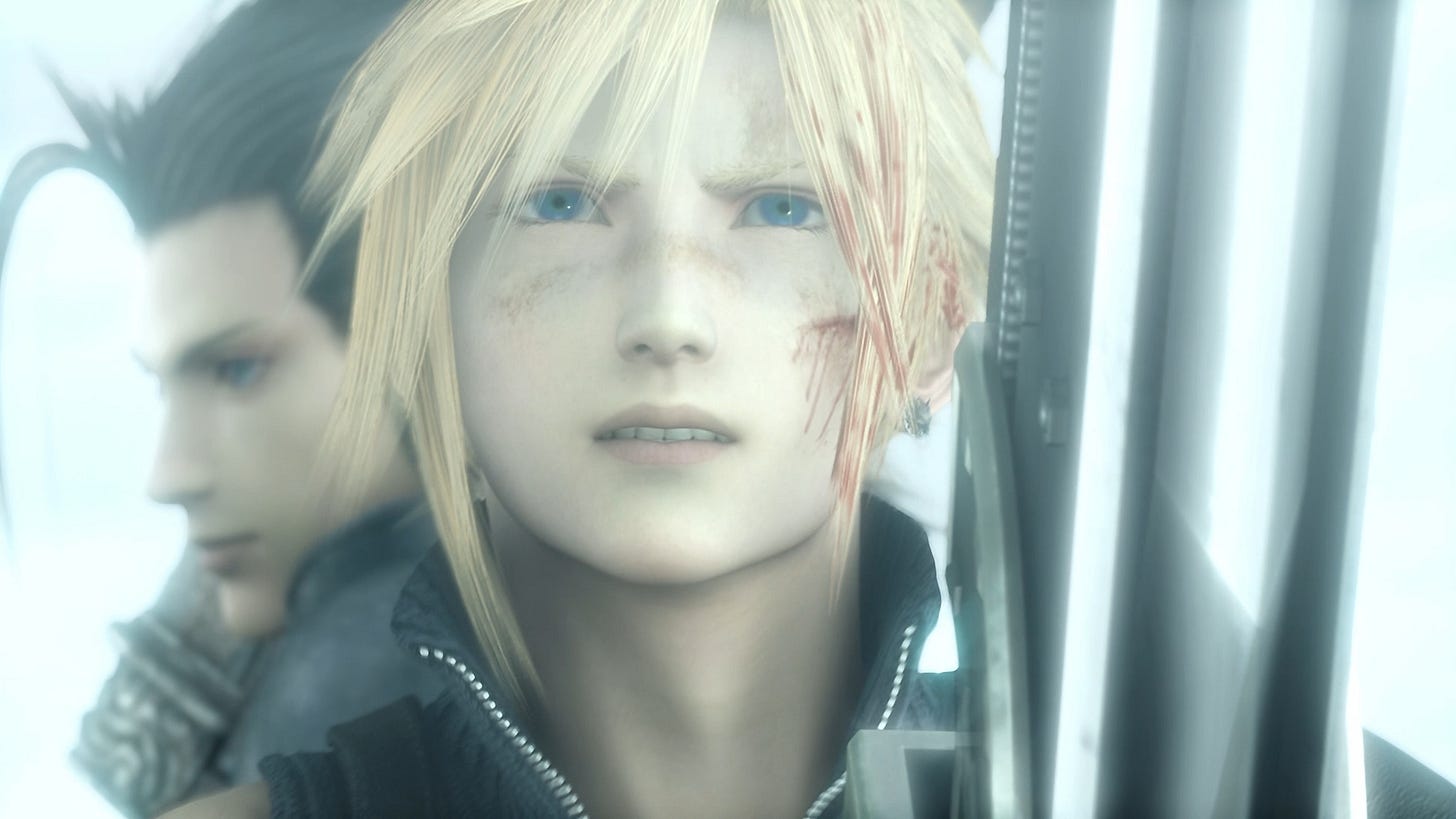
Advent Children Complete While Cloud is being transported from the battle site to the church,
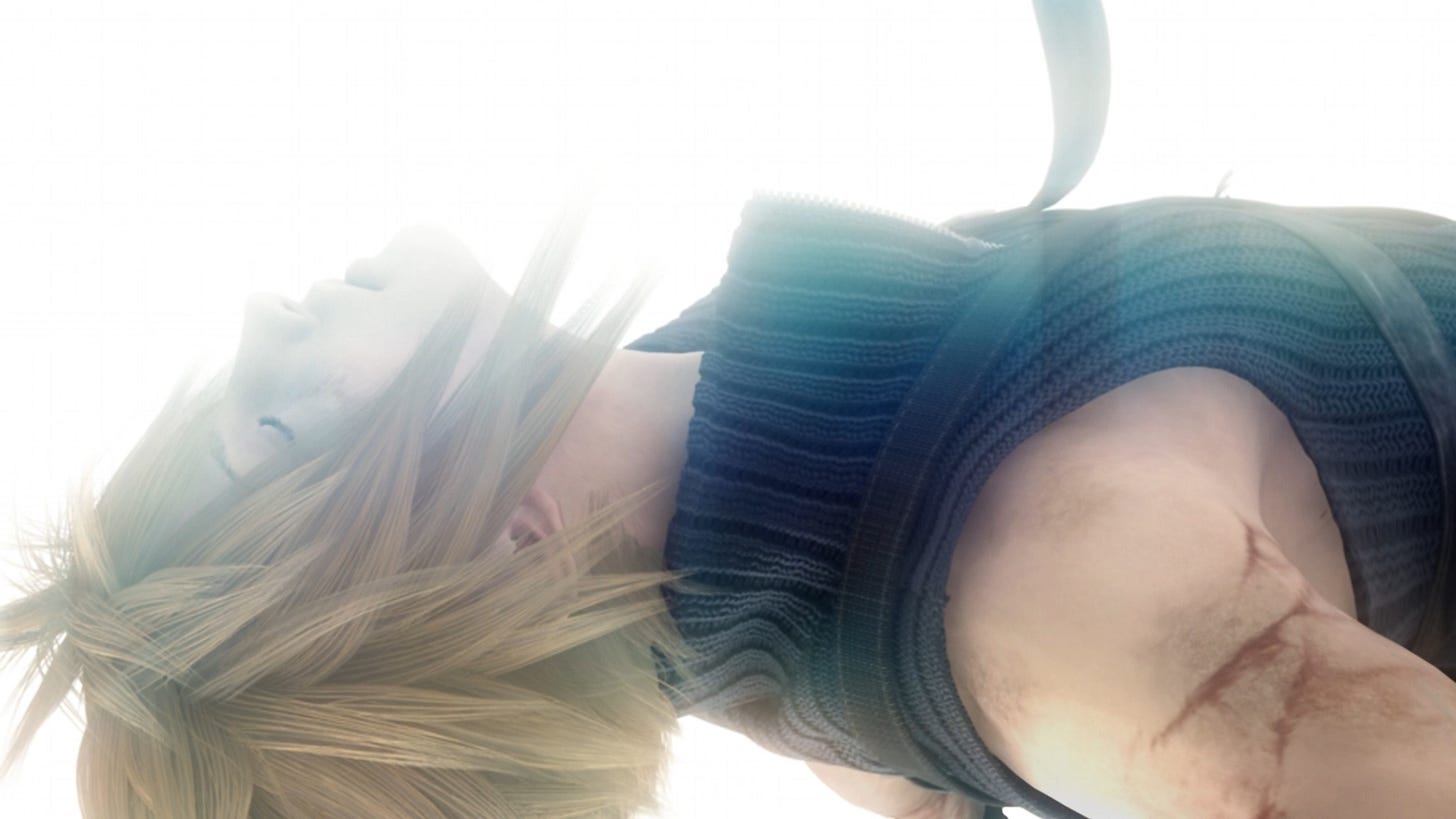
Advent Children When Aerith and Zack are checking in on everyone in the church during Advent Children’s ending,
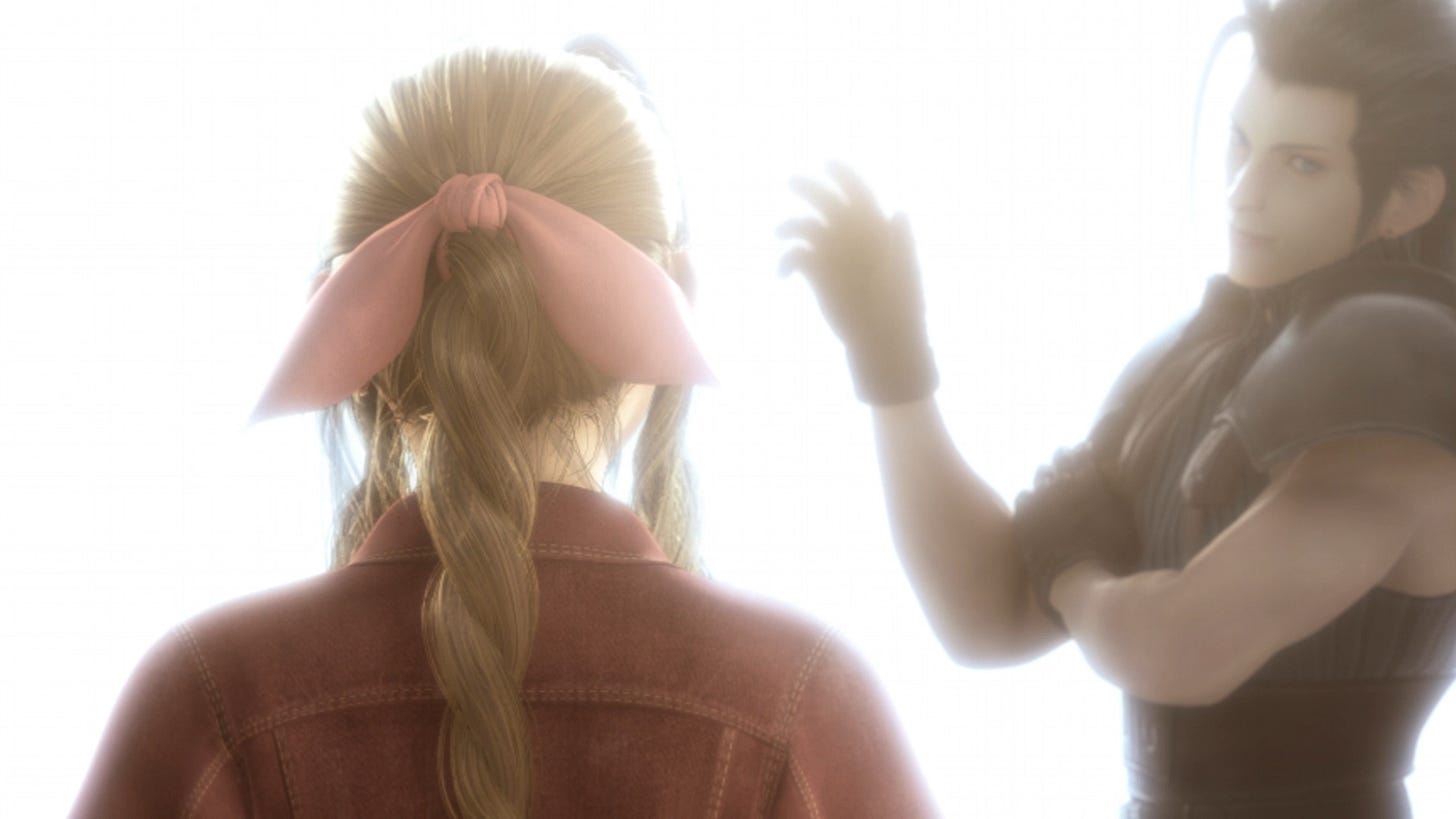
Advent Children And of course during the Crossing in Remake’s ending.
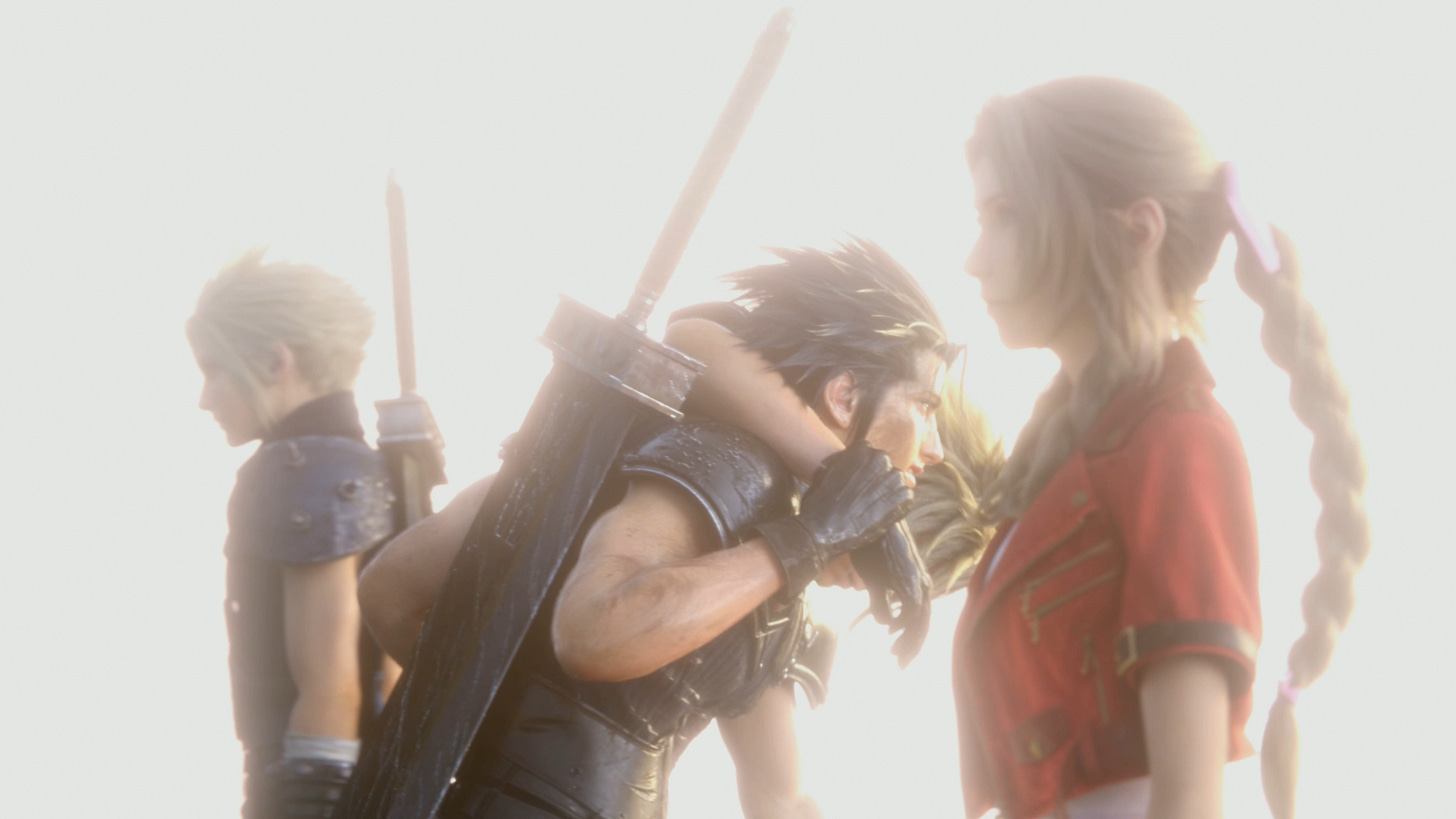
FFVII Remake ending


If we consider this as our biggest hint, the only conclusion is that Zack and past Cloud are located in the planet’s memories, the Lifestream, while our group landed in the new reality after defeating fate in the Singularity. This means that Zack is technically not alive. He just didn’t die in the memory of the planet. You can look at it as if somebody would change your own memories leading you to believe that a relative survived a fatal car crash, even though they’re not physically alive, for example. Cloud, Aerith, and the others therefore exist in the remade world while Zack “survived” in the Planet’s memories but still doesn’t exist on its surface.
Aerith: “If we succeed…if we win…we’ll be changing ourselves…“
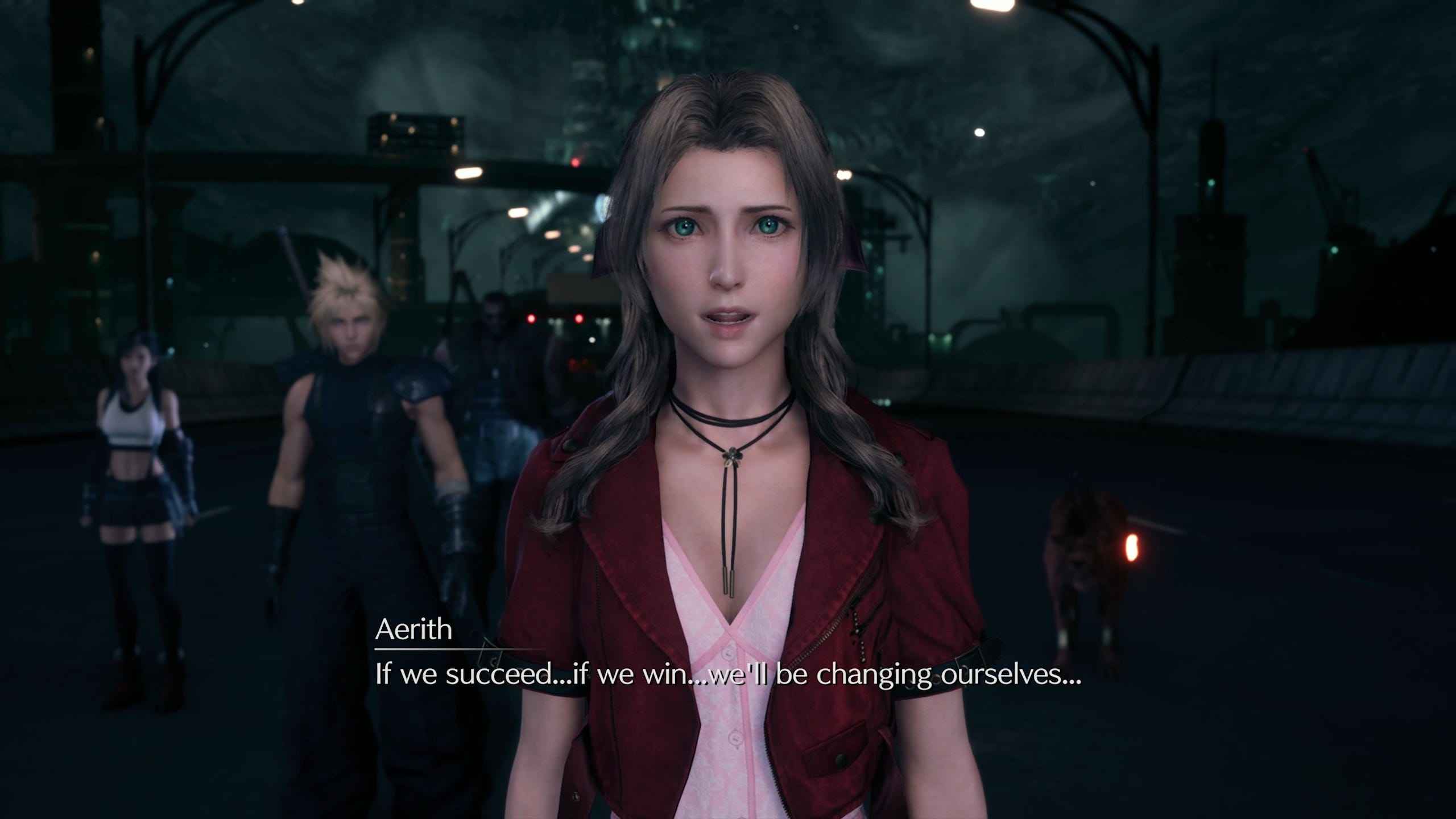
They seem to cross only because they happen to be in the same location the same amount of time after fate was defeated. Or because Aerith feels that a change happened in that very location. Since it rains in both places and water is basically a representation of the Lifestream,3 the rain could be acting as a conduit between those two places, reminding Aerith of Zack in that moment.4
Stamp Bag
With that piece of the puzzle established, let’s have a look at the infamous Stamp’s Champs chips bag appearing after Zack’s survival.

But before we dive into it, it’s important to talk about the timing and sequence of events. First, the Whispers fly about the battlefield before Zack’s last stand begins.
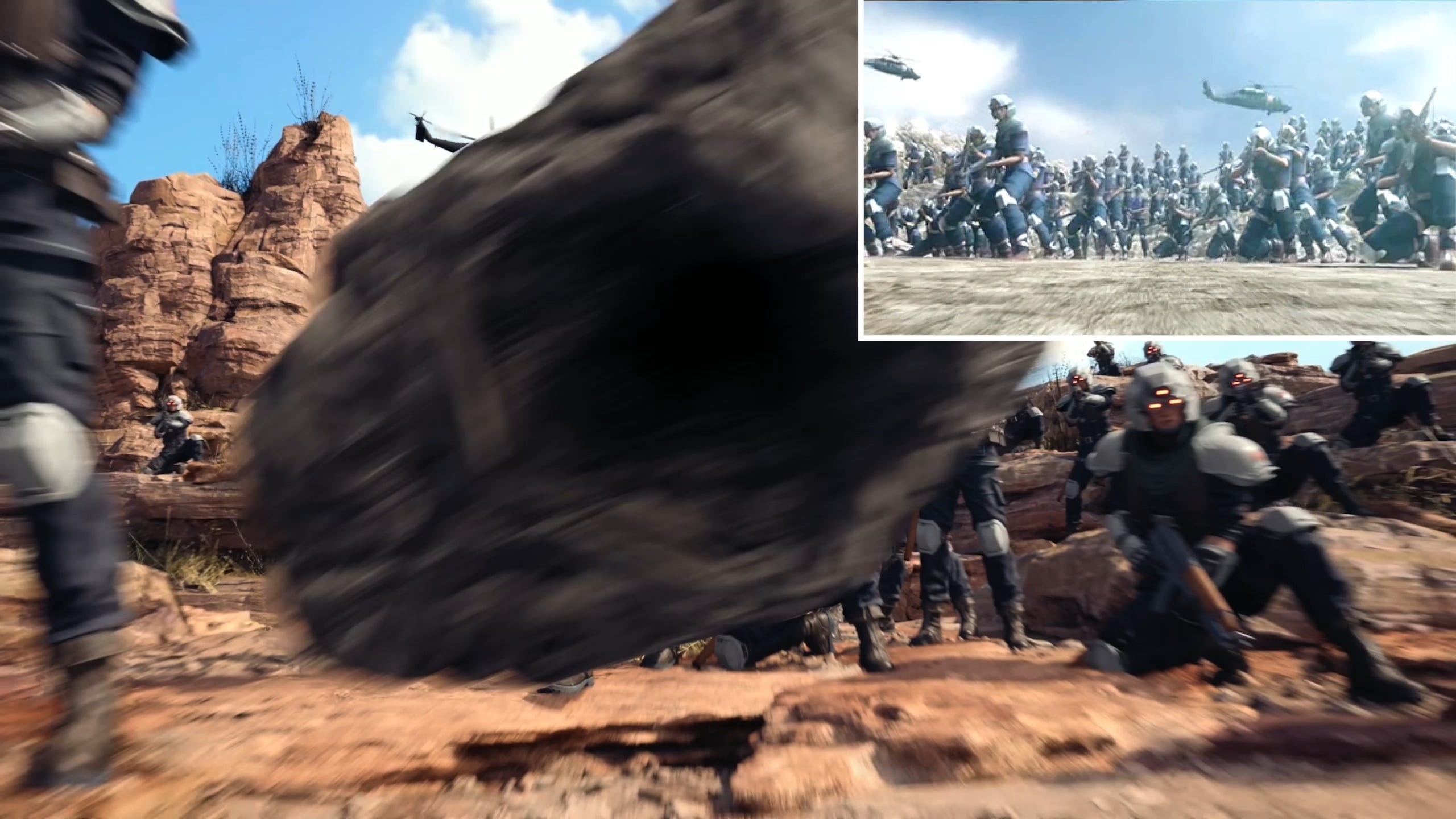
The scene itself plays out exactly as it did in Crisis Core.
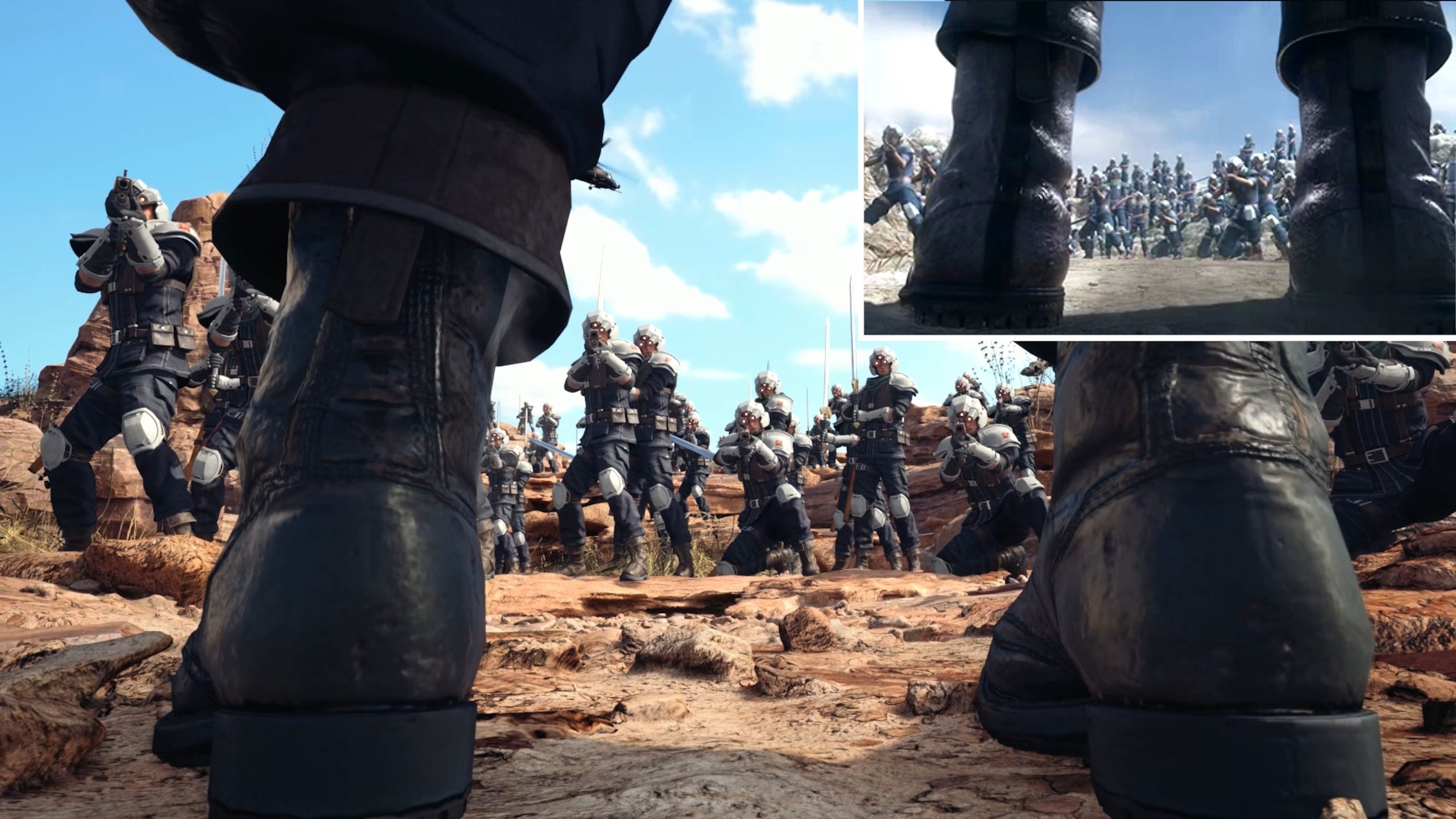
After Rufus’ and Hojo’s ending scenes, we witness the defeat over the Whispers from Zack’s perspective. However, Zack has already survived his last stand before the whisper dome explodes!


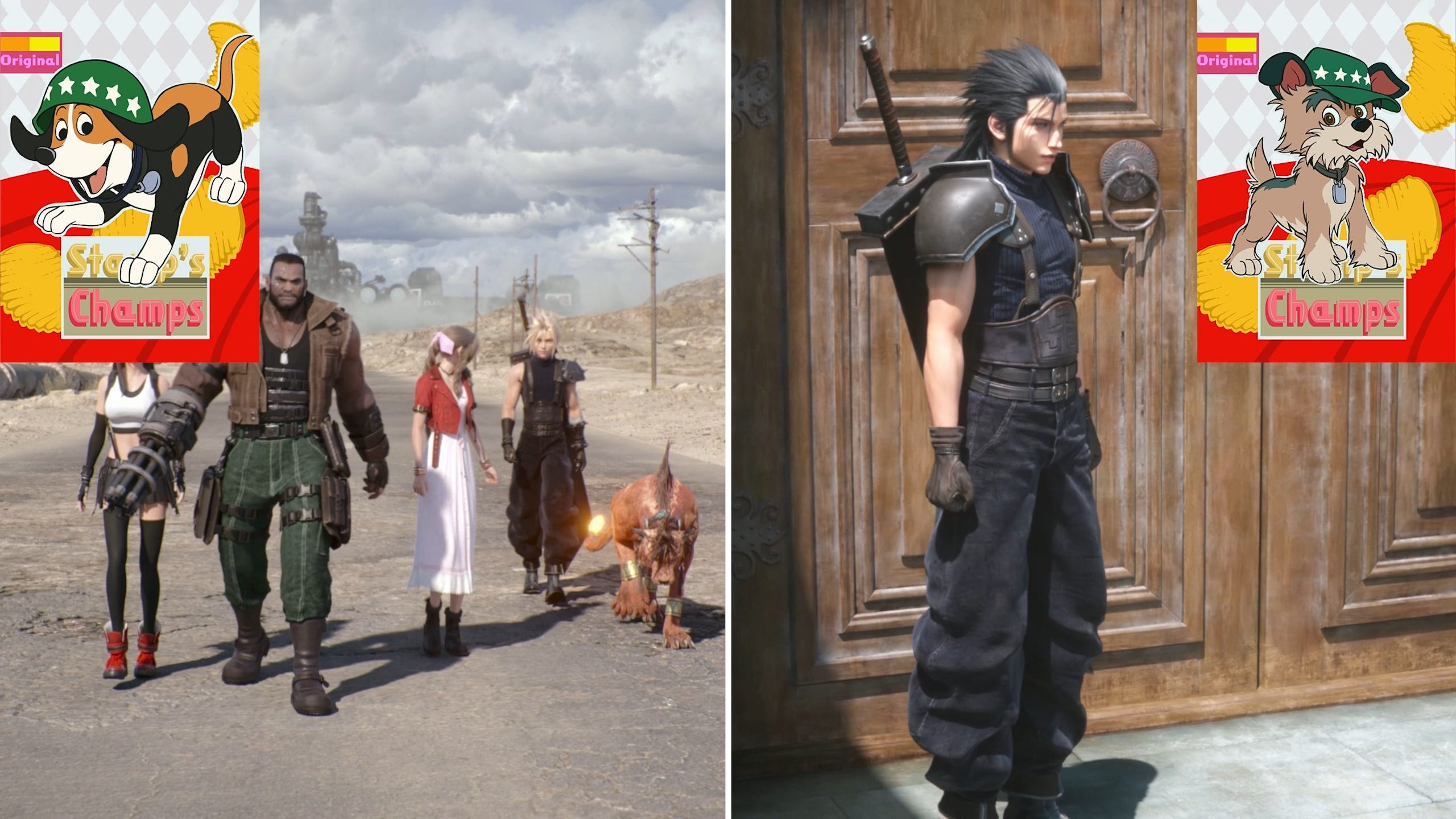
Additionally, the Stamp bag with the changed mascot design also appears before the Whispers disappear. This means that Zack’s survival as well as the changed Stamp design are not a result of defeating the Whispers or removing fate from the equation.
We already teased in episode #23, Whispers Uncloaked, that the Whispers flying about the battlefield are responsible for Zack’s survival. They have no reason to observe Zack and ensure his defeat as there are no visible deviations, not even potential ones. Nothing indicates a possible change to Zack’s last stand and its outcome. Zack surviving before the Whispers’ demise further confirms our assessment.
We know what caused Zack to survive, but we still don’t know why Stamp’s design is different.
Observations from the Game
Let’s go over what we can observe in the game.
The beagle design has been around for at least fifteen years due to the existence of a book donning his beagle design in Aerith’s former home in the Shinra building, which hasn’t been touched since they fled.


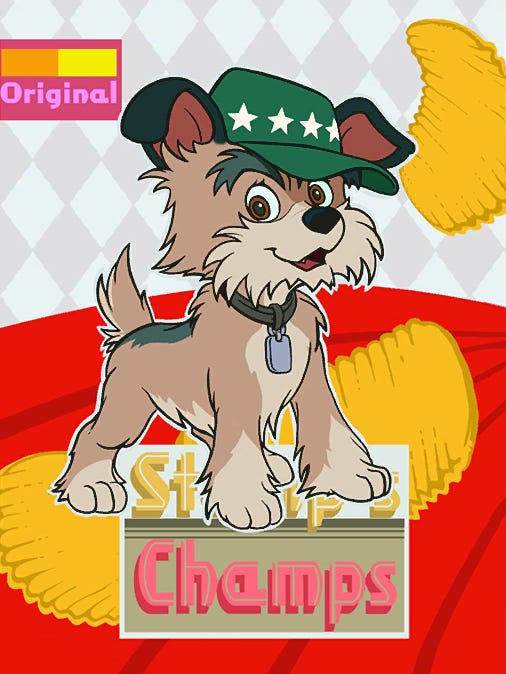
The Terrier version of Stamp’s Champs has the same packaging design printed on its surface as the Beagle version: the text, colors, patterns, and chip representations. And both claim to be the Original.
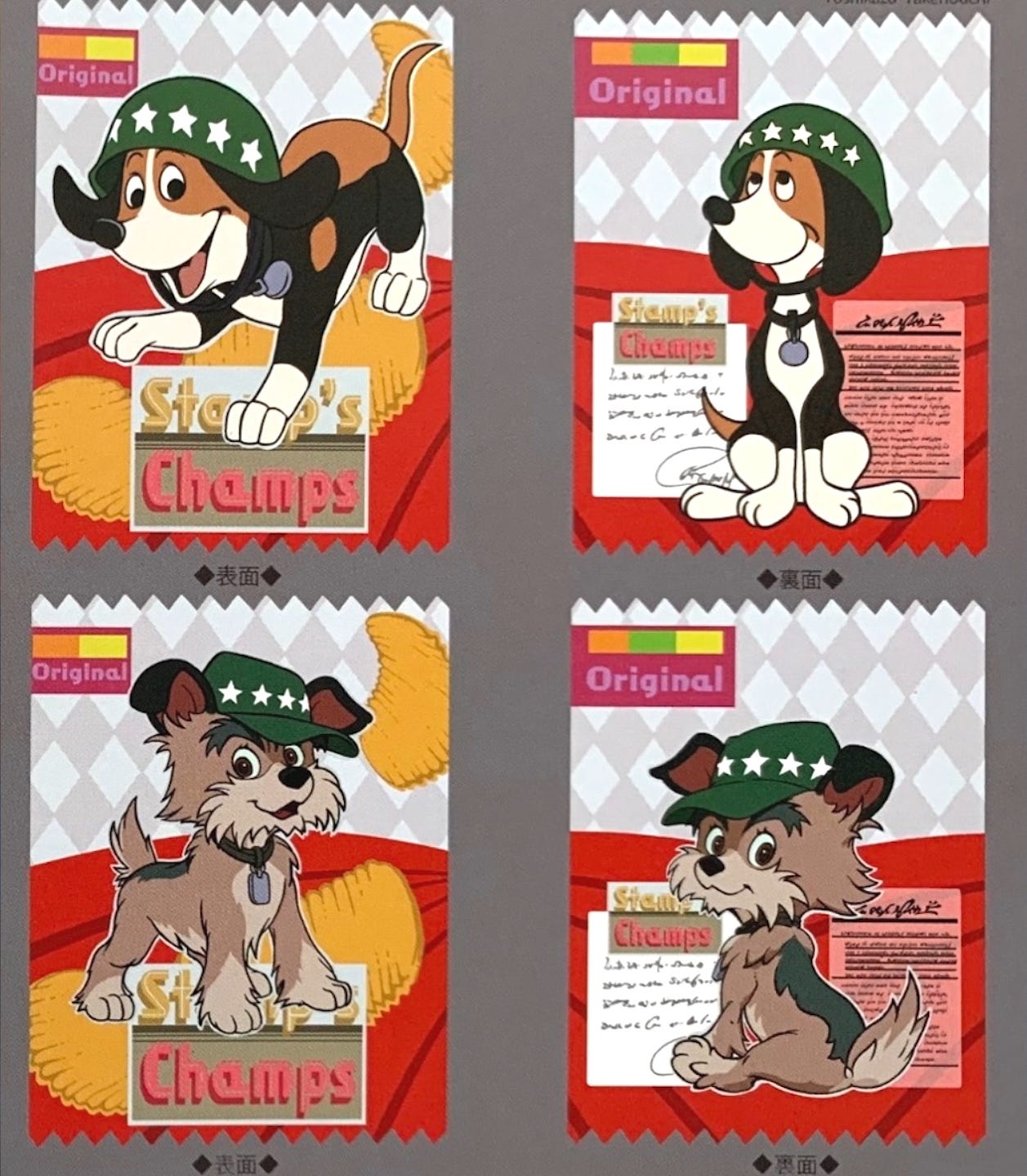
The bag in Zack’s ending certainly hasn’t been around longer than the book in Aerith’s room either. A simple redesign from Beagle to Terrier can therefore be dismissed as a possibility as well. It’s much more likely that one of the infantrymen had bought a bag from a dispenser before assuming duty and then munched on these while waiting for the fugitives Zack and Cloud to arrive.5
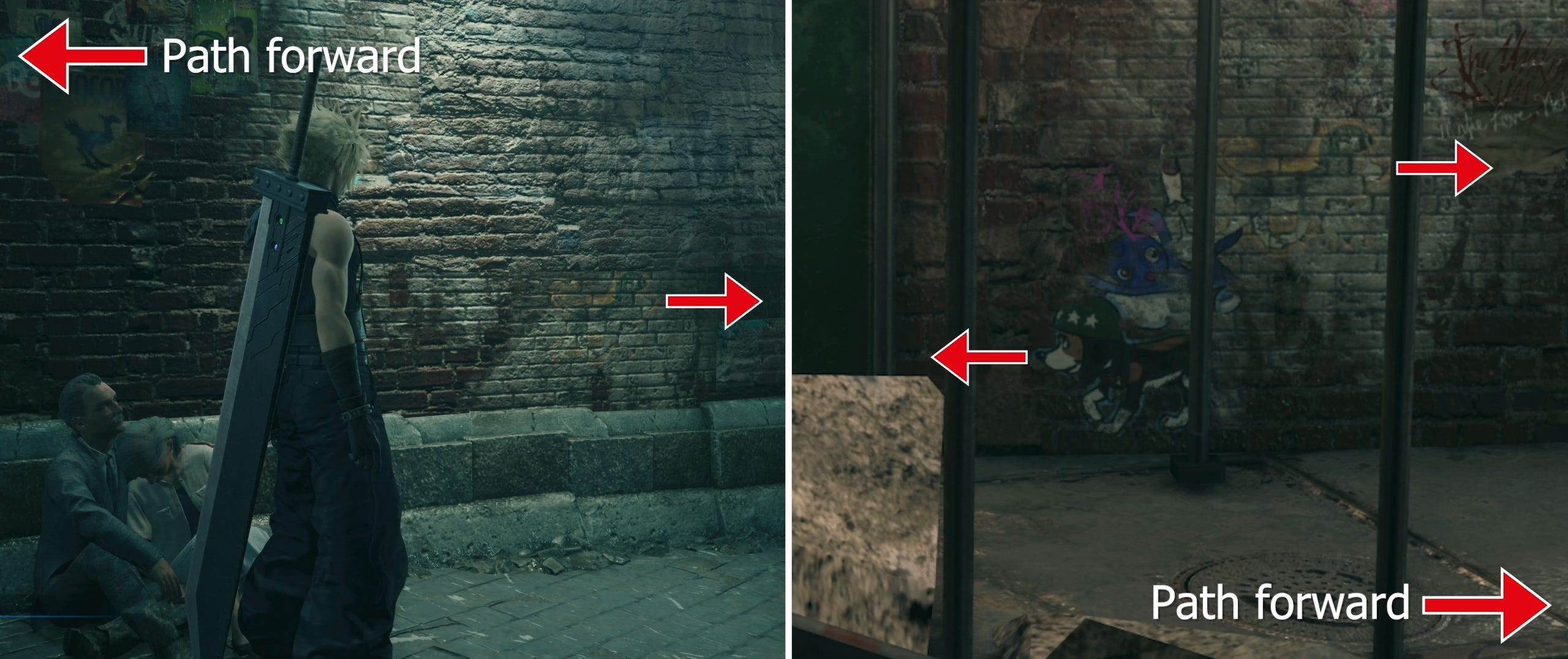
There’s also another important detail to mention: Stamp already appears in Sector 8 in chapter 2 in the same way as in chapters 5 and 10 where he shows the way with his nose. Why is he in Sector 8, though?


He doesn’t show the path to the train station for Barret and the others but instead guides Cloud along the unforeseen detour through several alleyways and over buildings. The normal paths are blocked by debris from the explosion’s aftermath as well as the crumbling highway just before Cloud reaches the station. Nobody could have predicted any of that.


Cloud even turns his head towards two Stamp specific graffiti occurrences, which means he does notice their existence and we, the player, should also pay attention. Those two Stamp graffiti also appear right after Sephiroth shows himself the first time to Cloud.6


The use of Stamp graffiti as a guide for members of Avalanche is also a new element. Who’s guiding Cloud and the group? Is it future Aerith whose essence still resides in the pure part of the Lifestream? Did she introduce this concept of Avalanche’s Stamp graffiti to guide Cloud to the Loveless theater to make sure he meets her memory version? The same one she also provides with some of her memories to gently nudge events in her favor.
Why is the Stamp’s Champs chips bag different?
With Stamp’s design being different in Zack’s ending scene, does that mean he resides in a different reality? Let’s examine the possibilities.
Possibility #1
Beagle and Terrier Stamp represent different realities
Cloud’s group is now either in the new world of the living, adjusted by the changes made throughout this first installment or living through the ripple effect in the planet’s memories caused by said changes. Zack became his own entity either within the Lifestream in general, or the negative or even stagnant Lifestream to find and pursue his new purpose. The different Stamp designs then reflect those two realities as a symbolic marker.
Possibility #2
A single changed reality represented by Terrier Stamp
The new Stamp bag’s Terrier mascot design represents this new and adjusted reality and will be the only design moving forward. It would then represent the change from before to after the Singularity and be the result of defeating the Arbiters of Fate.
One could also argue that Sephiroth could have changed something in the past during their battle in the Singularity while he had complete control over the Whispers and therefore fate itself. This would explain his diminished power during the fight, allowing us to defeat him. Just like in the original game where he simultaneously had to suppress Holy, leaving less power for the fight itself.
Possibility #3
Beagle: hopes & dreams — Terrier: regret and despair
This involves an interesting idea from my good friend Sector 6 where this first game’s representation of the Lifestream’s memory depicts the hopes and dreams of those within and basically puts their wishes on display. Think of it as passed souls reliving key moments of their lives but adding wishful thinking and missed experiences to fulfill crushed hopes or unattained dreams. Let me provide some examples:
Tifa wishes to spend more time with Cloud and be more inquisitive regarding his issues.
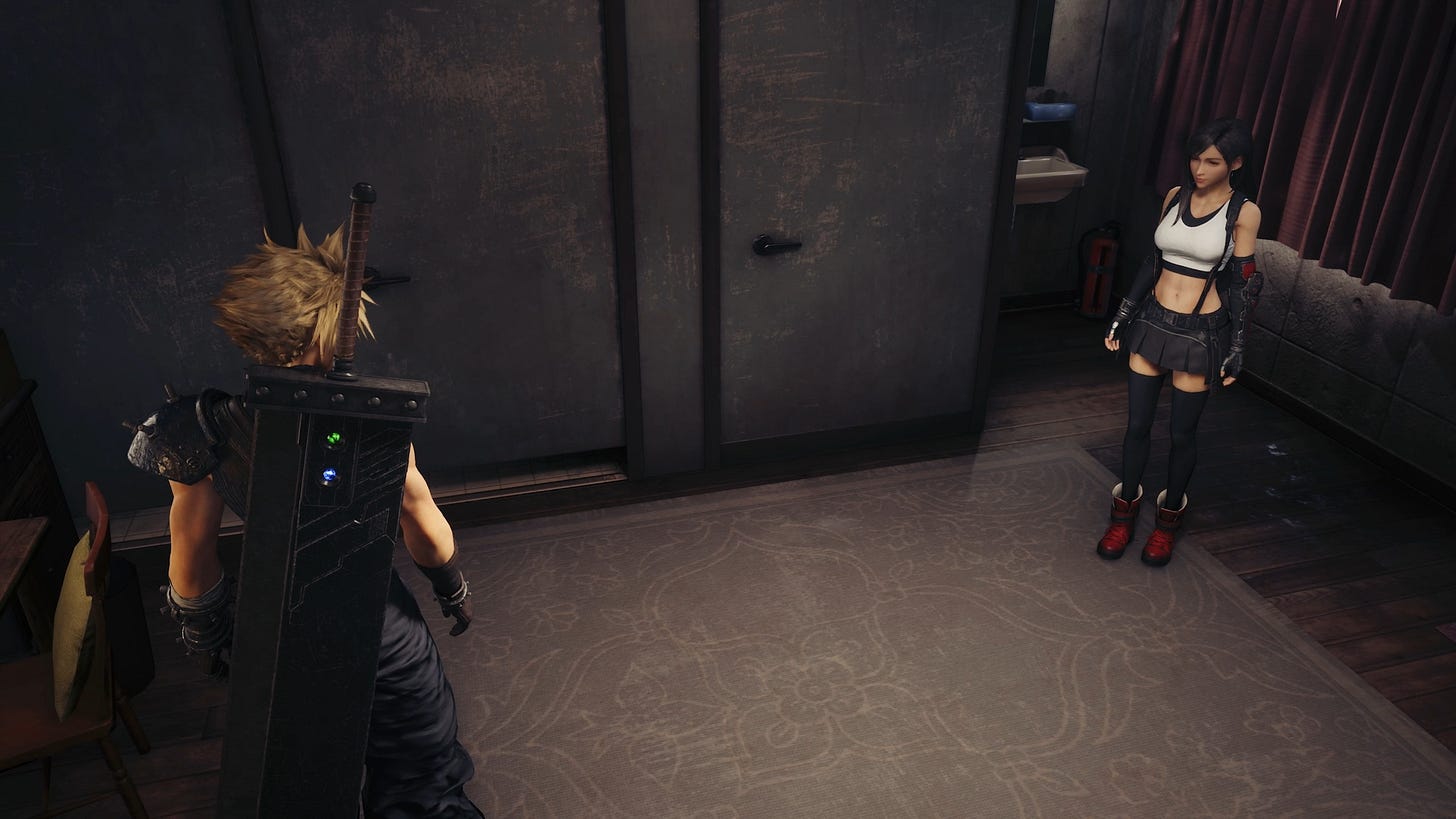
Chapter 3 Discovery: Alone at last; Location: Tifa’s apartment 201, chapter 3 Wedge wants to make a difference and is able to do so by saving more lives in chapter 12 and later helping out in the Shinra building.
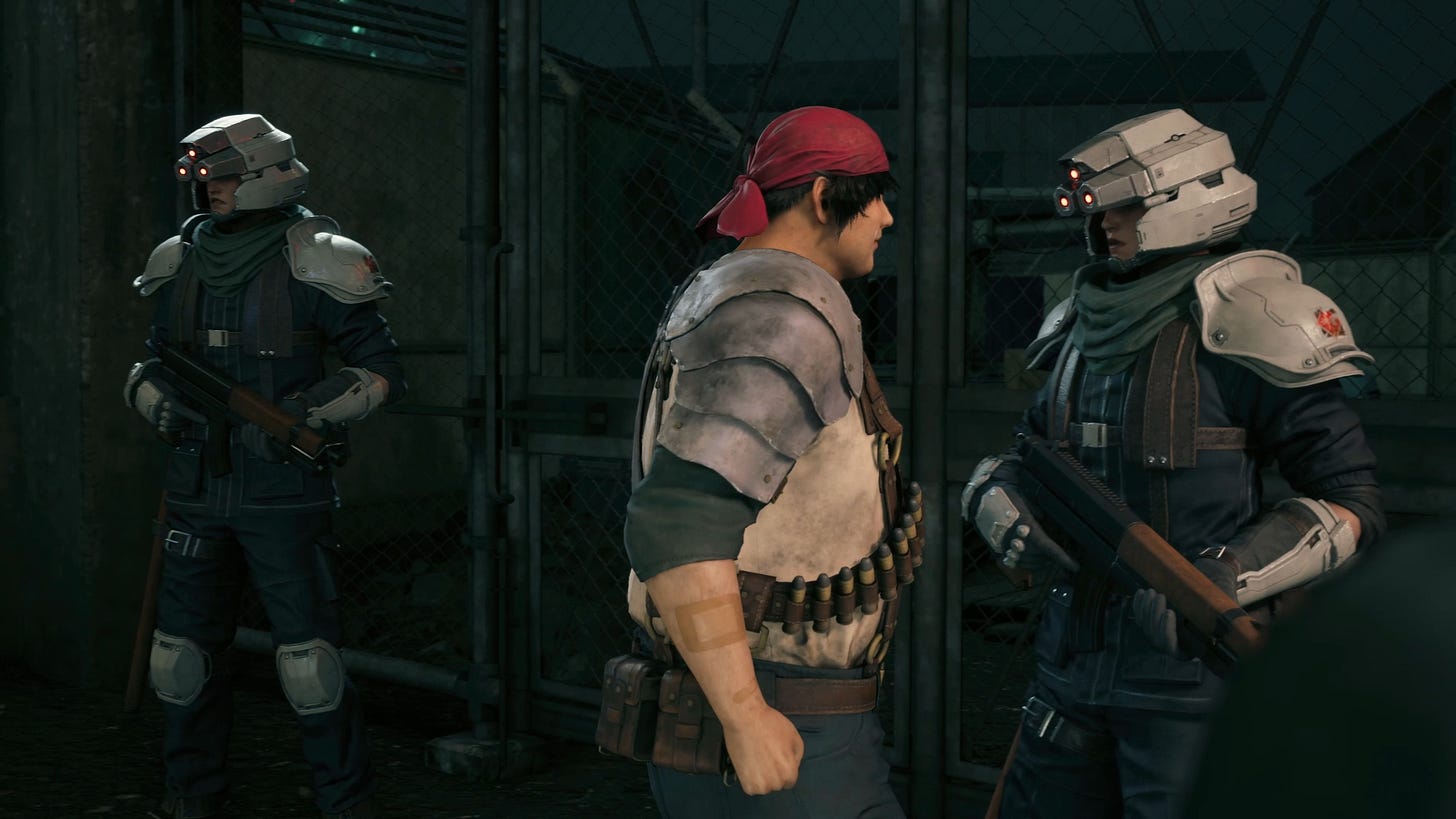
Chapter 12: Wedge convinces the guard to open the door to Sector 6 before Platefall Jessie needs a different blasting agent and while procuring it, she’s able to spend more time with Cloud and see her family again.
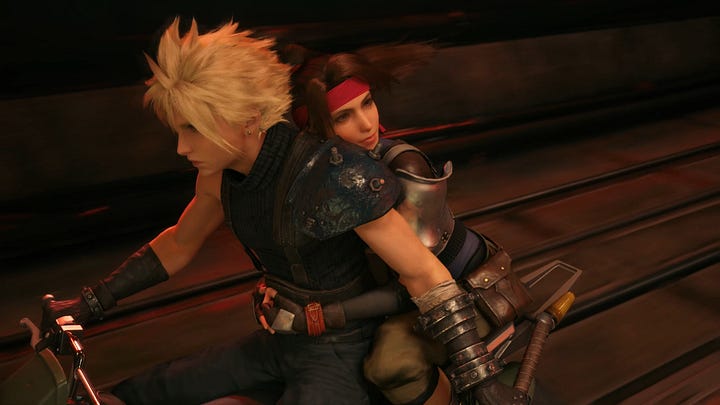
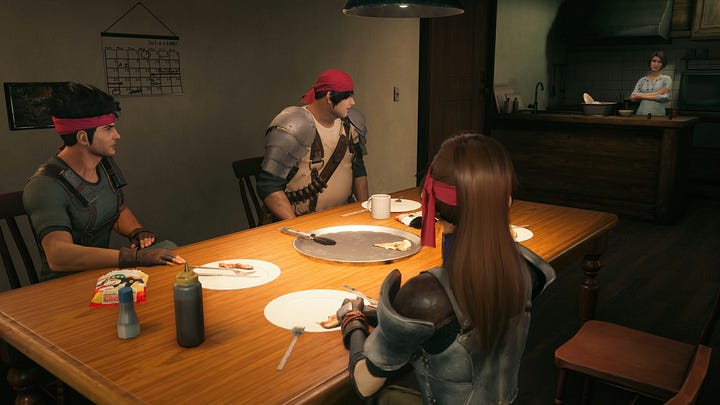
Chapter 4: Ride to the Sector 7 plate — Visiting her mother for Pizza Tifa and Barret want to search for survivors and see the bar again. This leads them to meet Marle, see the bar in ruins and find Wedge alive.
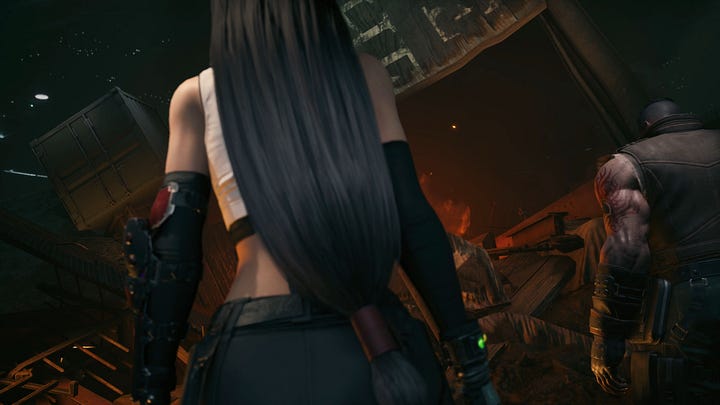
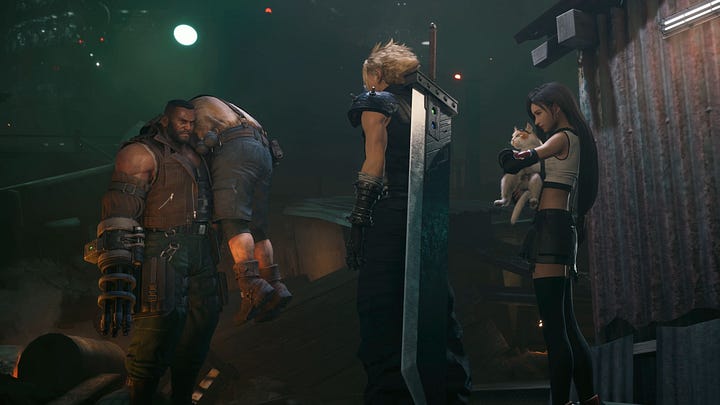
Chapter 13: Seventh Heaven in ruins, rescuing Wedge and one of his cats Stamp’s designer might have had two designs ready, a Terrier and a Beagle, decided to use the Terrier but later regretted it, so he dreams about the beagle being the actual design.
The Terrier design in Zack’s ending would then represent the designer’s regret.


All three possibilities have merit.7 But so far, we’ve only acknowledged that a change happened, not what changed specifically. By doing so, we will learn more about what is actually happening.
Two Stamp designs and their meaning
First of all, the breed. As mentioned earlier, the new design depicts a Terrier instead of a Beagle. But what does that mean? Let’s have a look at their respective characteristics.
Beagle
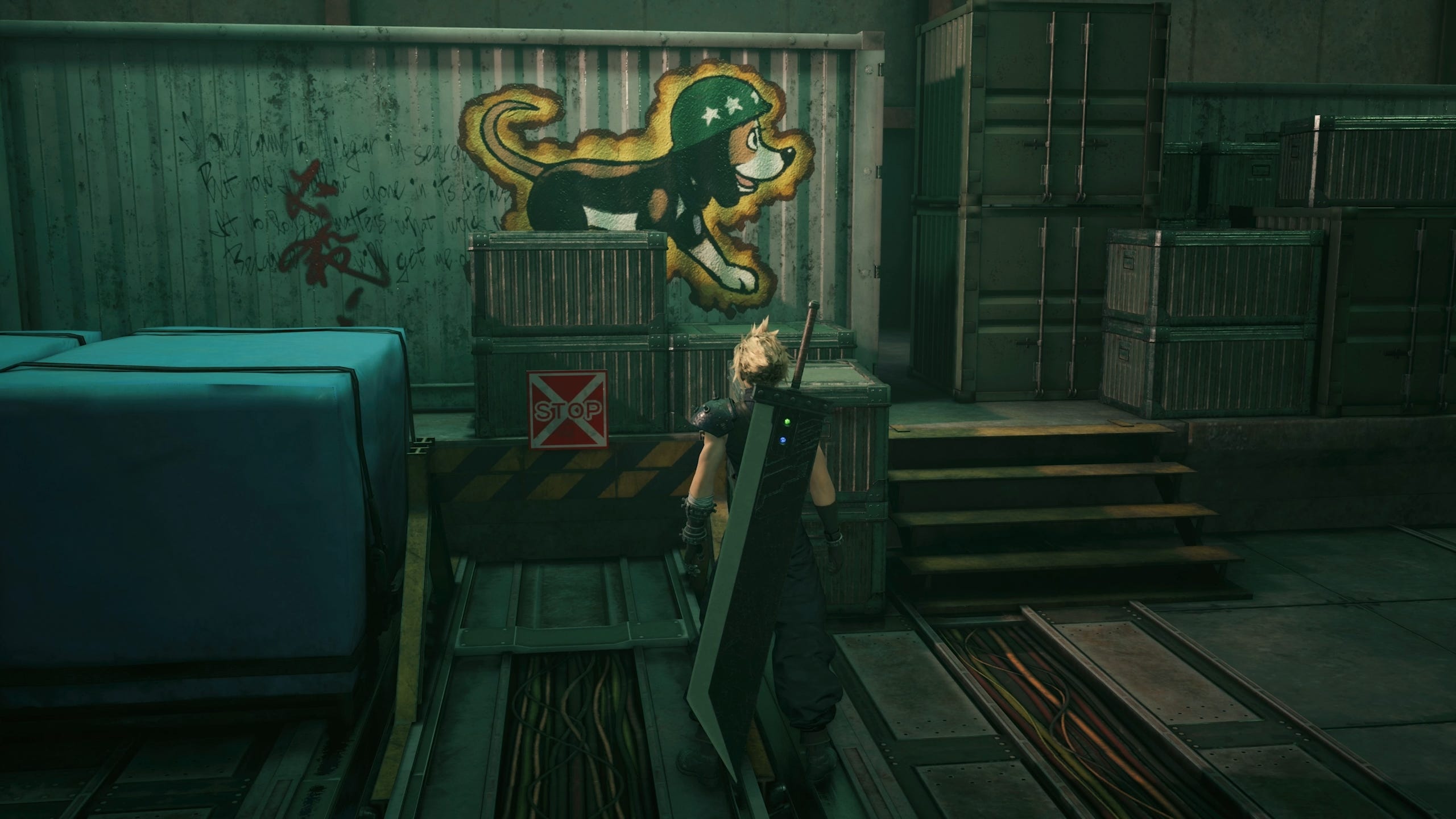
Beagles are great at tracking scent and love sniffing!8


Once they pick up a scent, they’re hyper-focused and won’t let anything else distract them. This makes them phenomenal hunters. Like Cloud, who’s hunting down Sephiroth all across the planet. Thus, Beagles are explorers by nature. Like players in an RPG, exploring every nook and cranny.


Beagles are very loving, curious, and friendly. Perfect for roping kids and young adults into Shinra’s propaganda.


Beagles also seem very happy-go-lucky, as depicted on promotional material of Stamp.

They’re also very loyal dogs. Stamp is depicted as being loyal to Shinra.


Beagles need lots of physical activity, playtime and attention. They are pack animals and great family dogs. More fodder for Shinra’s propaganda. Be a part of a big pack, a family! Enjoy lots of activities and be a part of important missions!


Beagles are very curious and easily bored. Like new Shinra recruits who haven’t yet been indoctrinated to shut up and obey.


It’s also important to note that Beagles are widely spread and can be found everywhere, just like Shinra’s Security Officers. Cloud was one of them for years.


Terrier
The scruffy Stamp depicted on the chips bag in Zack’s ending scene is—according to the Material Ultimania—a Yorkshire Terrier. However, when looking at its characteristics, nothing really fits.
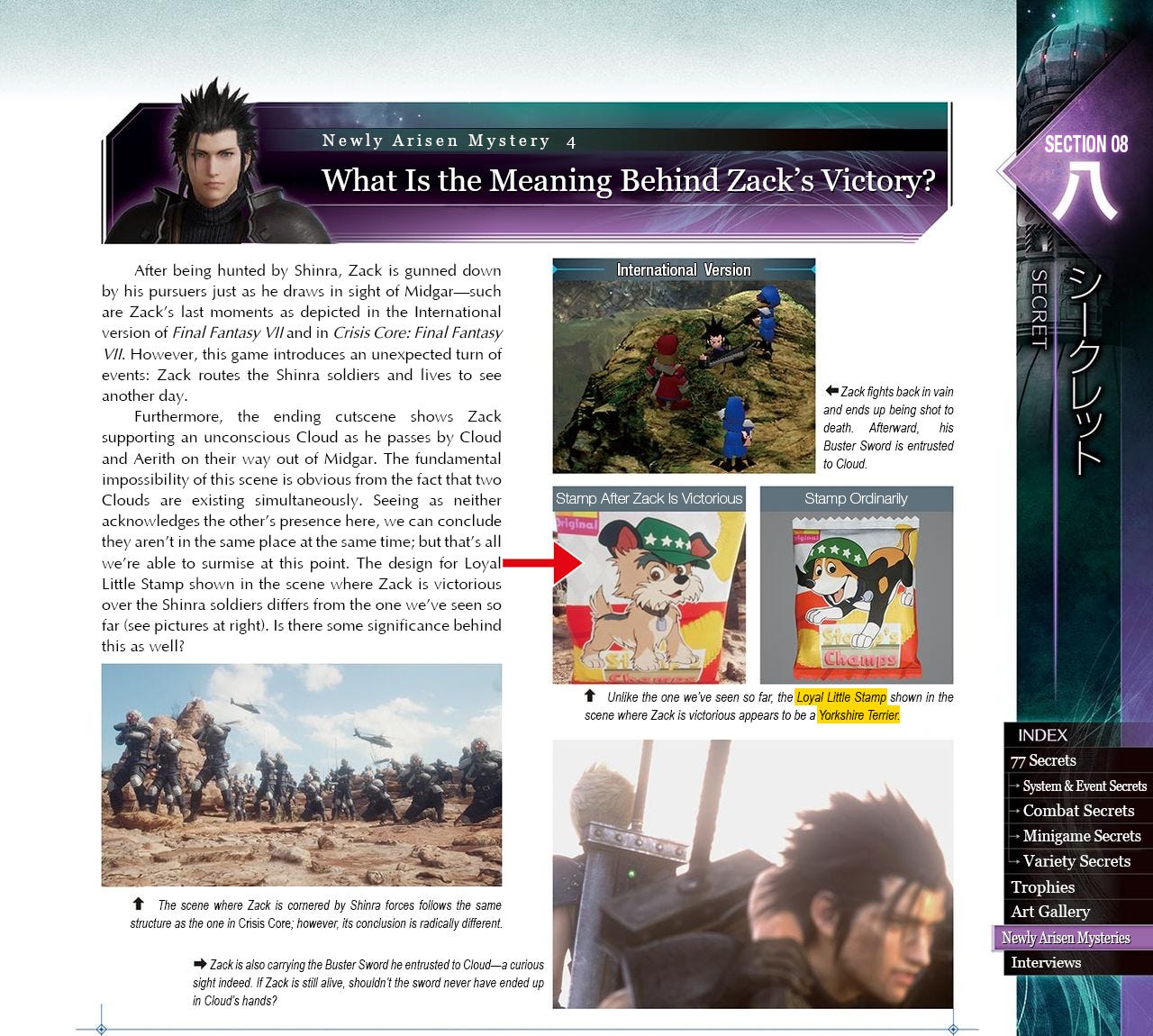
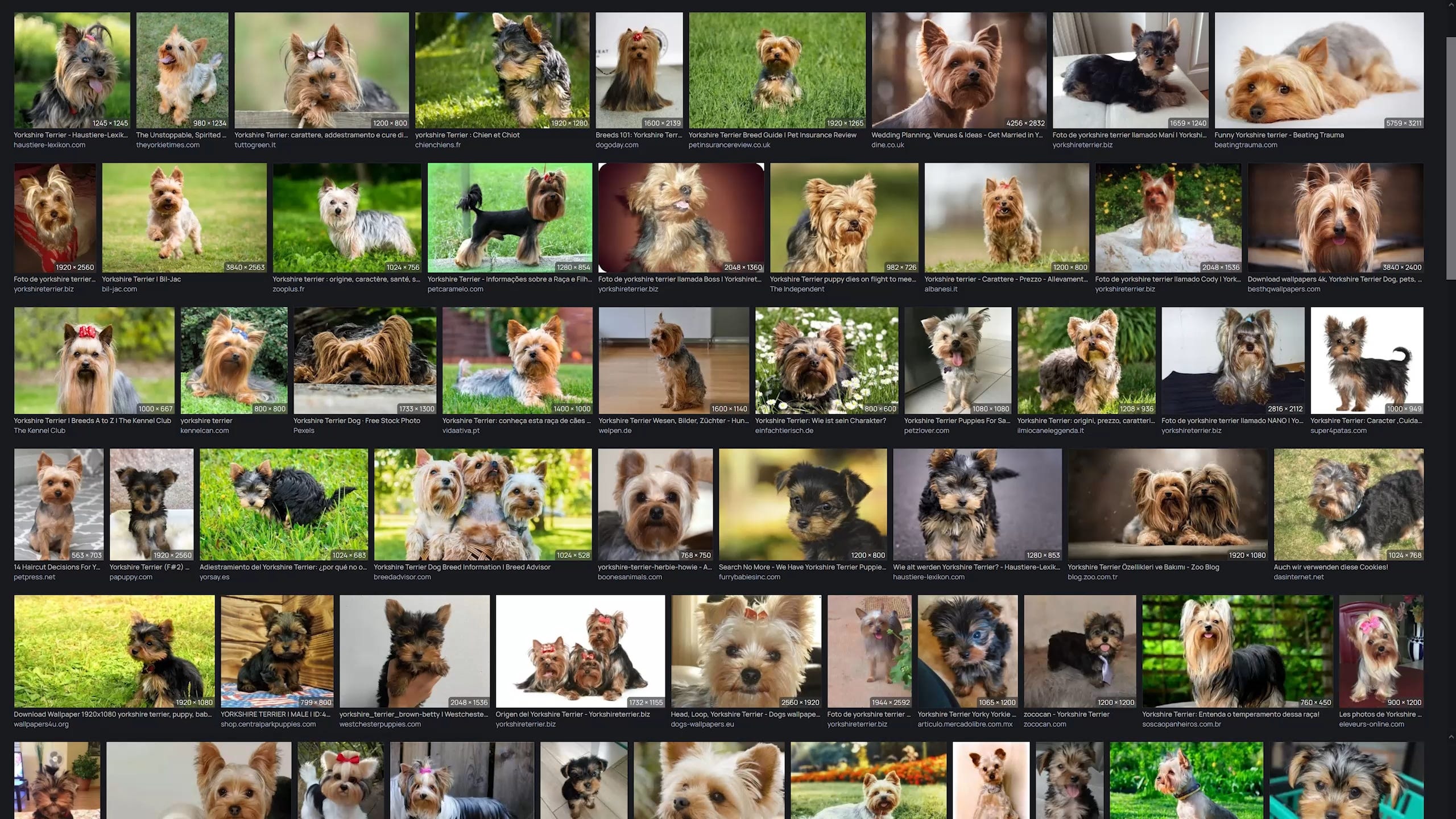
While Yorkshire Terriers do have a dark brown or almost black back, most I found were at least 50% black, unlike Stamp here. Furthermore, Yorkshire Terriers have straight ears and not half-flappy ones.

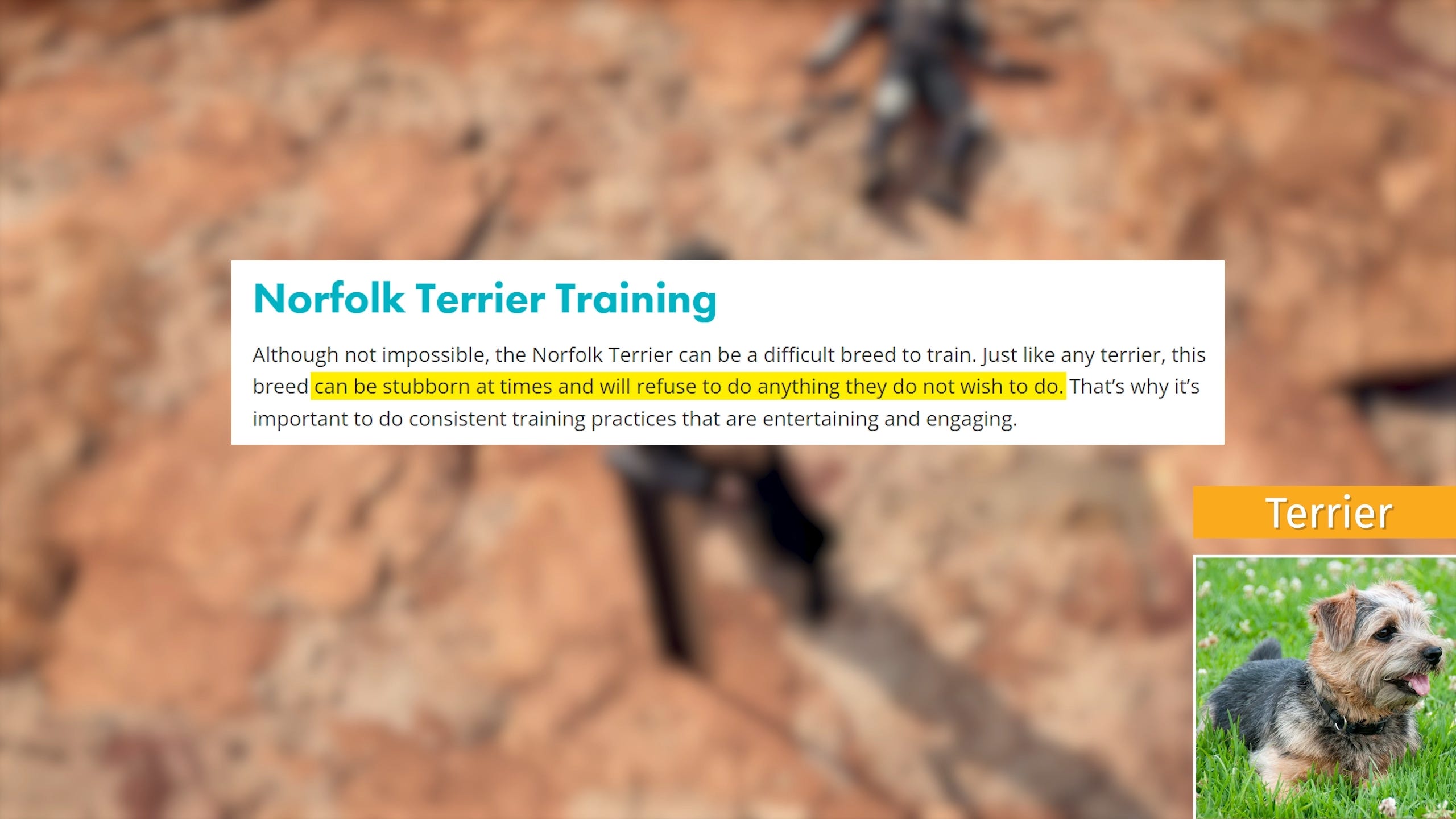
In my layman opinion, scruffy Stamp looks more like a Norfolk Terrier, even though it lacks a dark spot on its back. Caution: do not mistake it for a Norwich Terrier, which has pointy ears, like a Yorkshire.


Anyway, even in the characteristics department, the Norfolk Terrier comes out more fitting and consistent, unlike a Yorkshire, which exhibits rather inconsistent facets regarding its personality. According to canna-pet.com, they “need their exercise and attention to stay happy. If they don’t, they will begin to create their own entertainment by barking and digging.” Kind of sounds like Zack annoying fellow Shinra employees and doing Squats all the time when he’s waiting for or during downtime on a mission, doesn’t it?


Norfolk Terriers are strong, determined, and loyal. Just like Zack. They also exhibit playful personalities and are charming and independent.


Like Beagles, they harbor excellent hunting skills and love a good chase. It’s what Zack does in basically every mission in Crisis Core, especially when hunting down stray Wutai combatants in the slums.


However, Norfolk Terriers can be stubborn at times and will refuse to do anything they do not wish to do. Sounds like Zack’s thick skull, doesn’t it?
And unlike Beagles, Norfolk Terriers are not a commonly seen breed. Just like SOLDERs aren’t as widespread and common as Shinra’s infantrymen.

Yes, we’re most likely reading too much into this but after finding so many similarities, it felt only natural to share those findings anyway.
Just by looking at those two different dog breeds, we can make strong connections to Cloud and Zack. Stamp is Shinra’s loyal military propaganda mascot and Cloud is the blue-eyed infantryman aspiring to become a SOLDIER but never made it past the infantry. Zack on the other hand is a SOLDIER and exhibits different characteristics. So, in my eyes, Beagle Stamp represents Cloud and Terrier Stamp represents Zack.
Real-world inspirations?
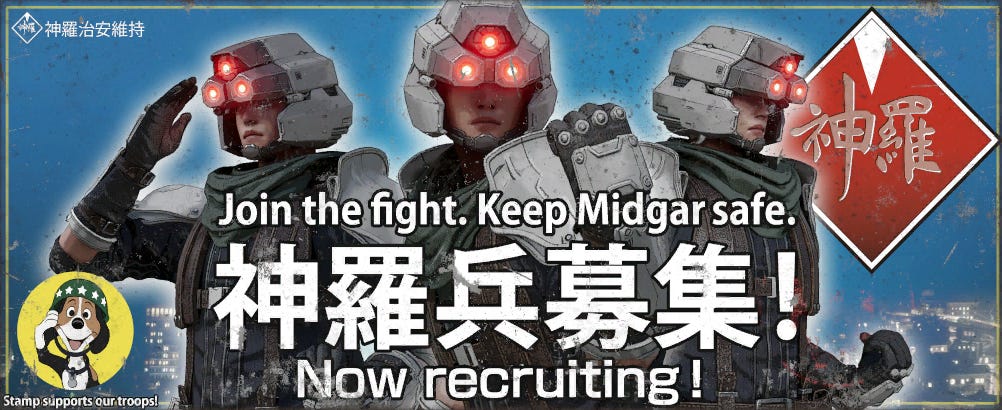
But wait, we’re not done yet. Those two Stamp designs might have been inspired by real world examples. This advertisement mascot for Friskies dog food from the 1960s shows a Beagle with a soldier helmet and a dog tag which looks almost identical to Nomura-San’s Beagle Stamp design!
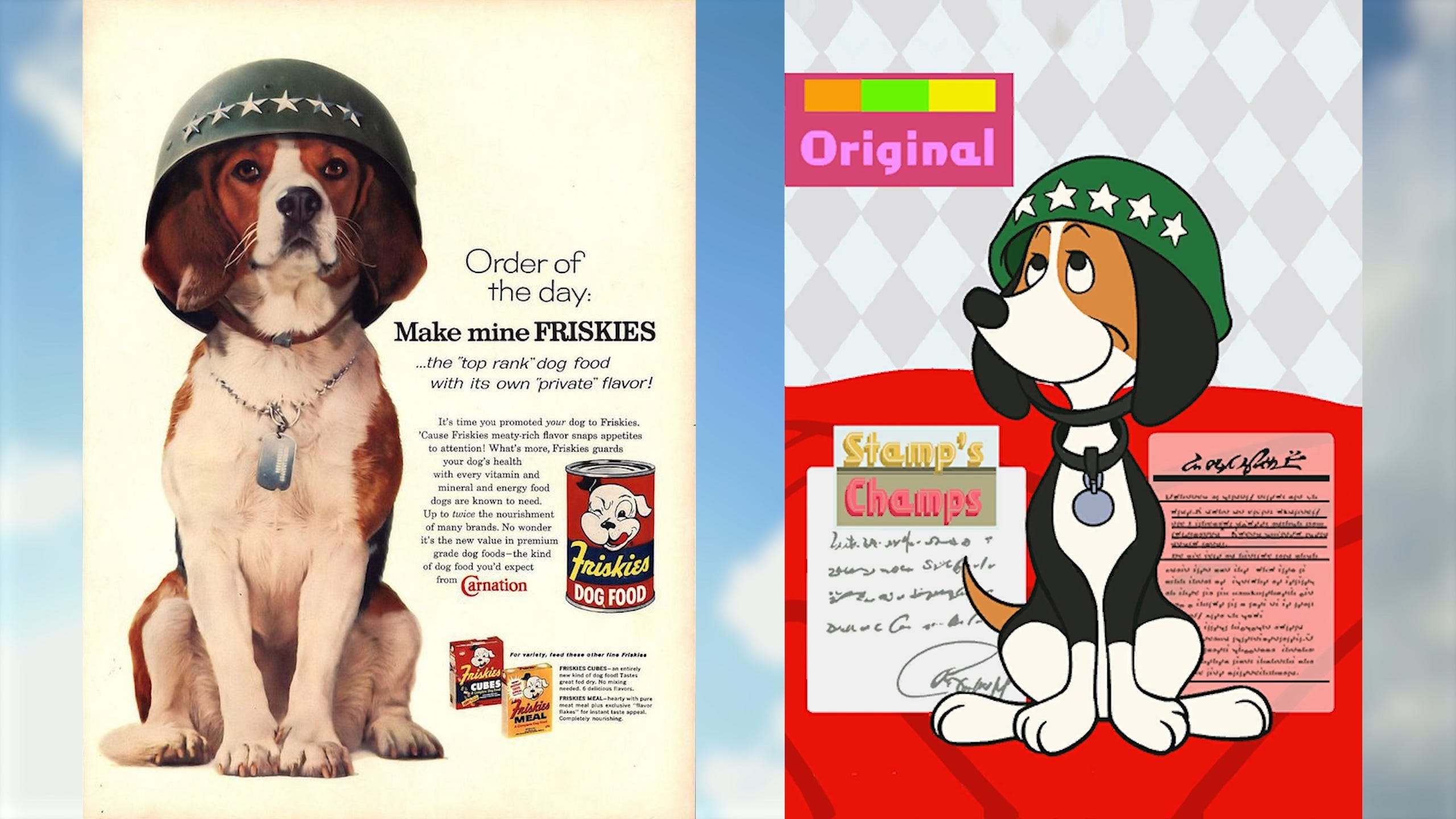
The only differences are the number of stars—six instead of five—and the dog tag’s shape.
What about Terrier Stamp? There’s a real story of an apparently famous Yorkshire Terrier who served in World War II and was called Smoky. Smoky became so famous that she and her human soldier friend traveled Hollywood and later the world to perform a myriad of tricks to show off her incredible skills.
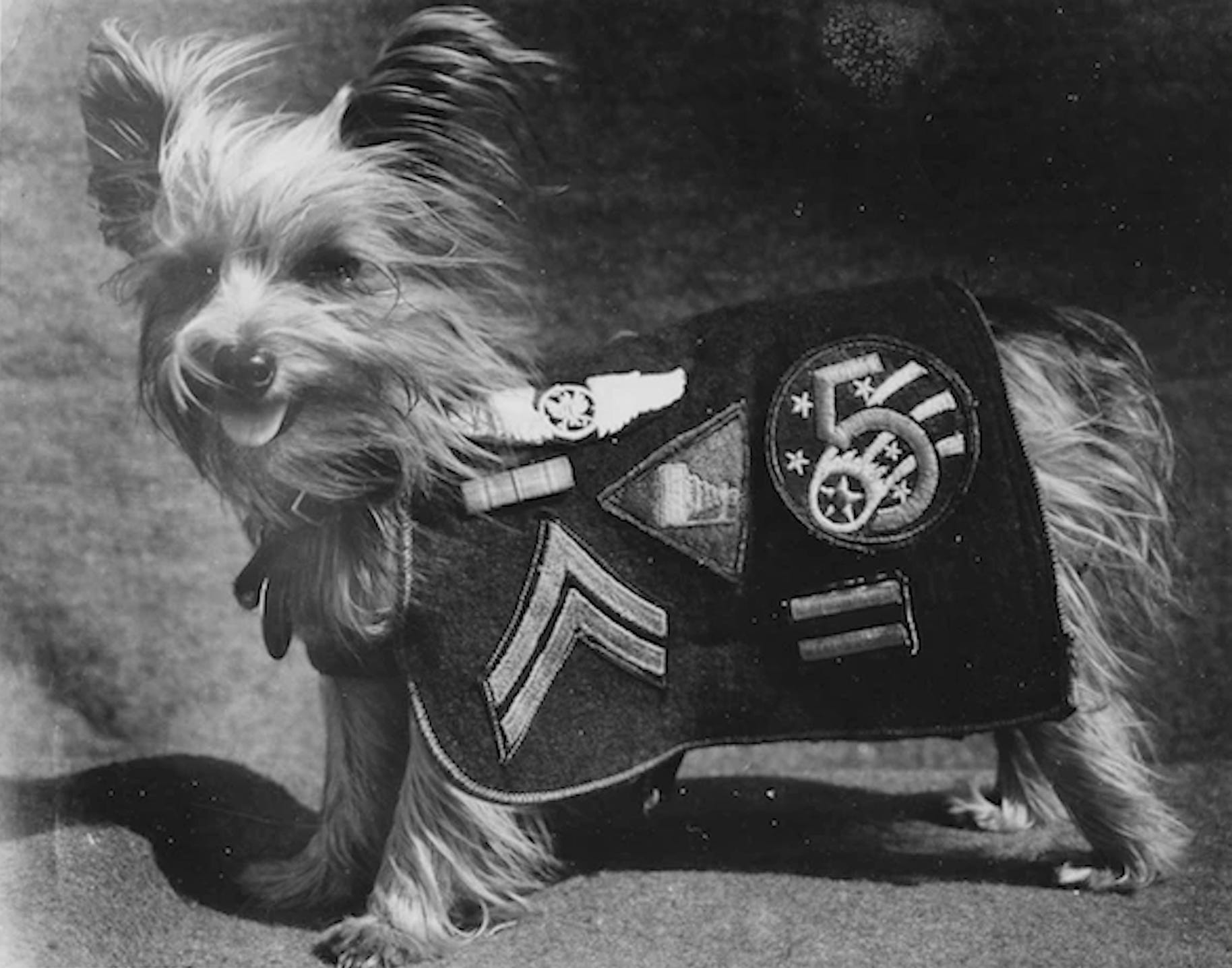
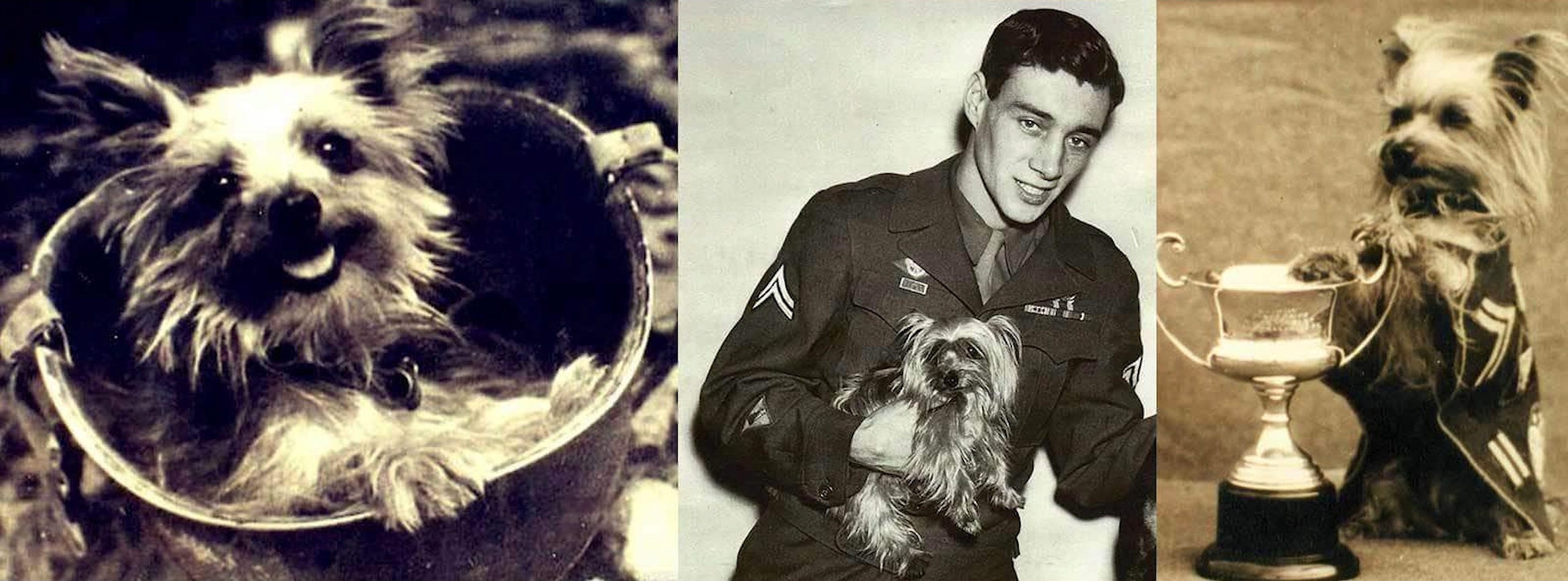
Several books have also been written about her time in the war, like Smoky the war dog, Smoky the Brave and A Dog with a Destiny: Smoky. Destiny, huh?

Without going too much into details, we can make the following connections between Beagle Stamp and Cloud as well as Terrier Stamp and Zack. The Beagle on the Friskies ad is displayed as a soldier complete with helmet and dog tag, but in reality, it’s just a normal dog dressed up as a soldier. Reminds you of Cloud’s false persona, doesn’t it?
Contrary to the nameless Beagle, Smokey has a name and reputation and actually took part in a real war, just like Zack did during the Wutai War. The only detail that doesn’t fit is the dog’s gender, though in this case, we don’t think it’s relevant.
Huge thanks to SilverWield on Twitter for finding those references in the first place!


Storytime
When we follow the whole story about Stamp and the Moogle in the short story told to kids in Sector 7 in Episode INTERmission, it can be argued that Stamp stands for Cloud, the Captain for the player who controls Cloud to retrieve the best Materia, the Moogle represents Yuffie, and the bread is basically a stand-in for the best Materia. Unless you consider the captain being Sephiroth…
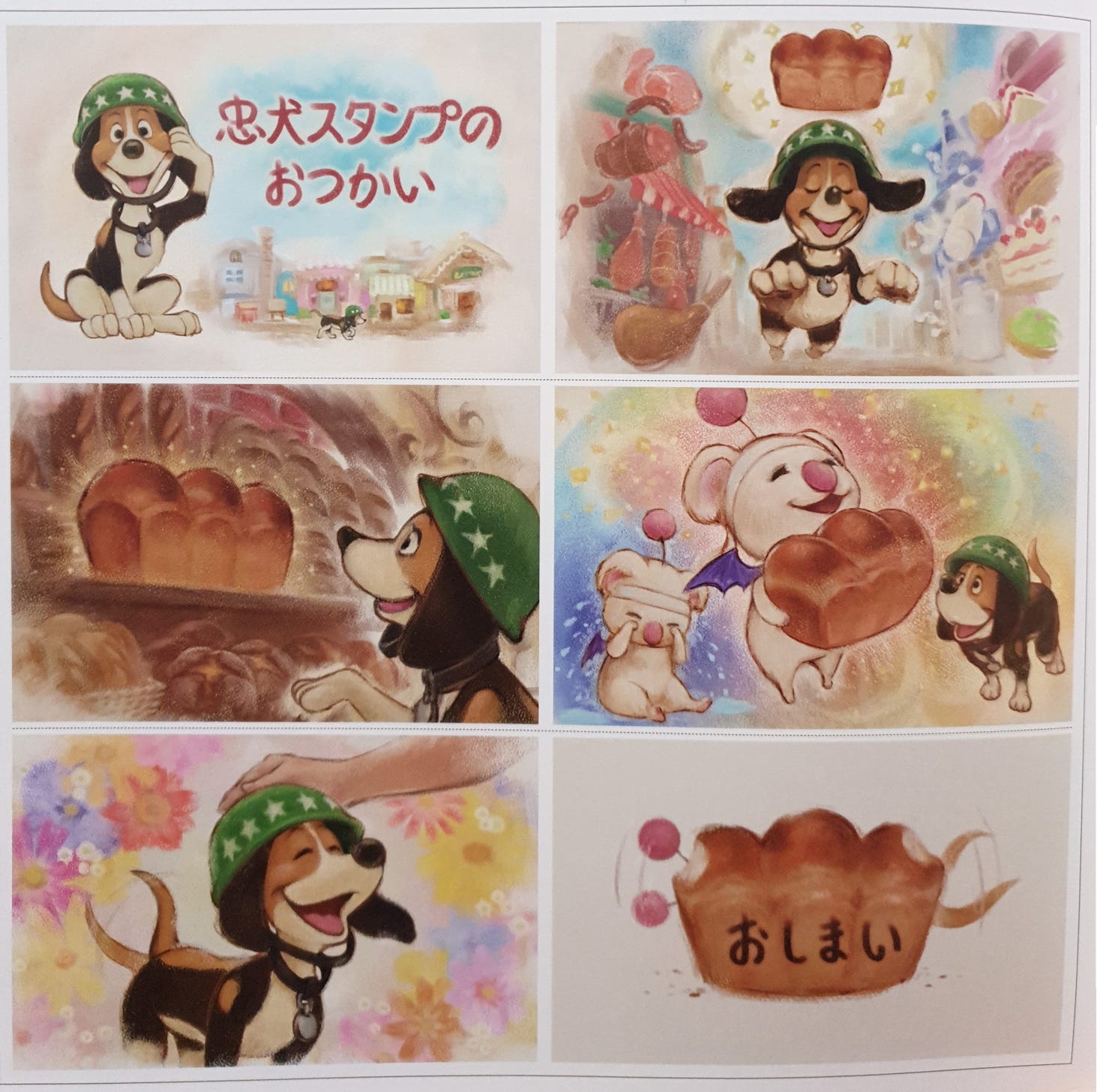
In any case, I encourage you to listen to the whole story to see where we’re coming from.


Dog tag & headwear
Stamp’s literal dog tag is up next. The Beagle version is circular and probably represents a mere name tag while the Terrier version looks much more like a military dog tag.
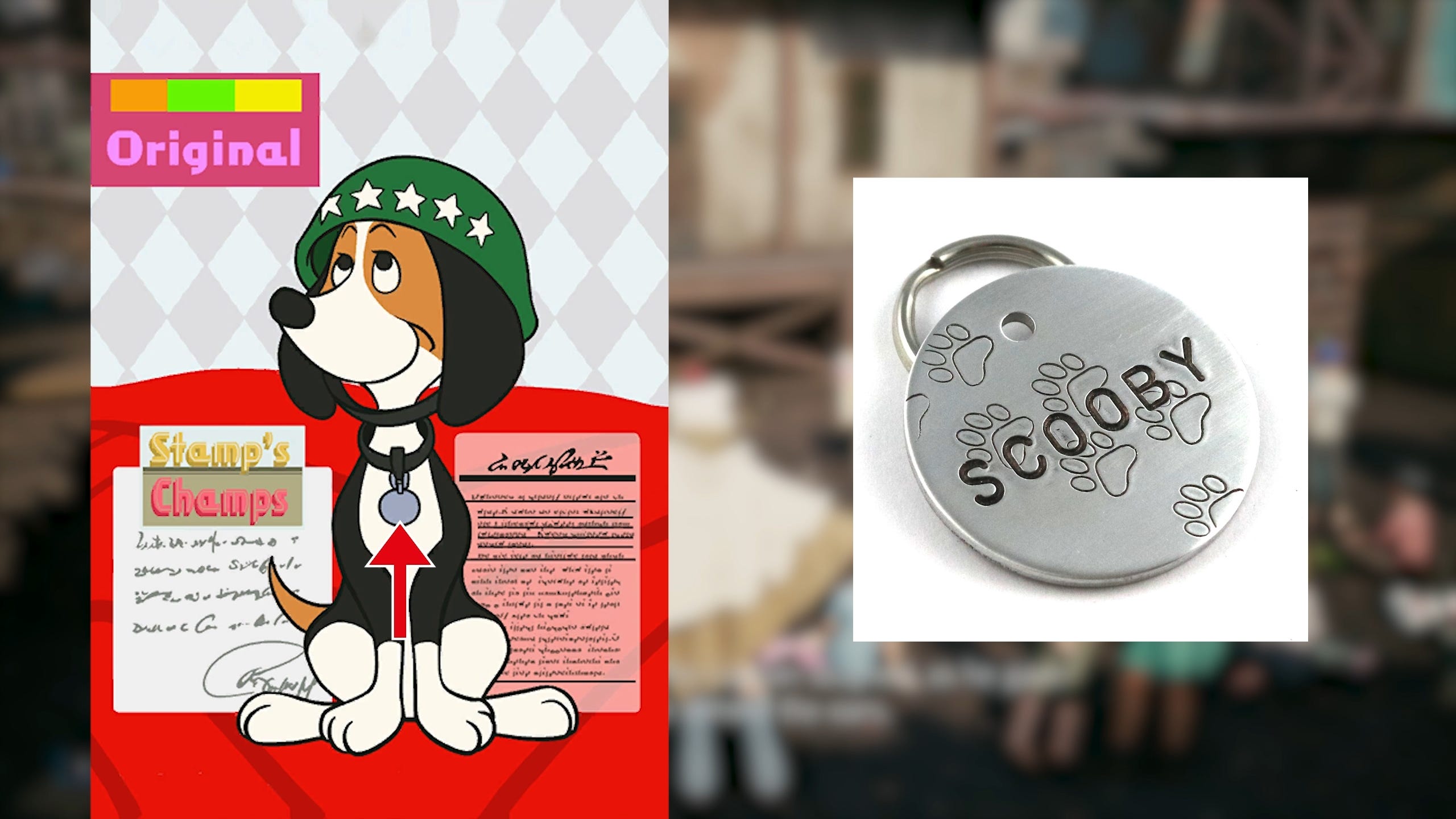
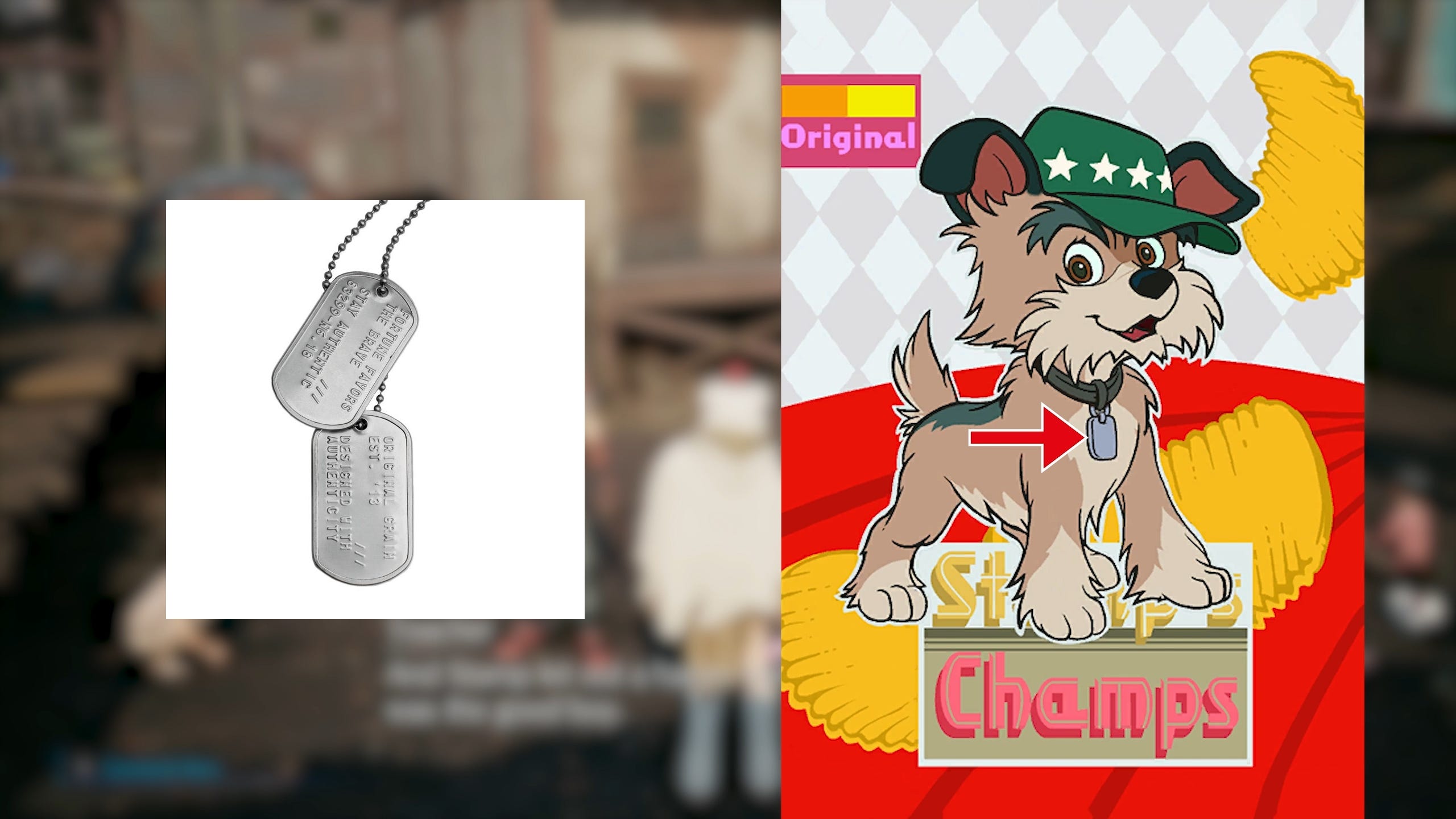
This fits Cloud and Zack as the former is a SOLDIER in name only and puts on a façade while the latter is a military veteran who usually wear their dog tags as identification should they fall in battle.
We made the connection to Cloud and Zack but there’s one more detail to cover: Stamp’s headgear. Beagle Stamp’s helmet looks like a standard issue helmet from World War II usually only used during active combat while Terrier Stamp wears a military patrol cap worn by soldiers in non-combat settings.
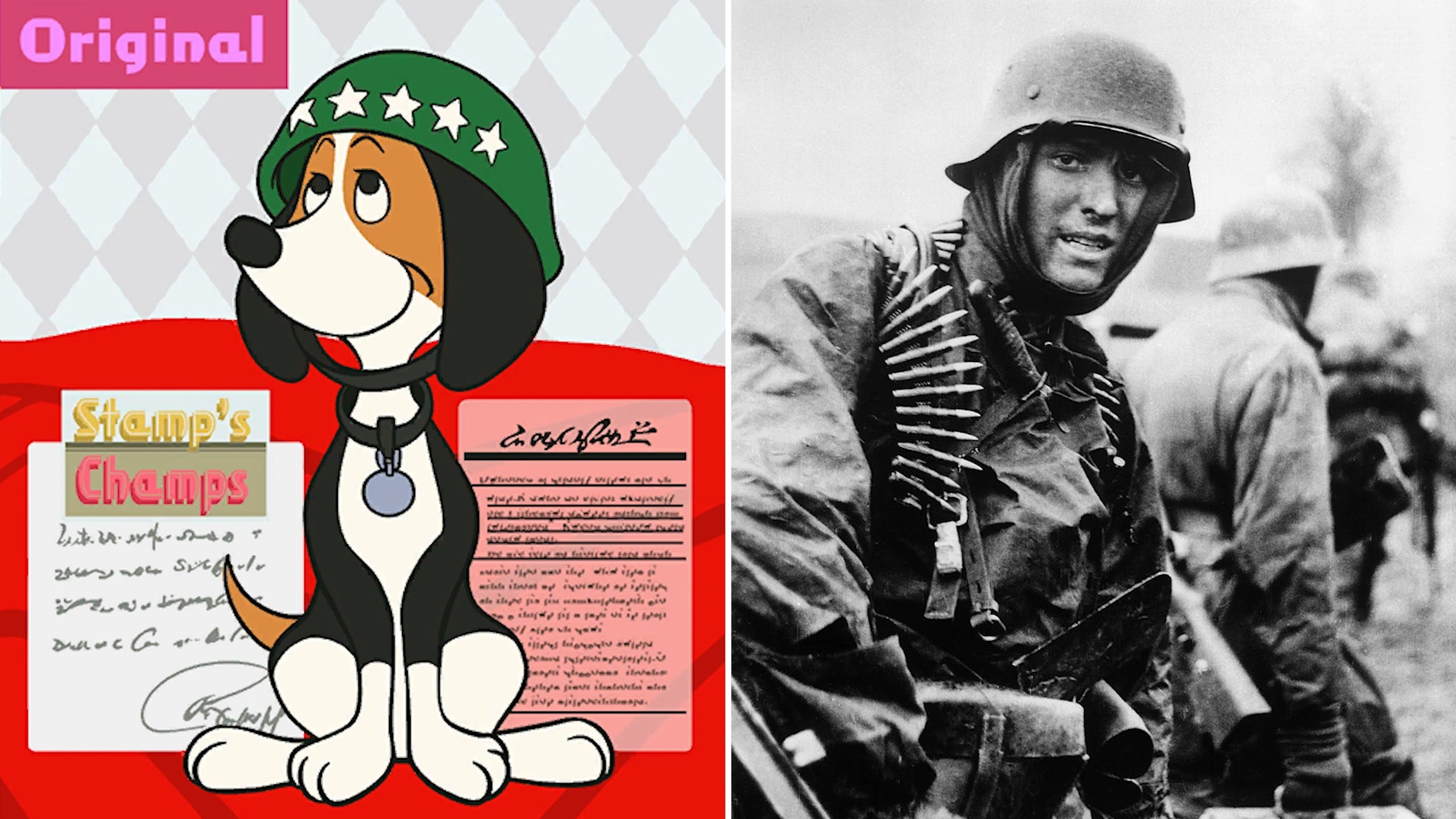
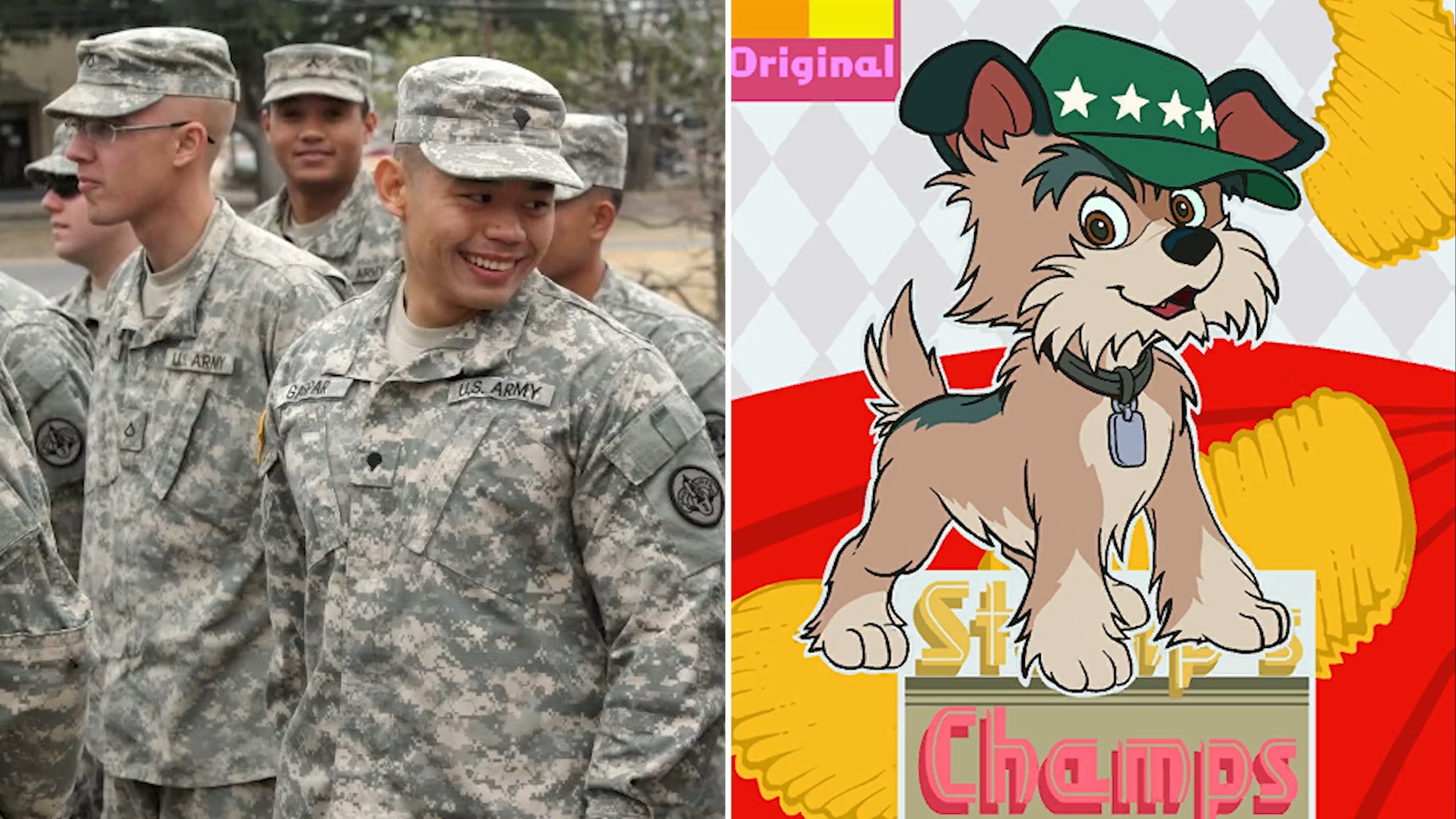
This difference could telegraph the following idea: Cloud, formerly wrapped in by Shinra propaganda, is fighting at the frontline of the story. Pretty straight forward as that’s what we, the players are doing. Zack on the other hand is a true soldier now disconnected from Shinra’s influence and patrols the Lifestream in a largely non-combat setting. A hint towards his new purpose? Keep this in mind for later.
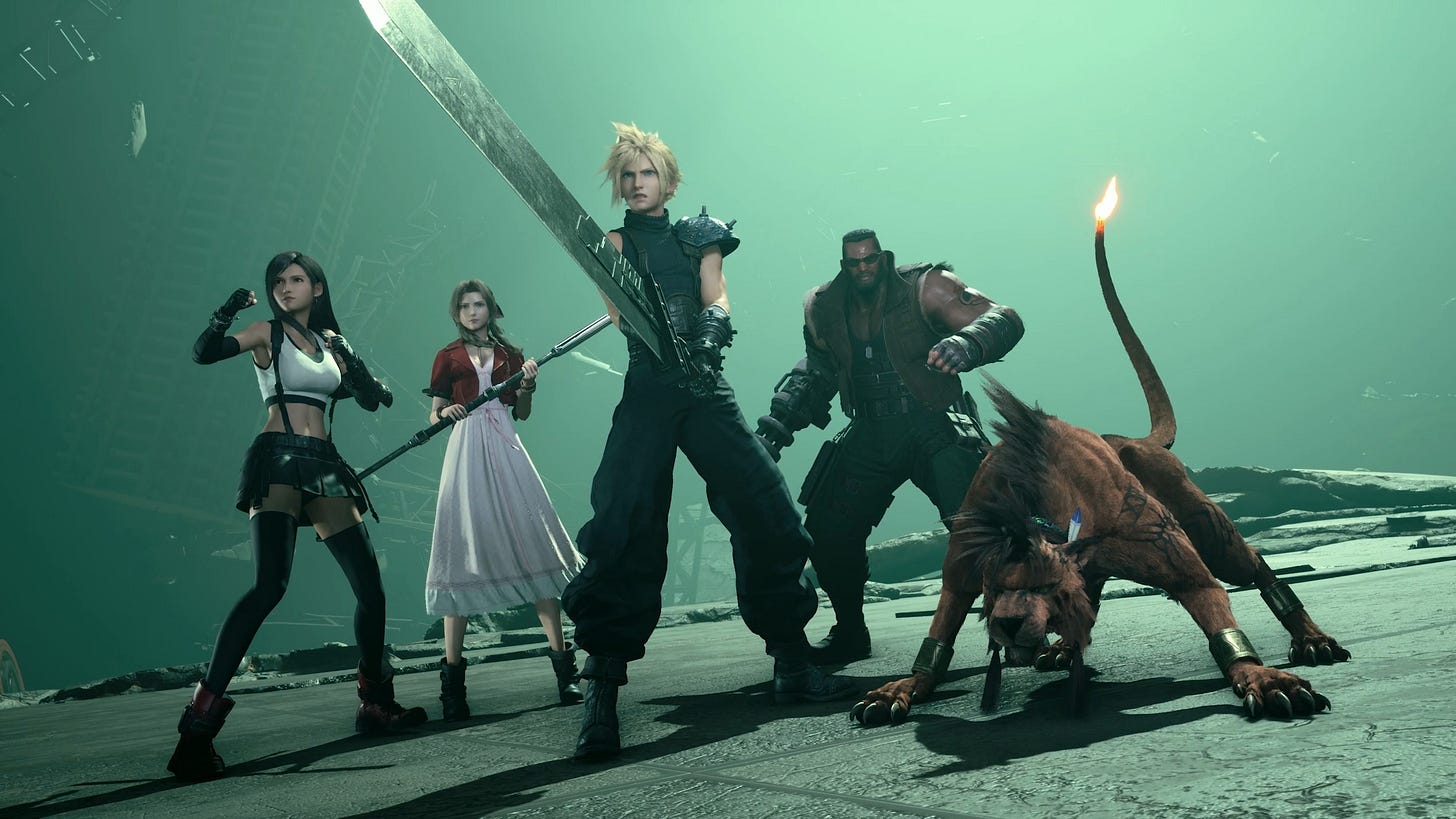
But what about the different number of stars? Beagle Stamp’s helmet has five white stars printed on it while Terrier Stamp’s cap shows only four.
Cloud’s party consists of five allies at the end of this first game.
Shinra contains five divisions: Advanced Weaponry, Space & Aeronautics, Research & Development, Public Security, and Urban Planning.
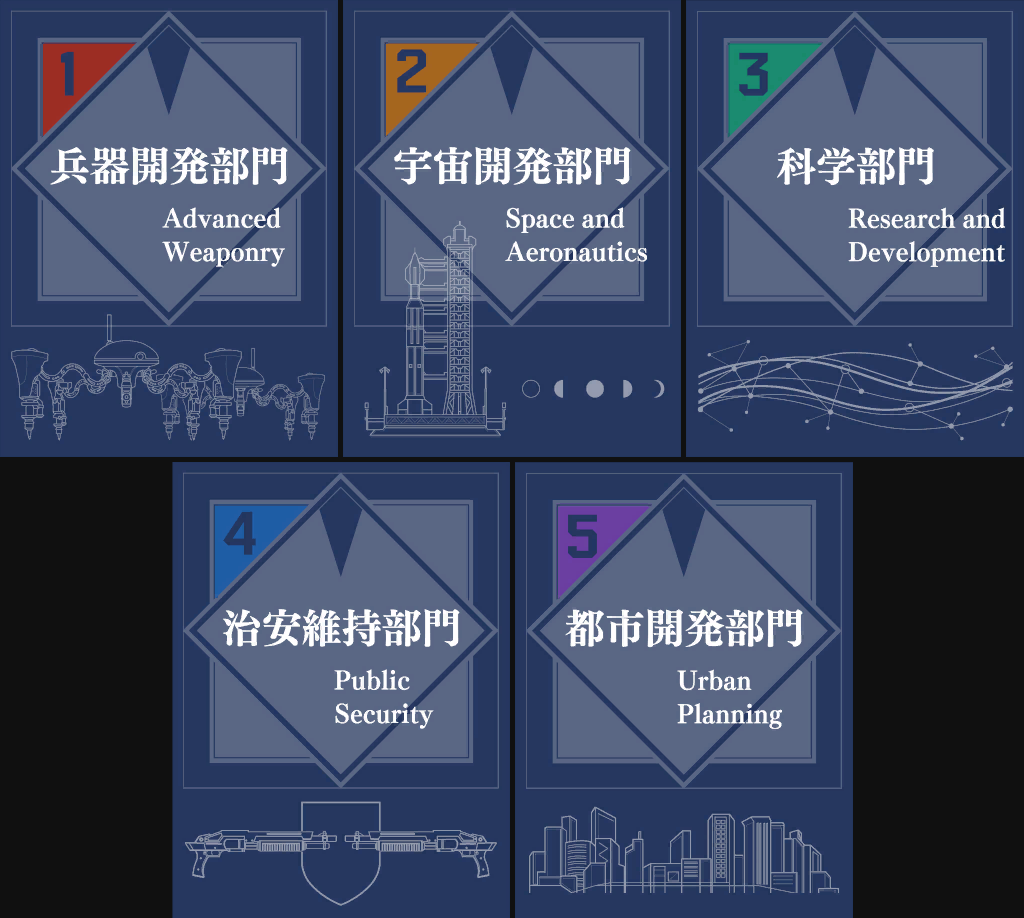
For Terrier Stamp, we have four Whispers which are responsible for Zack’s survival.
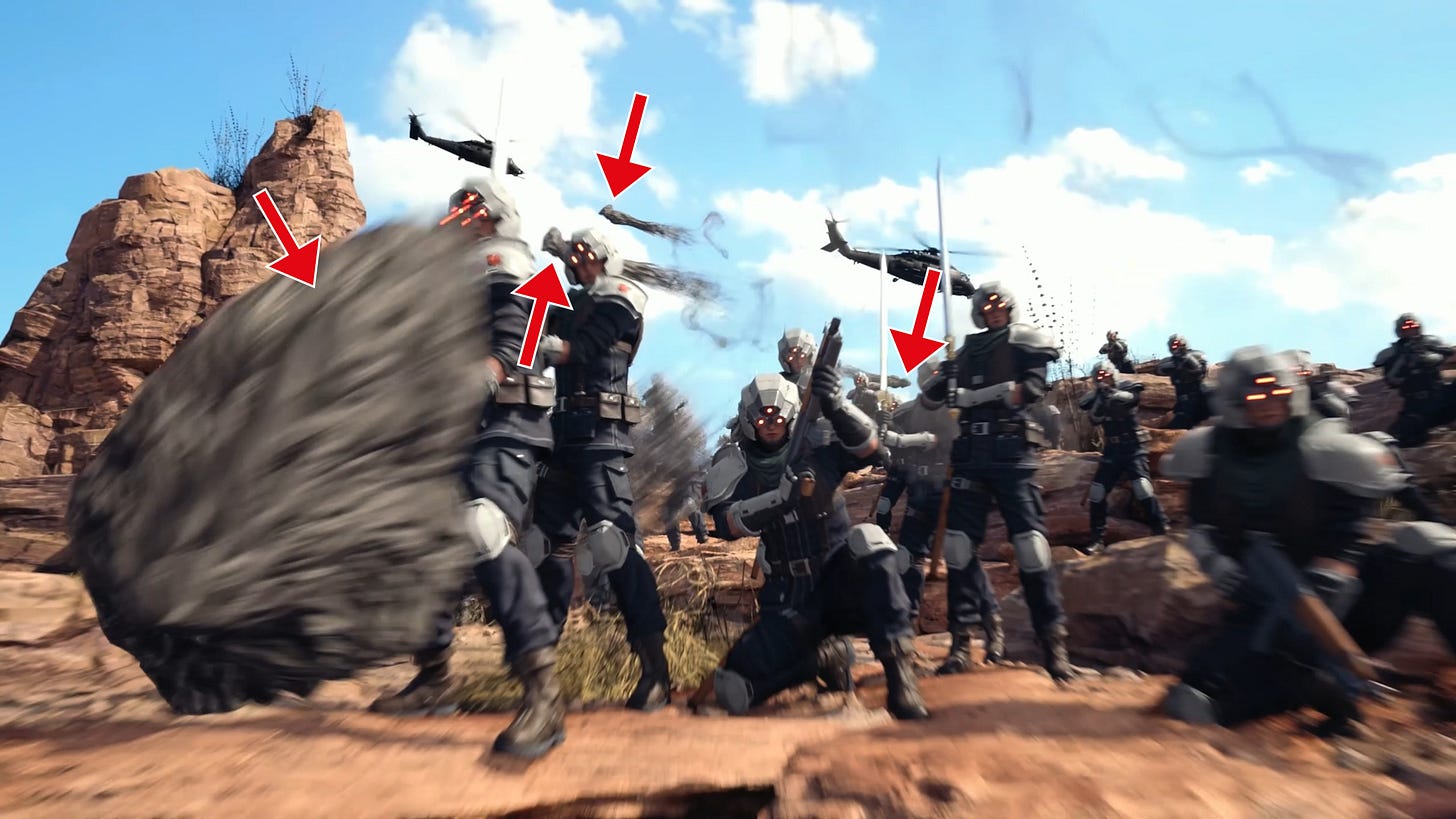


While fitting, it’s too surface level. We need to remember that this is a Japanese game, so let’s check out the Japanese version of the numbers five and four.
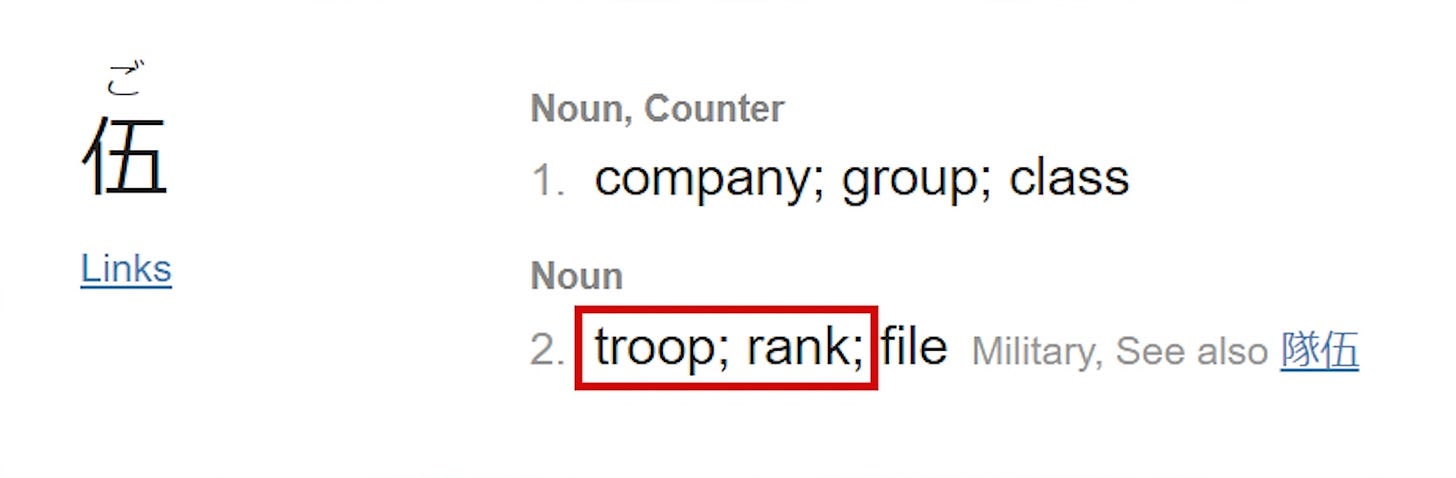
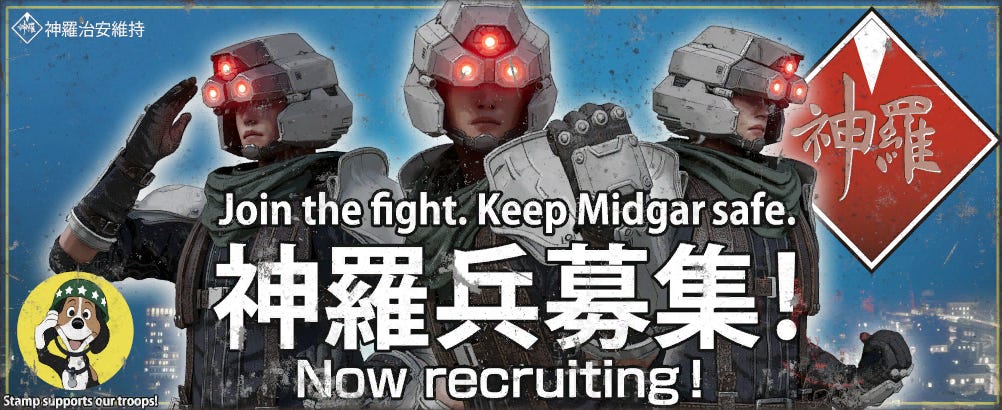
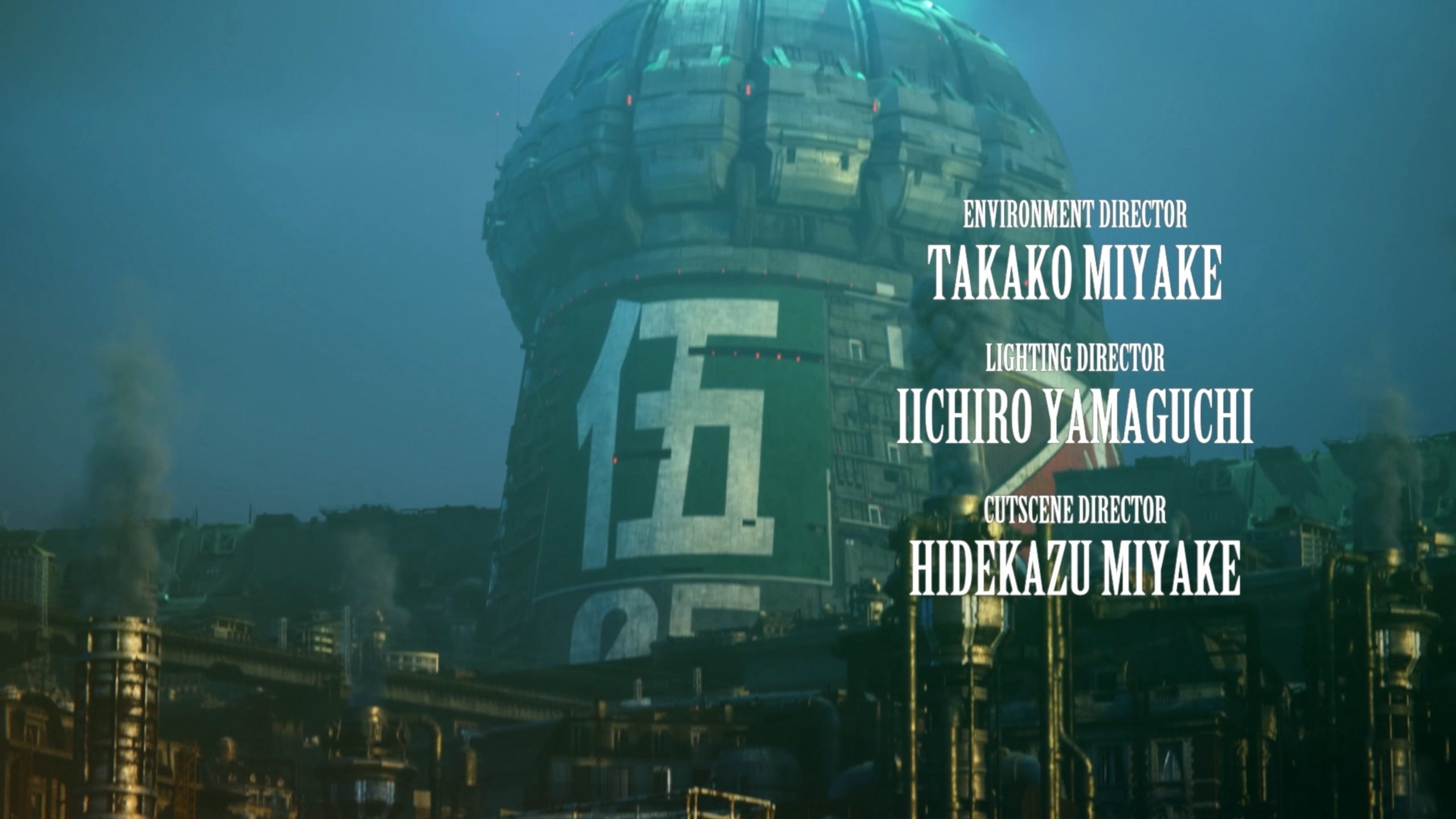
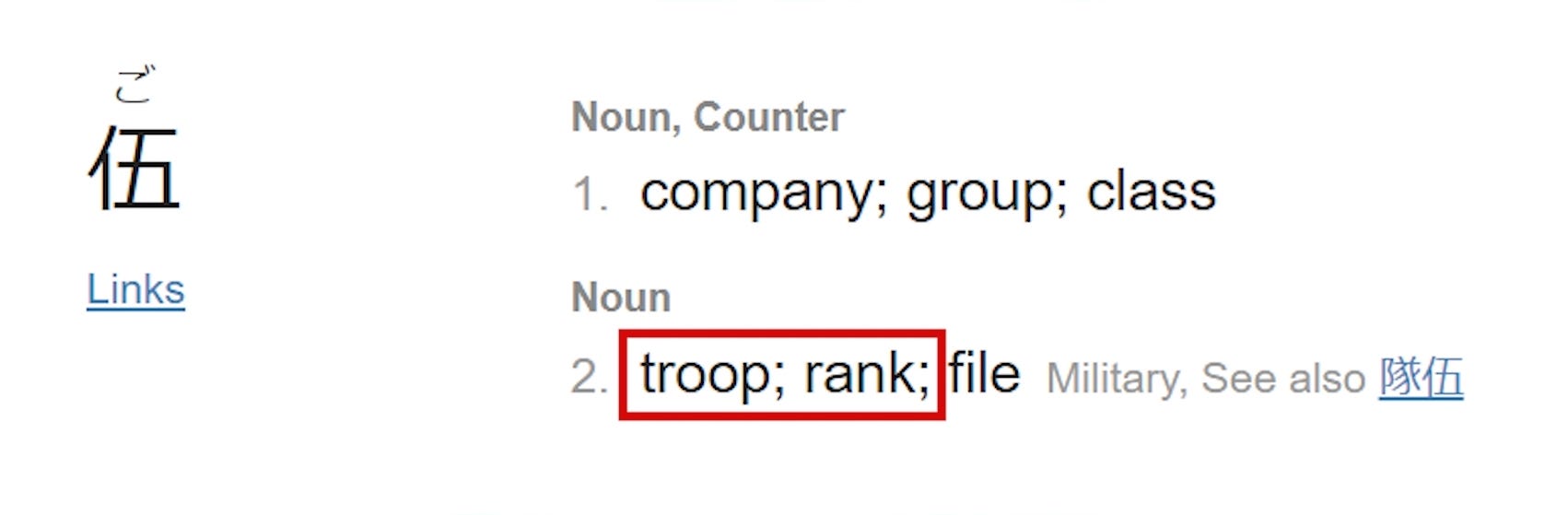
Five in Japanese is pronounced “go” (ご) and looks like this: 五. However, the formal way of writing five looks a bit different (伍). Where have we seen this Kanji before? Correct? Mako reactor no. 5. Incidentally, this specific Kanji is also used in a military context and means “troop” or “rank”.
Very fitting for Beagle stamp, isn’t it?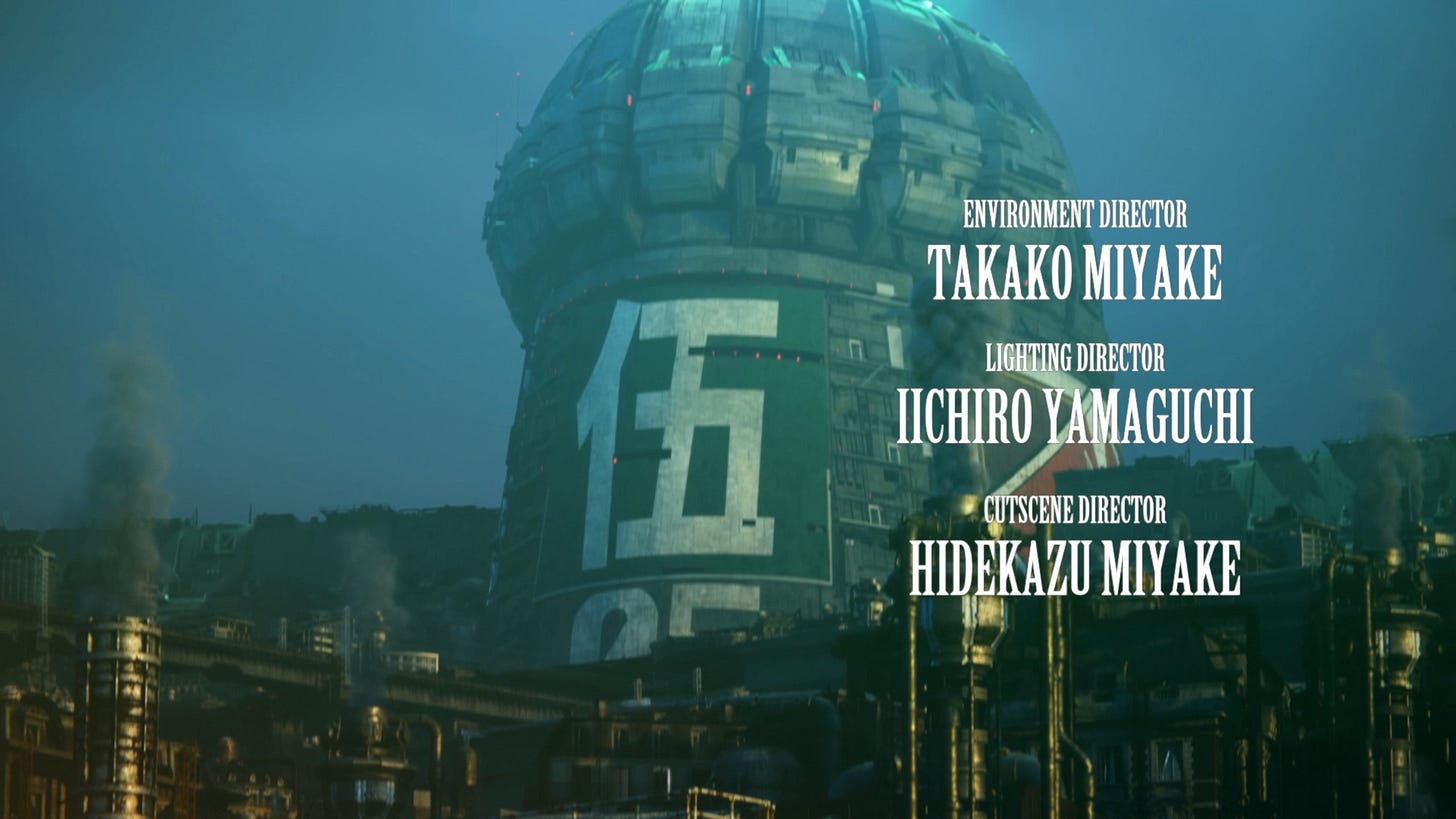
What about the number four on Terrier Stamp’s hat? Four in Japanese is pronounced as “yon” or “shi” and looks like this: 四. The same as on reactor no 4. But that’s not the interesting part.
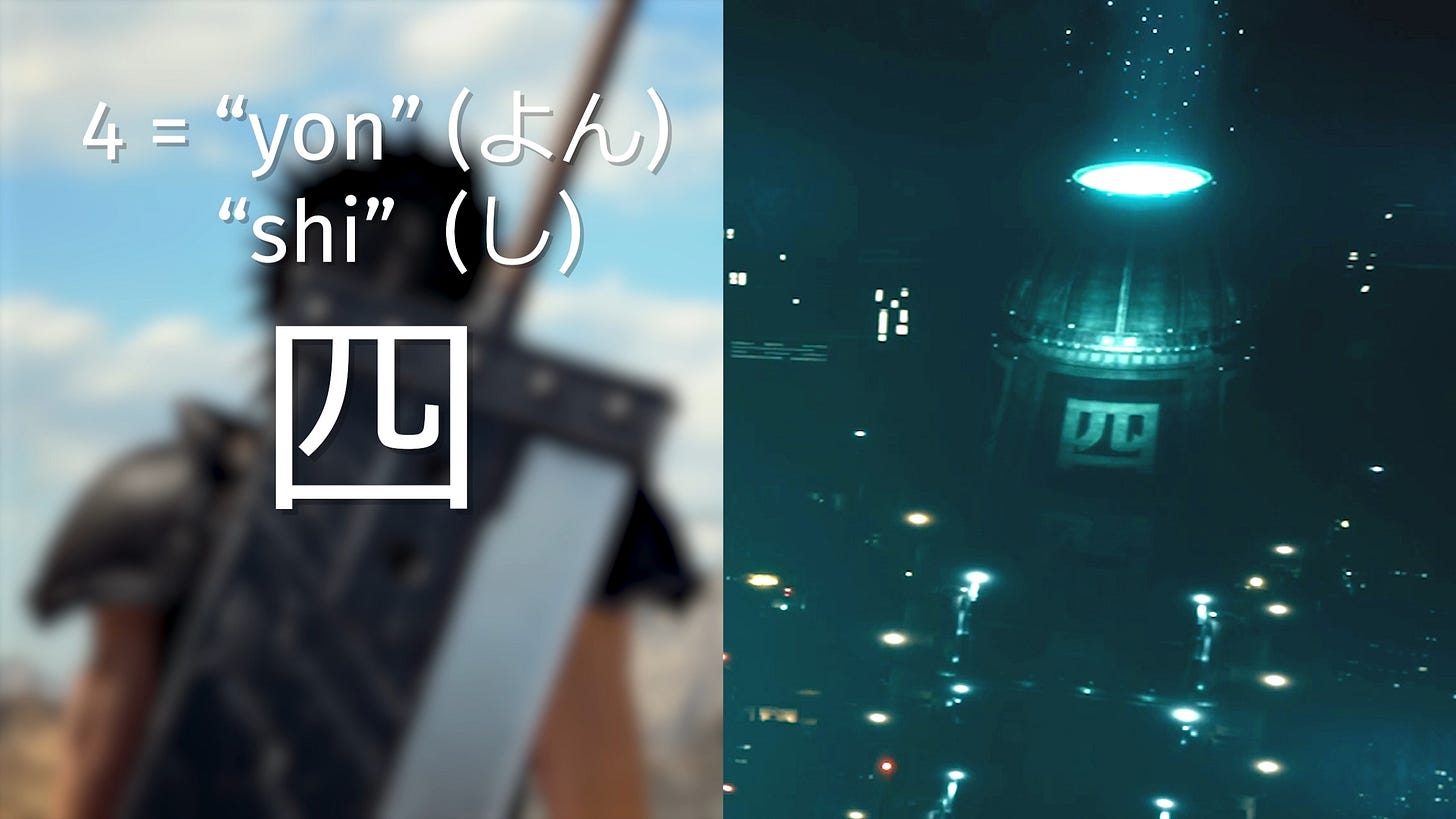
Some of you may already know this but there exists another Kanji that is pronounced as “shi” [死] and its meaning is…
drumroll…
“death.”

If you needed yet another hint that Zack is not as alive as the game may let you believe, there you go.
To summarize: Beagle stamp represents fake Cloud in the world of the living and Terrier Stamp stands for veteran Zack travelling the afterlife with a newfound purpose.
Alright, I think we’ve exhausted Stamp down to the last drop. Let’s move on.
Strange Midgar
The next thing we’d like to bring to your attention can be found in the same scene, just a few seconds later. Yes, you guessed it, it’s this strange version of Midgar which is revealed after the Whisper dome disappears into golden particles. It shouldn’t be as much of a controversy, but it is, and we need to talk about it.
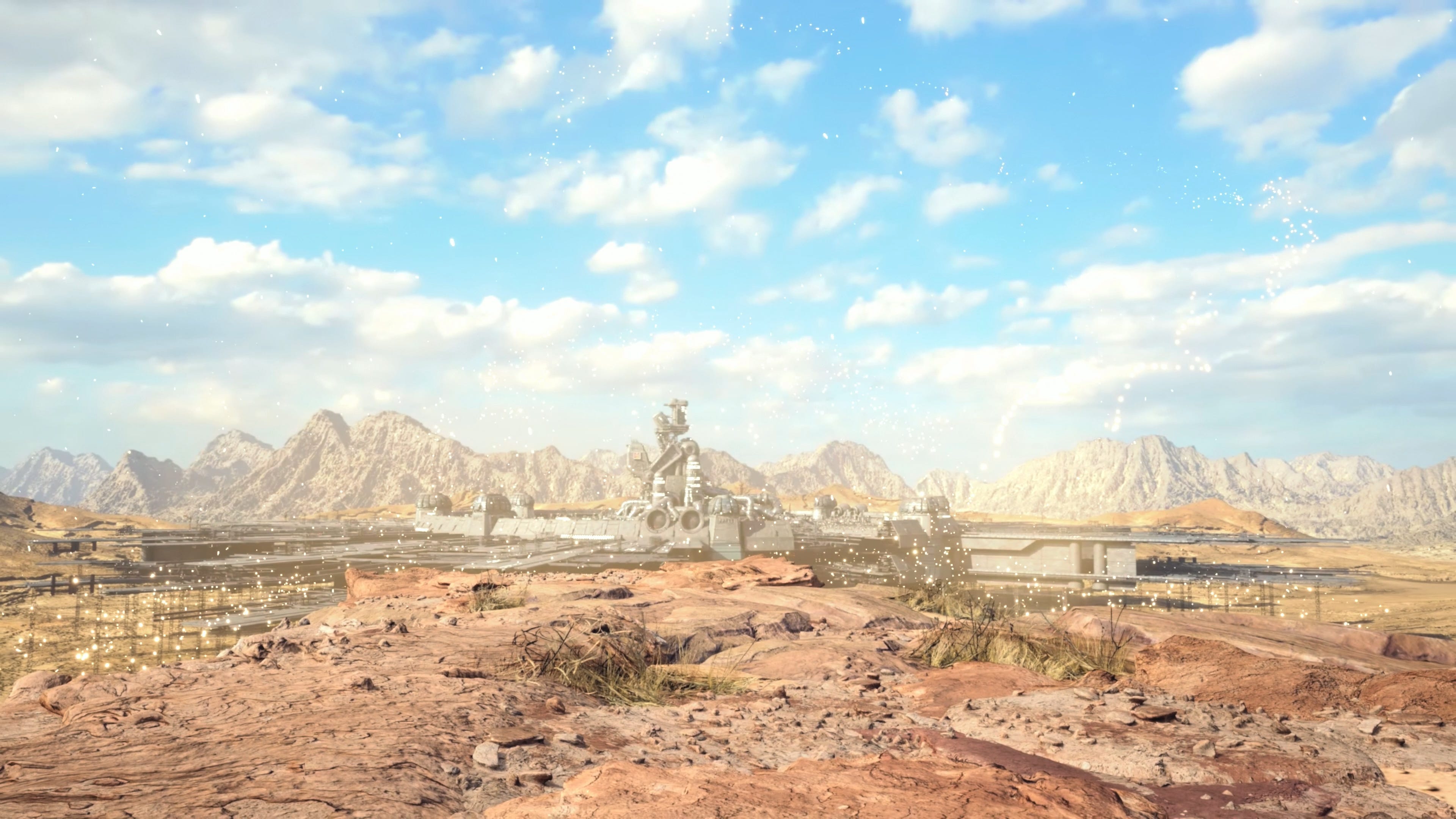
The controversy
The Midgar we see here in the distance exhibits some curious differences to the usual Midgar design.
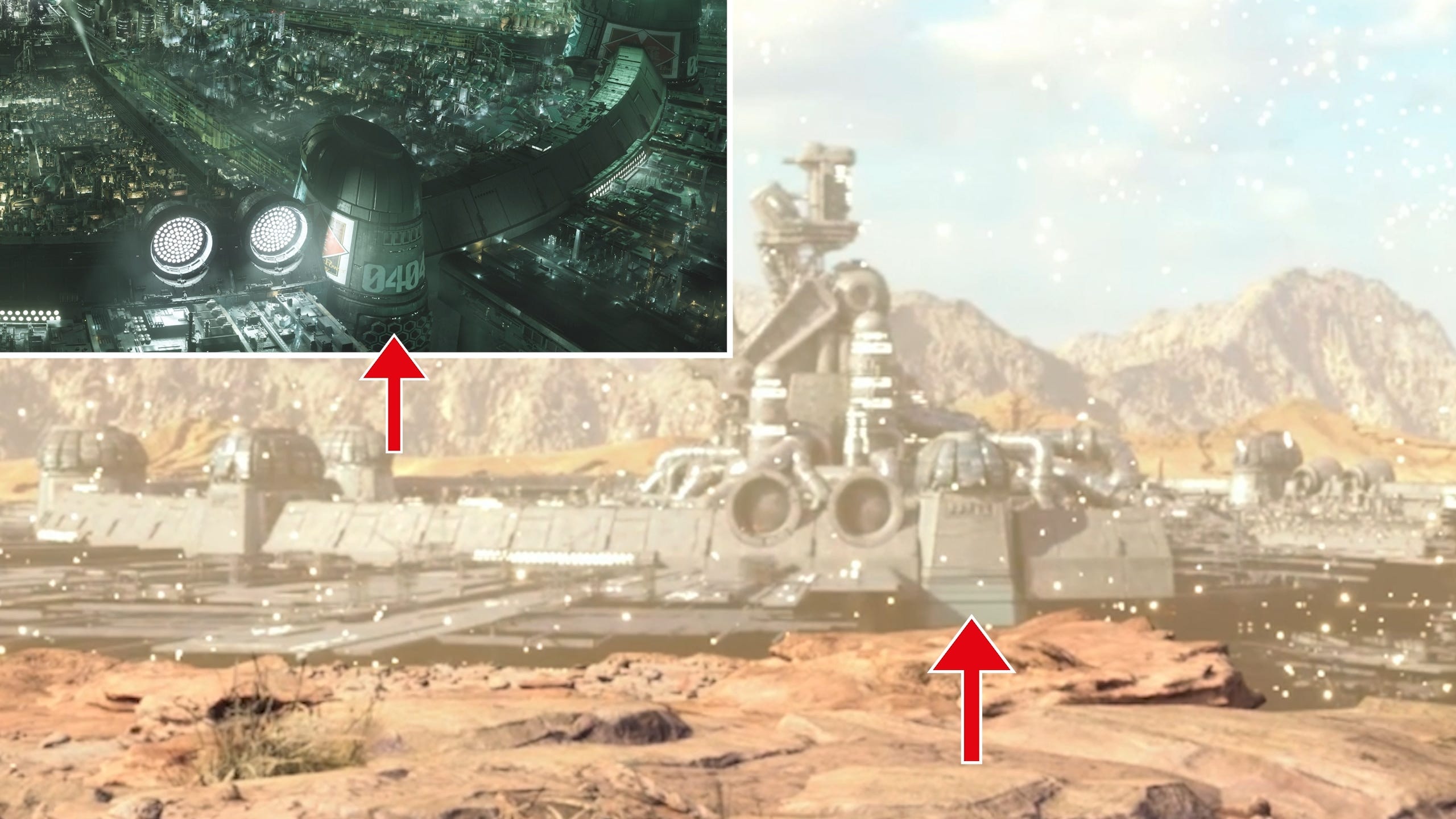
Upon discovery, this led many to believe that this is evidence or even proof for Zack being in a different timeline, one where Midgar has square reactors instead of cylindrical ones. The concept of multiple timelines is probably the most controversial conversation to be had among all topics surrounding Final Fantasy VII Remake’s mysteries. While the square reactors alone could be evidence enough in a vacuum, committing to multiple timelines without addressing all other factors involved would be disingenuous.
But this is probably why you’re watching our Game Analysis series in the first place. We don’t stop at surface conclusions. We dig deep and try to unearth the truth or at least to get as close to it as possible.
The arguments
To be clear: we don’t subscribe to any theory involving multiple timelines. At least not in the traditional sense. But that’s for later. Let’s go through the arguments against square reactors being relevant.
First of all, this detail is too much in the background for it to be a deliberate marker for a mystery. All changes relevant to the newly established mysteries are always presented in the foreground, acknowledged by the game or even the characters.
The changed Stamp bag,

Zack's ending scene knowledge Aerith shouldn’t have,
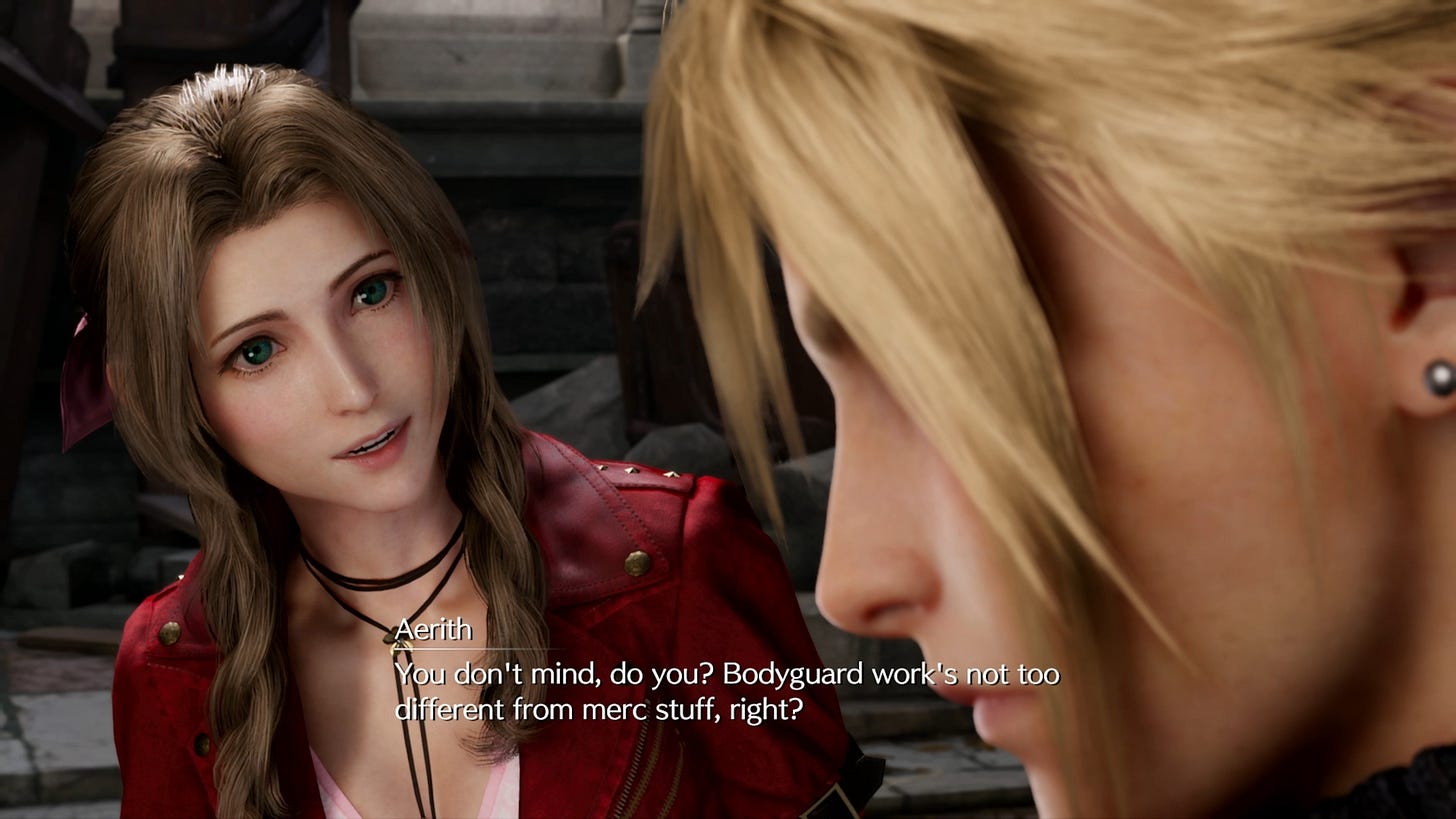
Confrontation with Reno in chapter 8 Aerith’s capability to transfer memories,
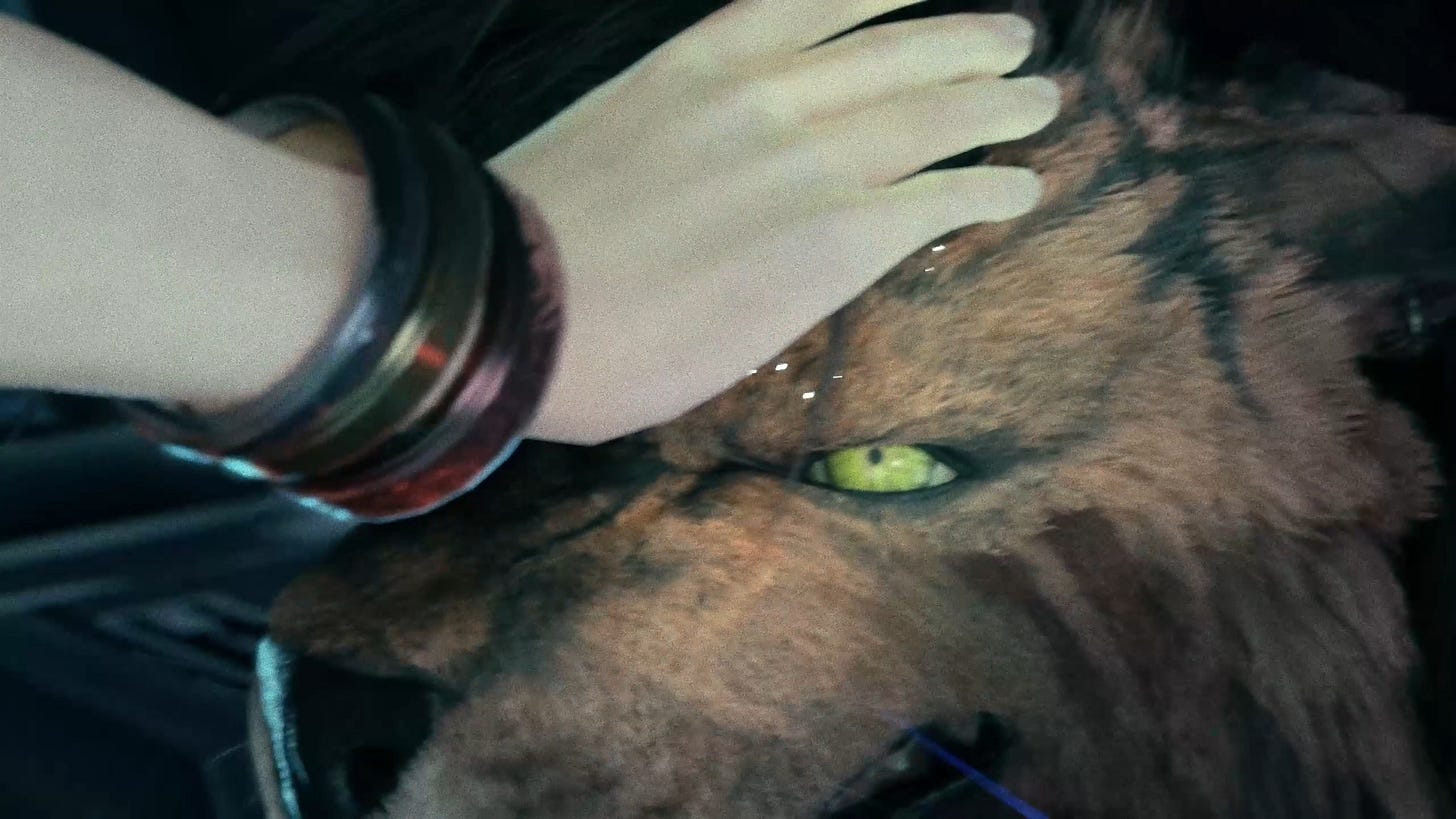
Chapter 17, Shinra building floor 66, Hojo's laboratory Sephiroth’s additional appearances,
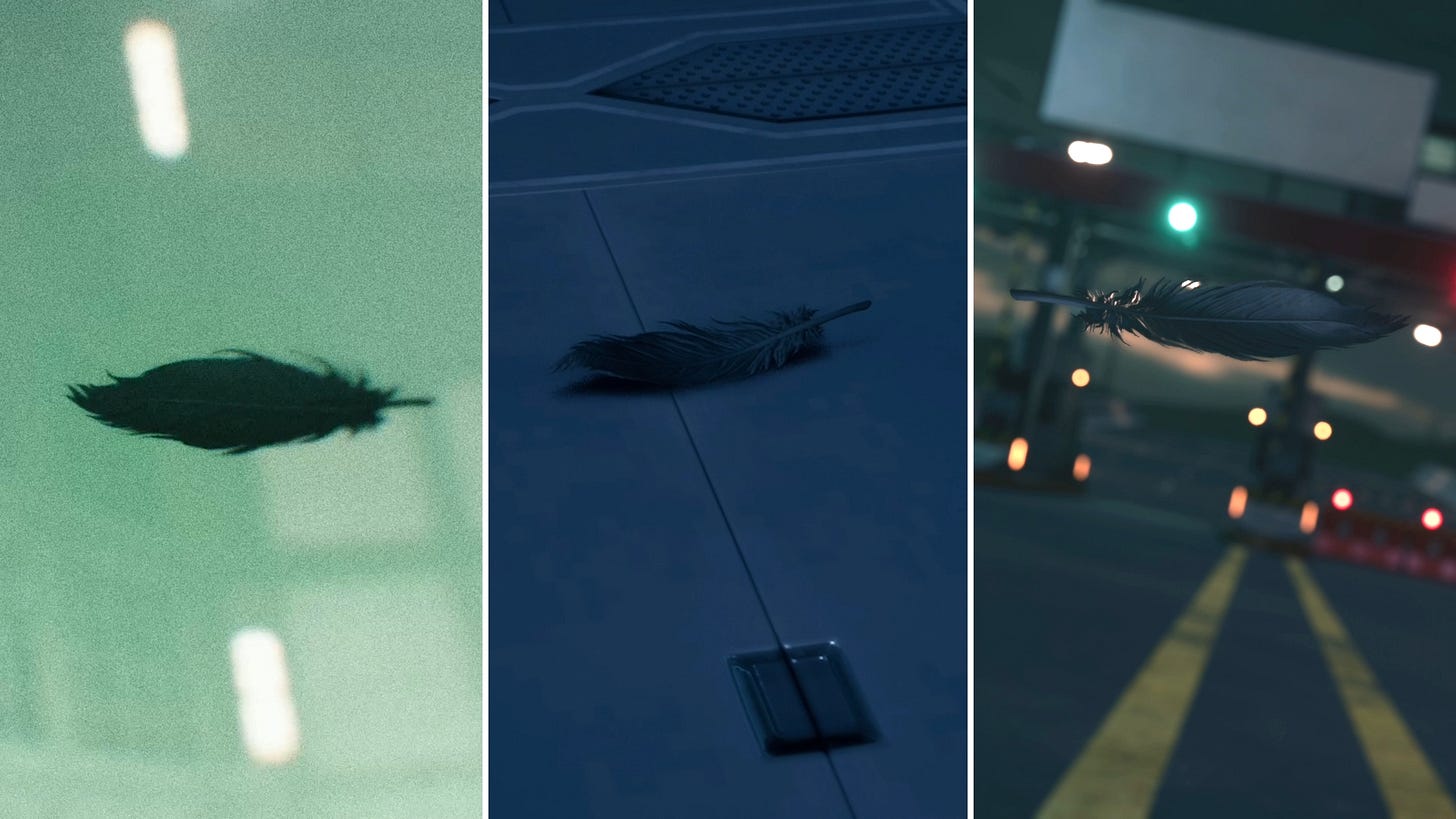
Chapter 2, Sector 8 alleyway Sephiroth’s feathers,
Chapter 1: Mako reactor storage — Chapter 17: Hojo's laboratory — Chapter 18: end of expressway Whisper interferences,
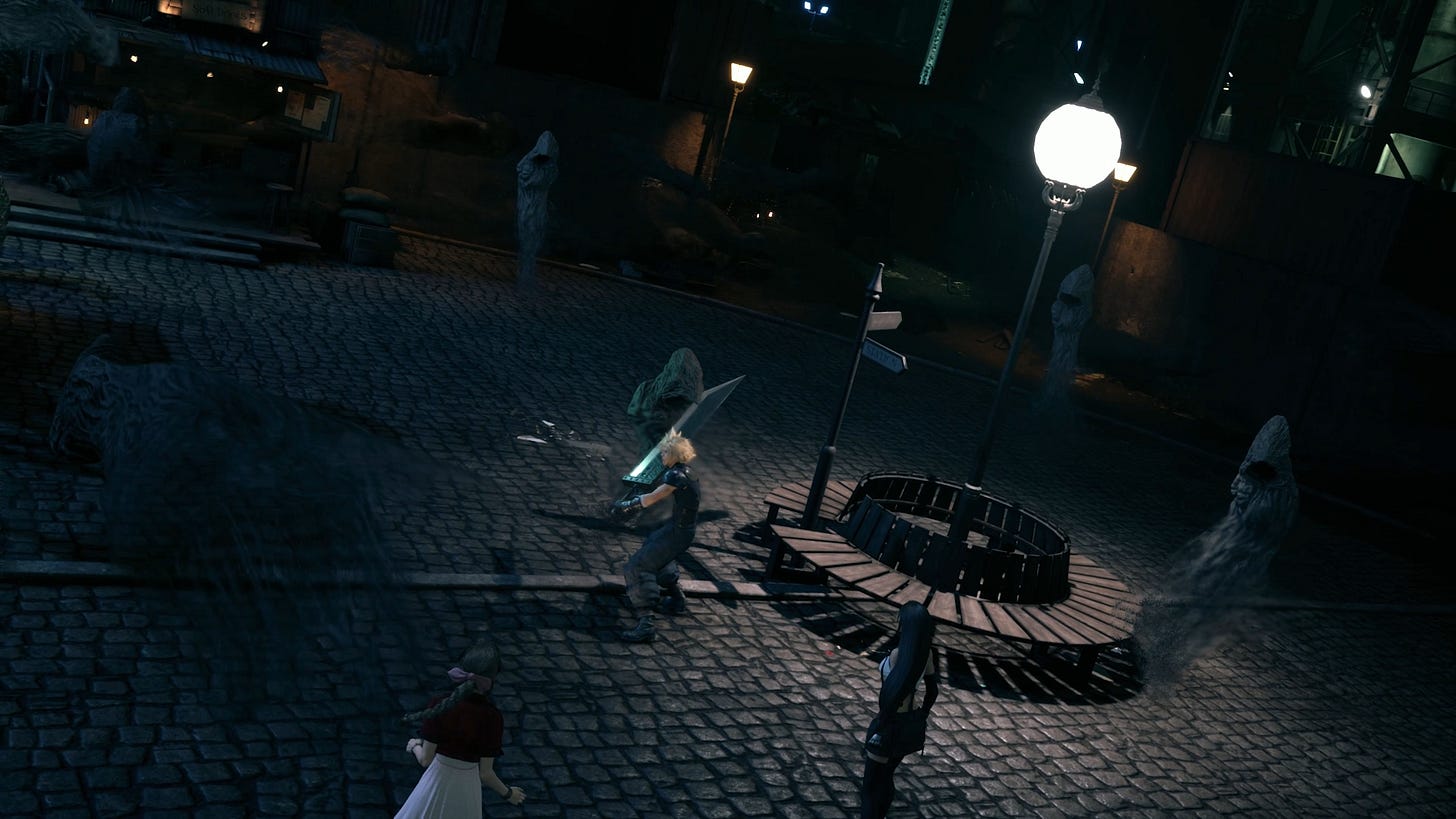
Chapter 12, Sector 7 undercity train station plaza their nature and how they operate,
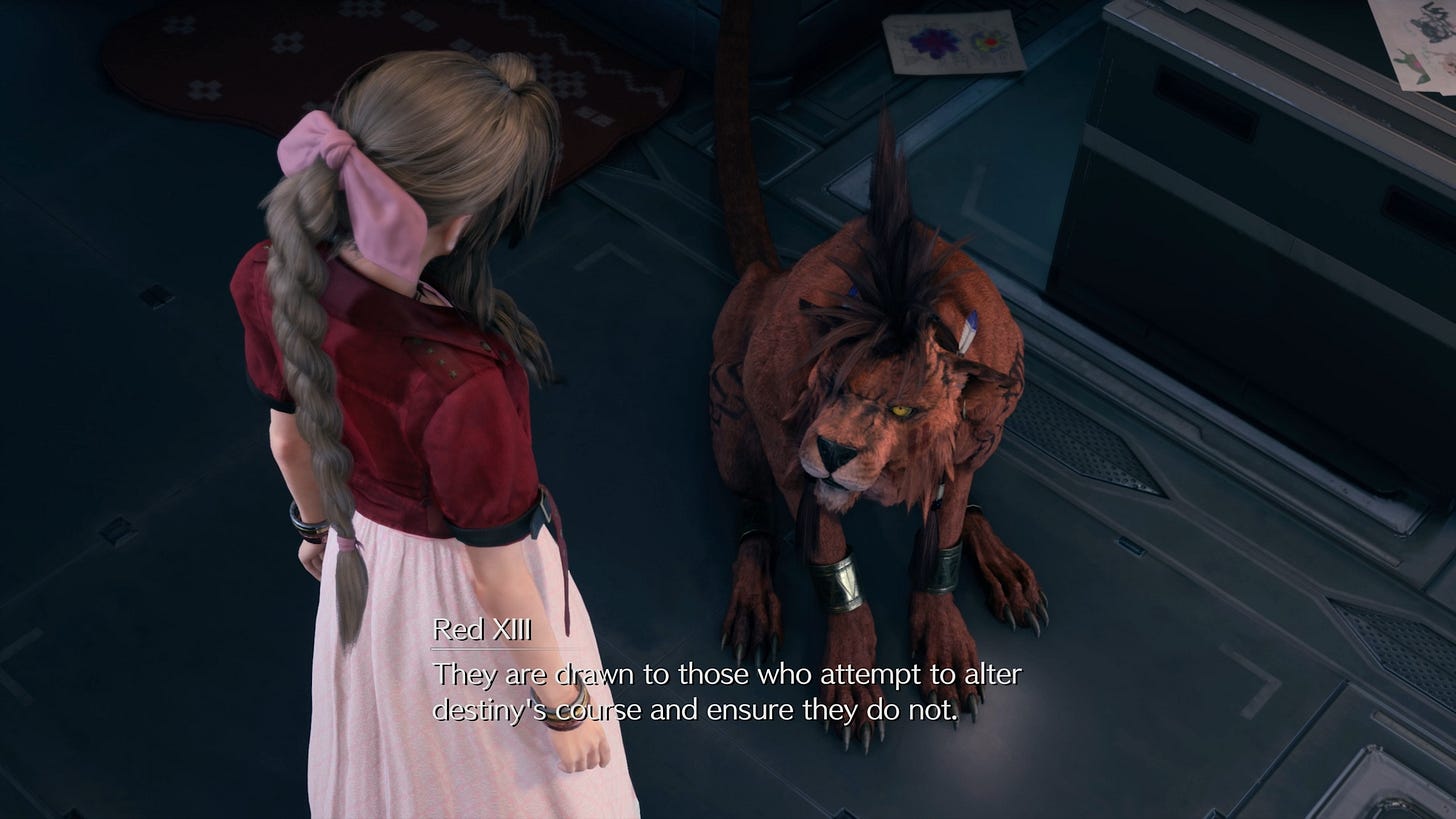
Chapter 17: Shinra building floor 65, Aerith's former home Cloud’s visions, PTSD moments, flashbacks, and many more.
Vision triggered by touching Marco — PTSD episode in Sector 8 — flashback to childhood in Reactor no. 1


When watching this scene normally, it’s nigh impossible to notice any difference to the normal Midgar. Only people who freeze-frame this scene and search for any clues would find this detail. So, if this change was deliberate and relevant to the story, they would have specifically showcased this version of Midgar in additional scenes showing several close-up shots, for example.
Second, there are many more design changes to be found, and they make even less sense. But first, let’s take a closer look at the square reactor bodies. They barely exhibit any details but still don round exhausts at the top, just like the reactors we know from all previous iterations. They also lack a number denoting the sector they provide electricity to.
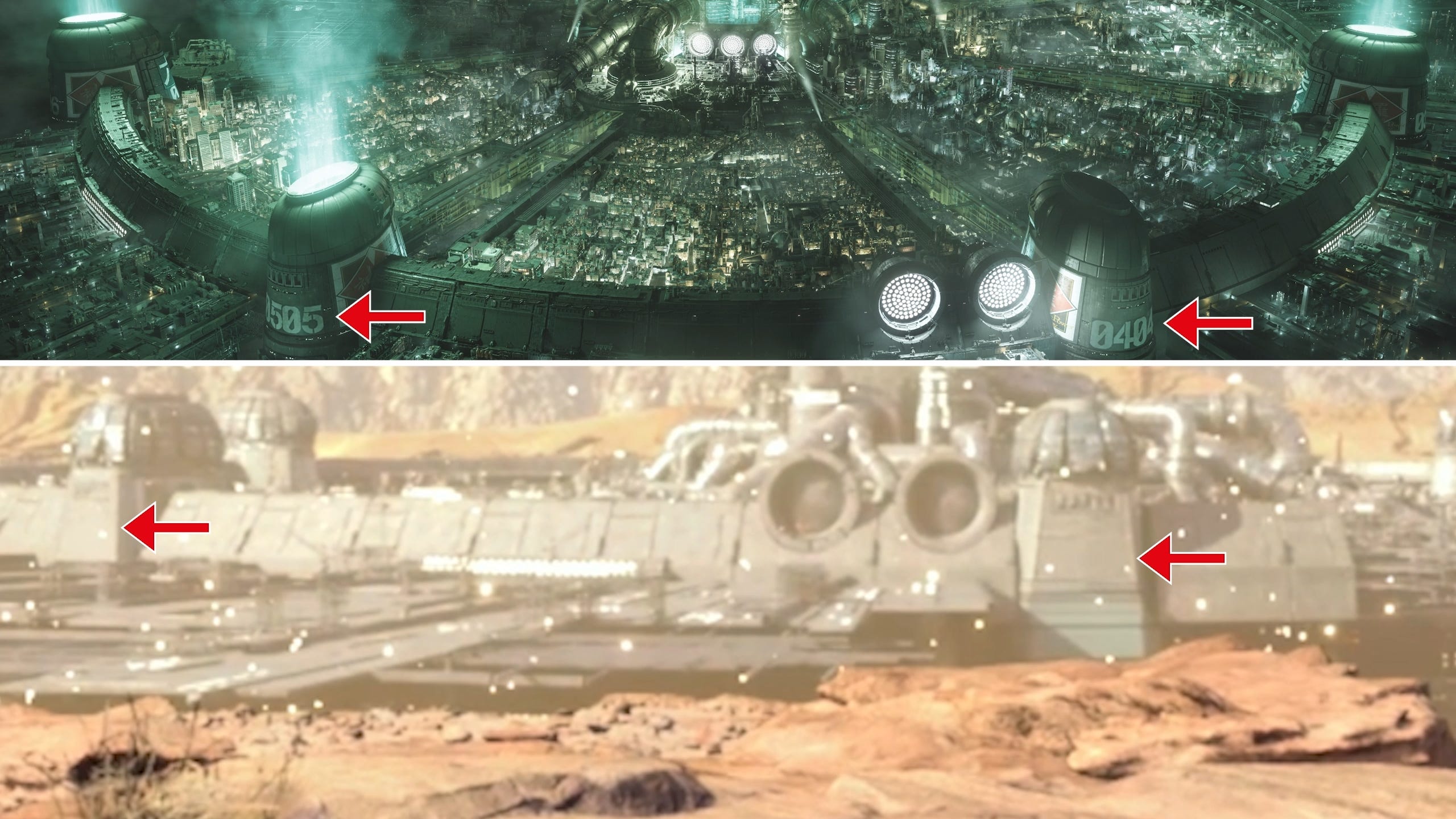
Furthermore, thanks to the thick outer wall and the square shape of the reactor bodies, the Shinra logo on their side is mostly covered and thus irrelevant. The original round shape leaves some space at least.
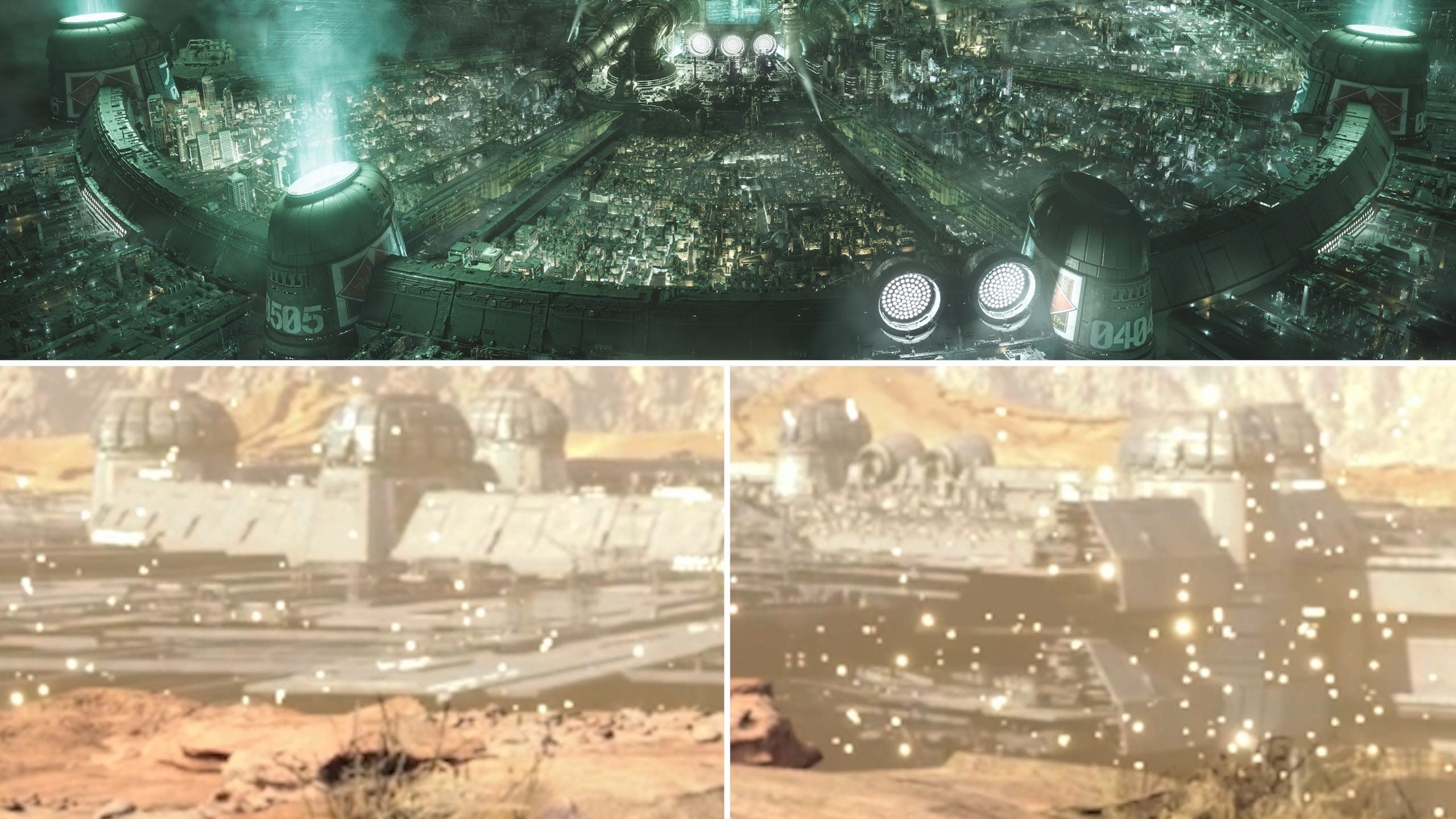
We also cannot make out any of those small platforms floating above most sectors, which are a part of all previous iterations as well. Why would they be missing all of a sudden?
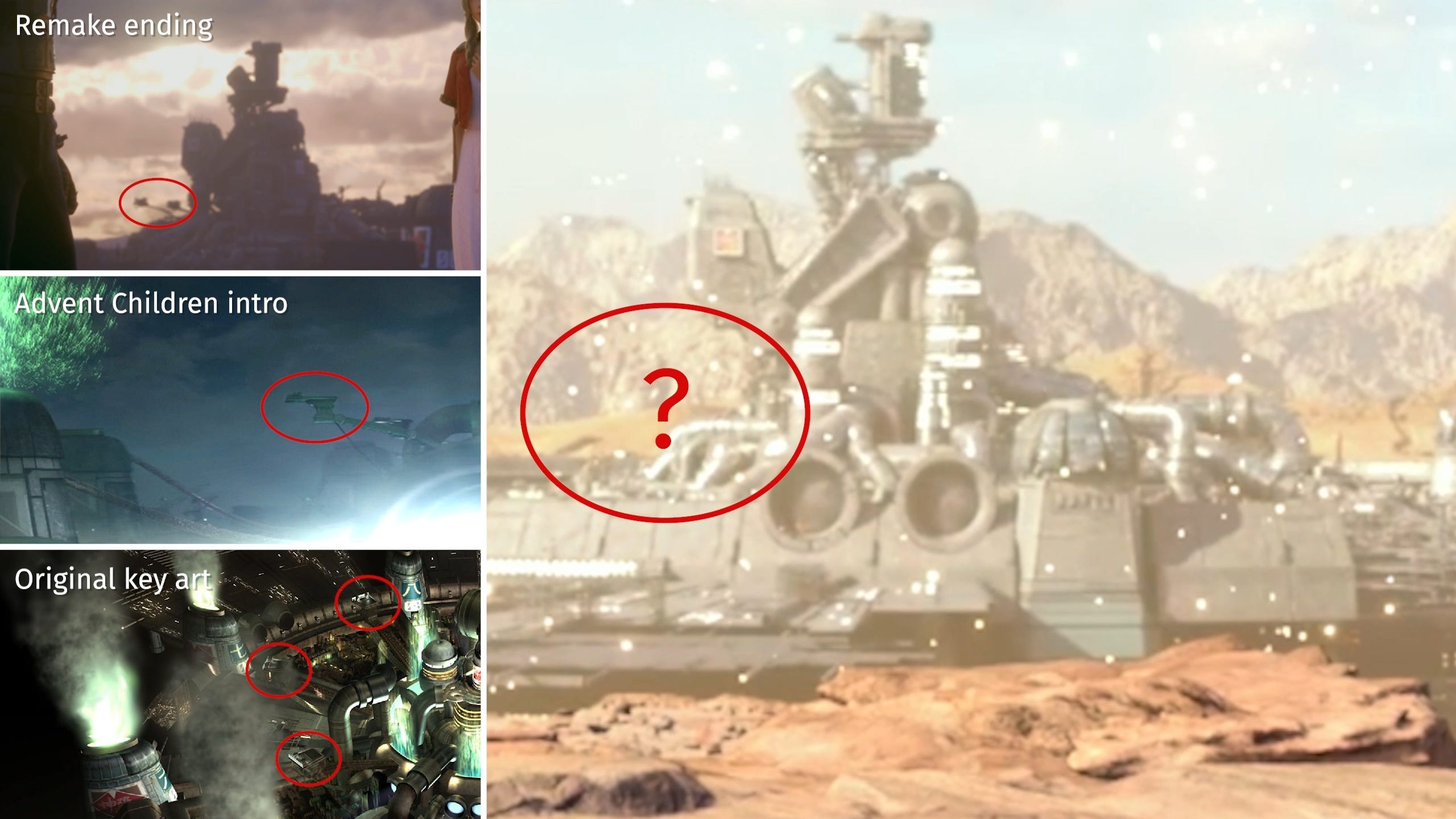
Maybe because we cannot see them in Crisis Core either and the designer of this version of Midgar took Crisis Core’s Midgar as a template?
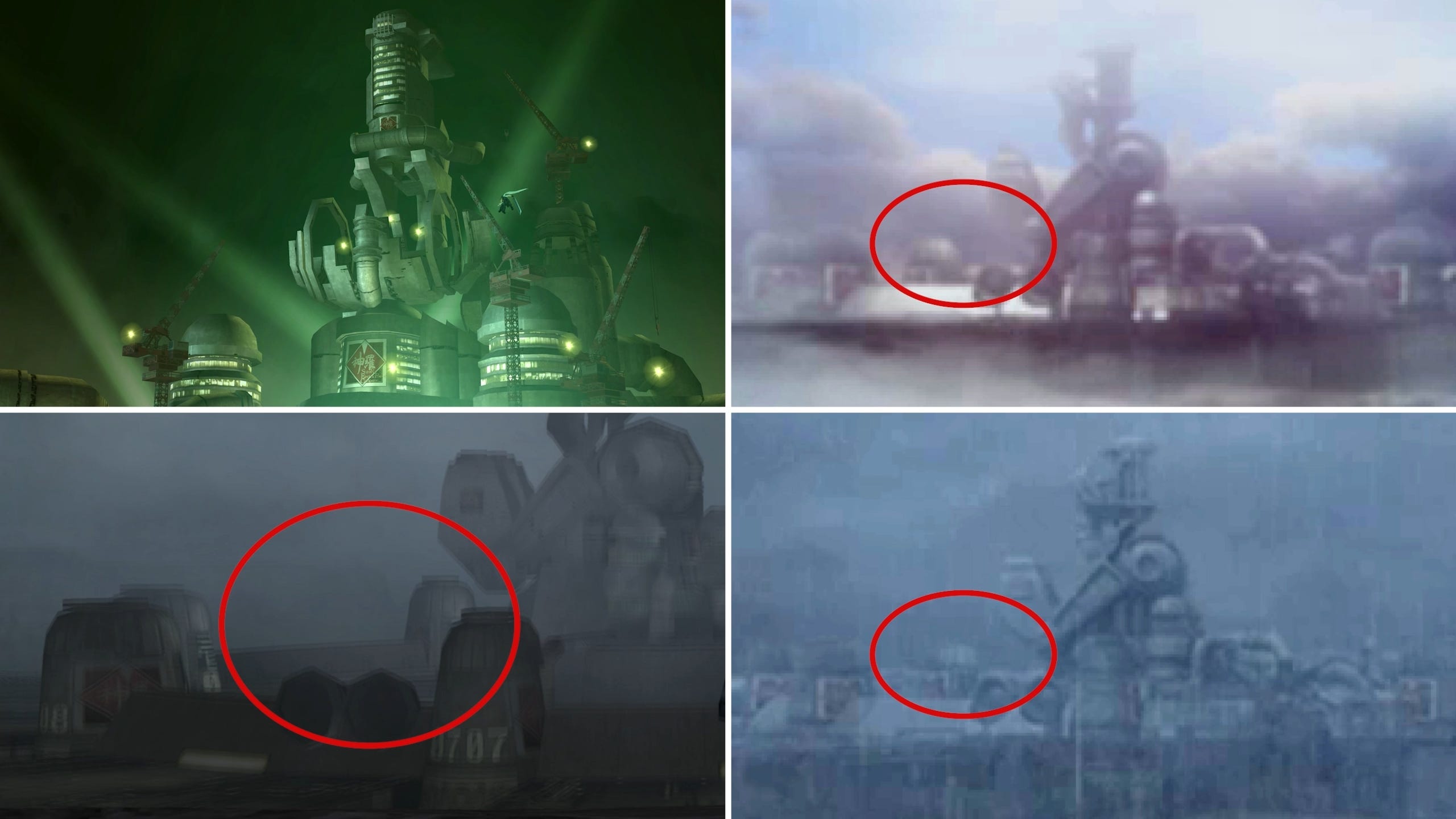
To be fair, Midgar is too low-poly in-engine and too low-res in the FMV for such a small detail to even matter. Although, Crisis Core’s Midgar still contains round reactor bodies...
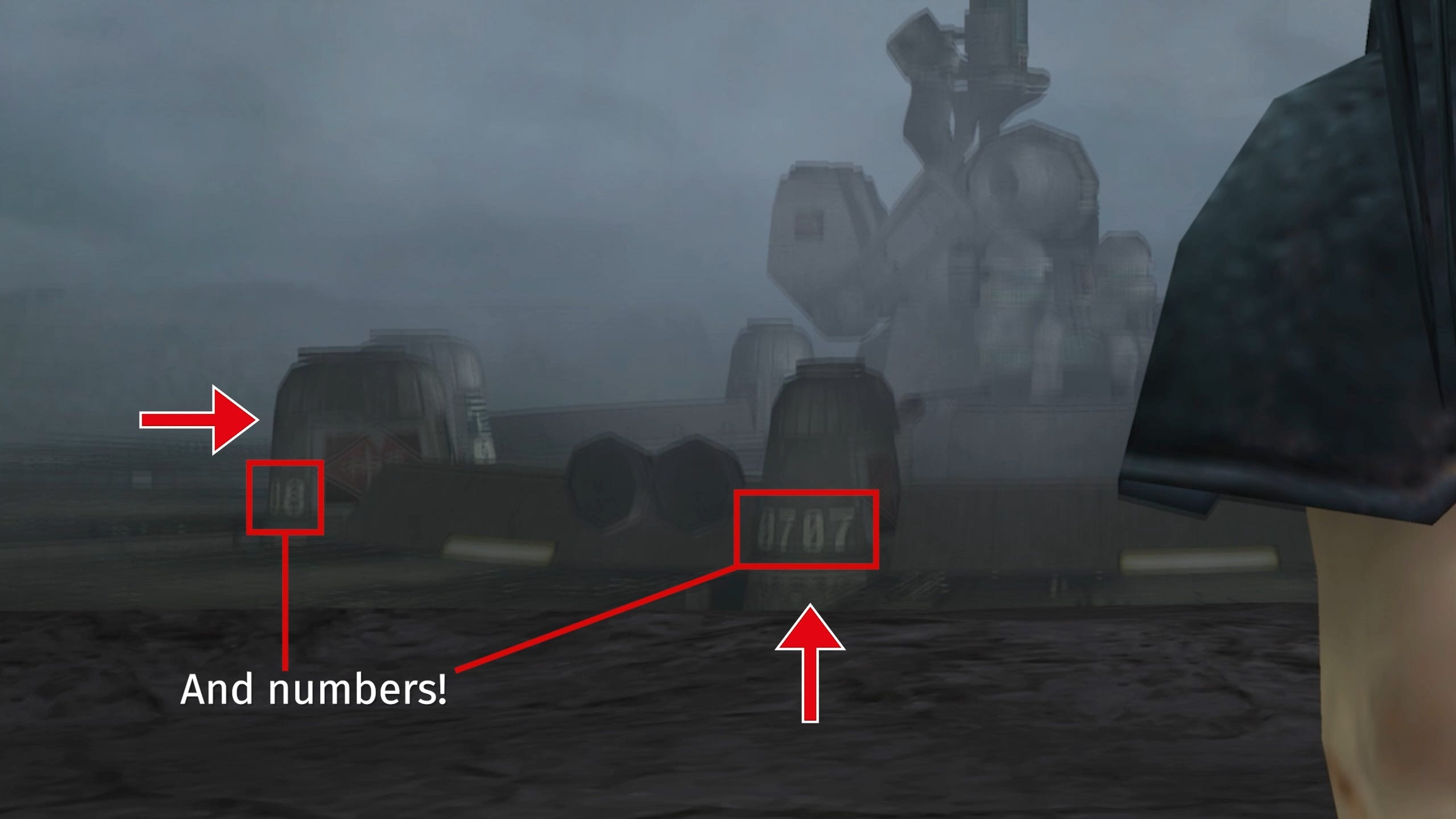
But that’s not all.
And the most questionable change of all is—wait for it—the second plate layer! Yes, you heard correctly, there are two layers of plates now, including the unfinished outer plates.


And if you look closely, the broken sector 6 plate looks identical above and below! As if the one responsible for modelling this version of Midgar just copy & pasted the layer for some strange reason.
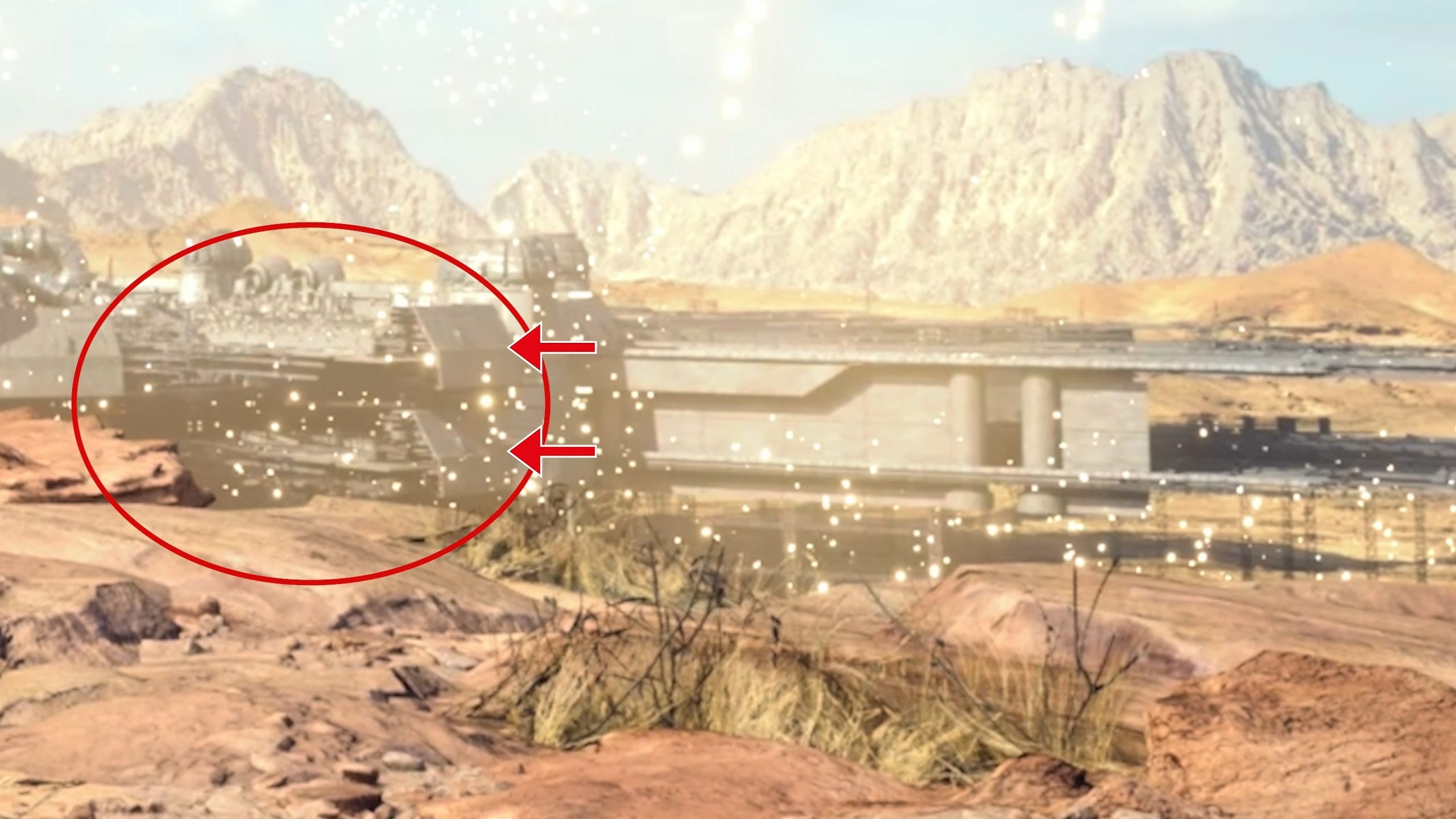
Even if this weird Midgar design was made deliberately this way to exist in-lore, it would completely defile such an iconic and well-established location design. We also weren’t able to come up with reasonable explanations for why those specific changes would make sense other than: “It’s just different, ya know?”
Third, the Midgar we see in the background while Zack is dragging Cloud towards the edge of the cliff looks entirely normal again, identical to the usual design visible behind Cloud’s group in their ending scene.
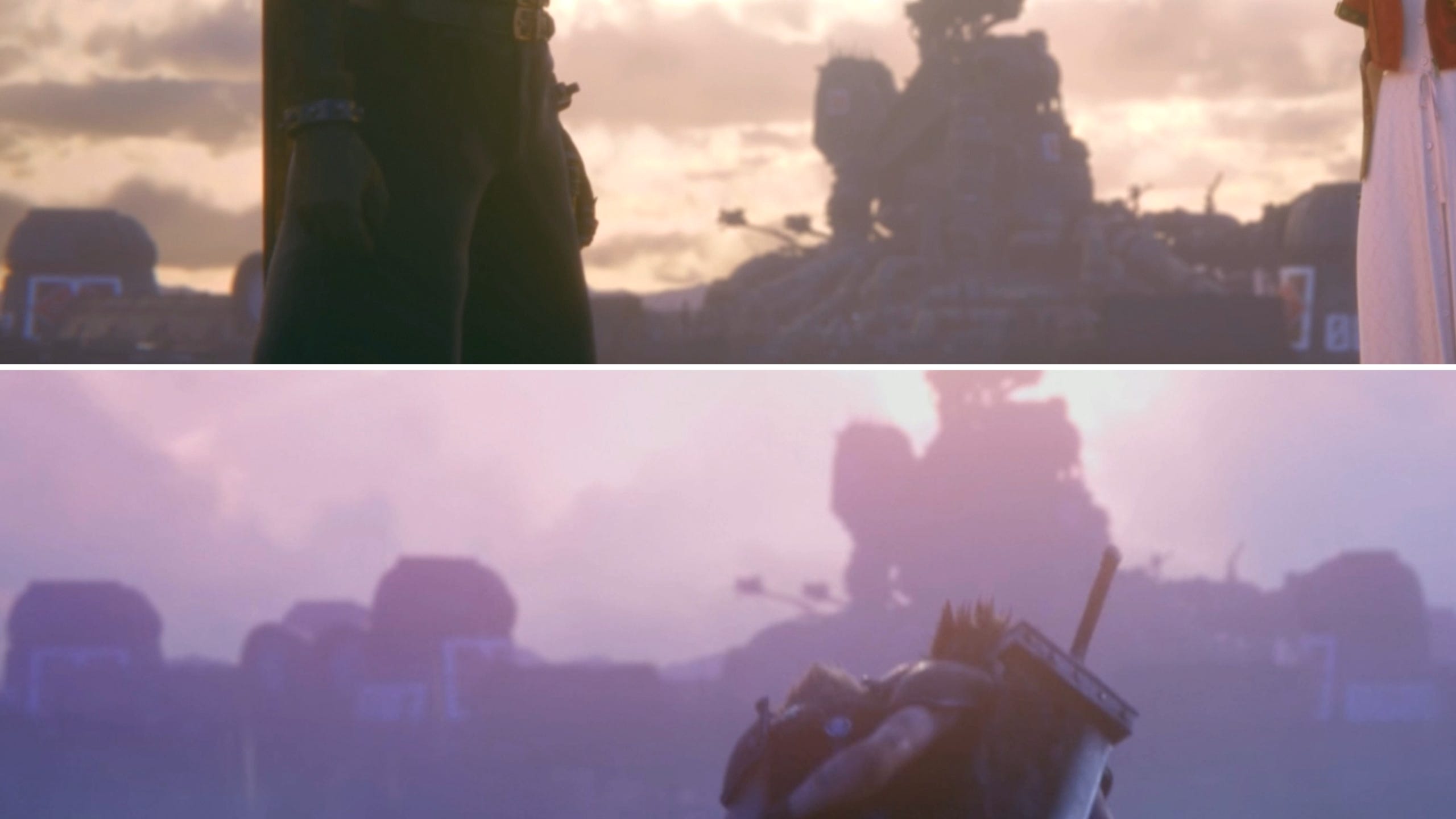
But there’s more. If you look very closely during the Zack revelation scene, you can make out the very same details through the smoke of Whispers as seen after they disintegrate into golden particles.
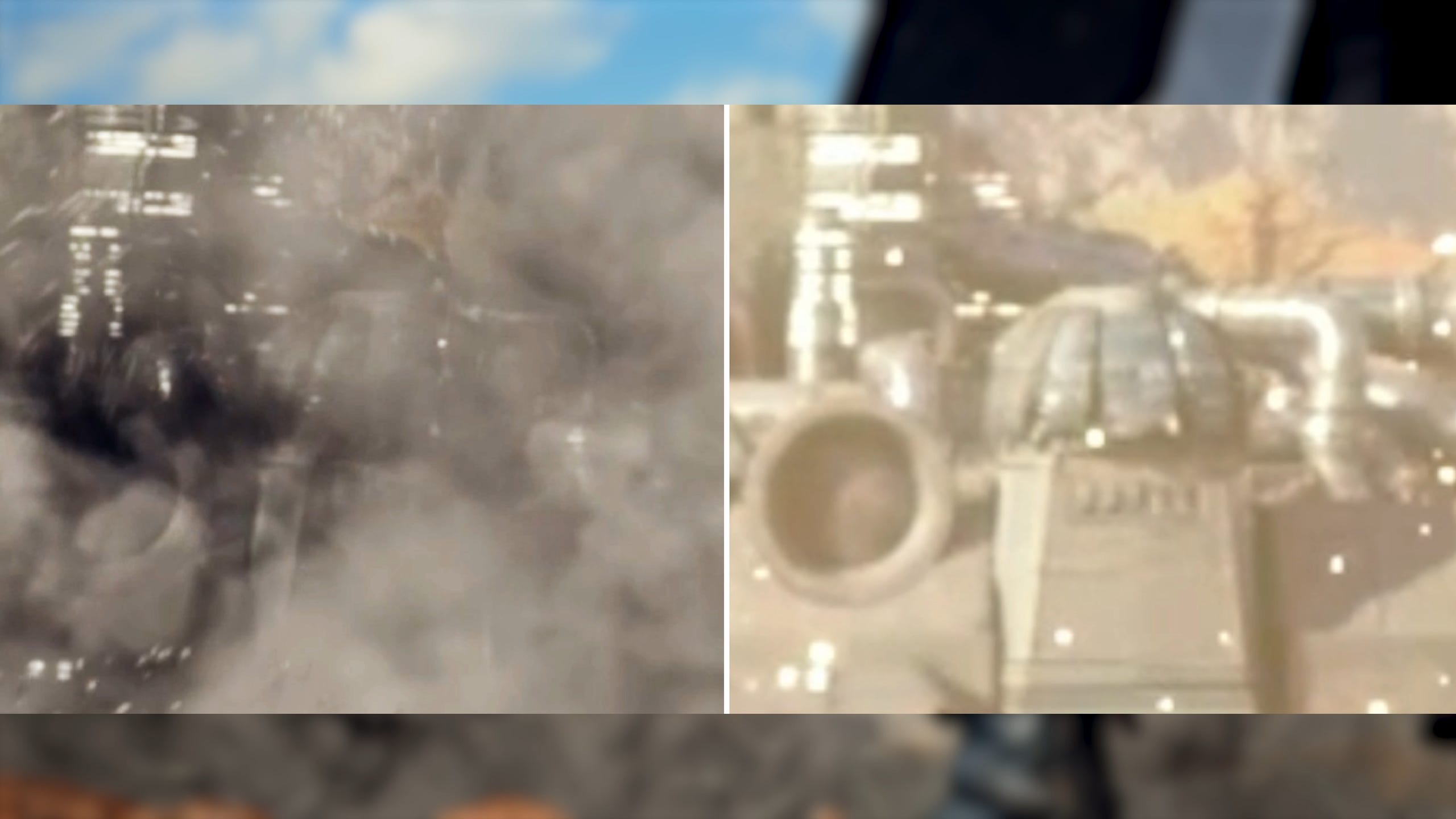
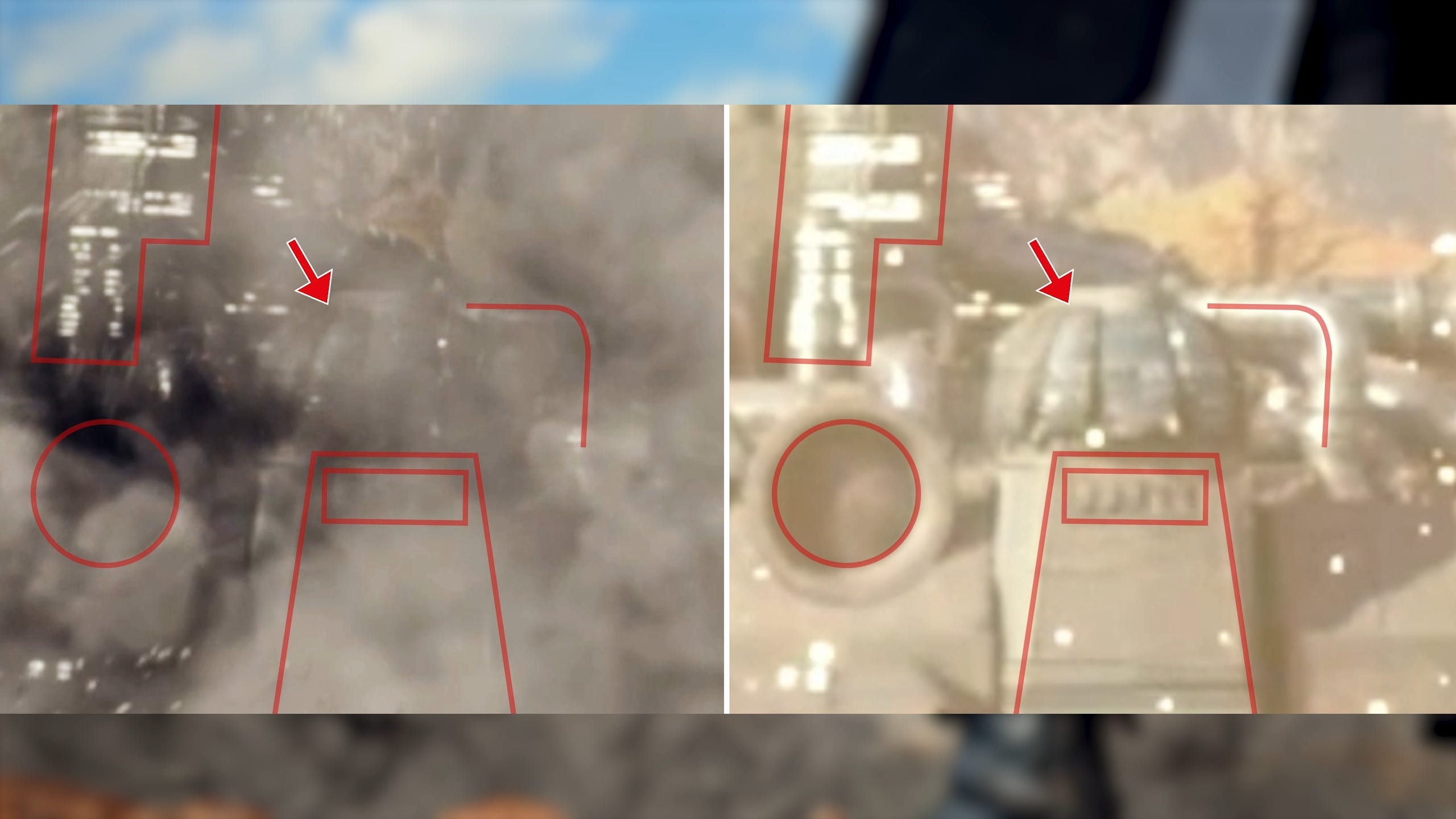
This means, the screwed-up Midgar exists before entering the Singularity and after defeating fate in Zack’s reality, but then looks correct again in the cinematic cutscene, just like in Cloud’s reality.
Lastly, the in-your-face Terrier Stamp is already enough to send the message that something has changed. Before fate is defeated. A change in the design of an iconic location makes therefore no sense at all.
Conclusion
Considering all points above, we can only arrive at one conclusion: someone messed up. Badly. This wouldn’t even be the first instance. Many other heavy mess-ups exist, some even more visible. We briefly mentioned some of them earlier so please excuse the repetition.
We have the broken Sector 6 plate above Sectors 6 and 5 and even above a destroyed Sector 7 in Marle’s ending where people began rebuilding the place.
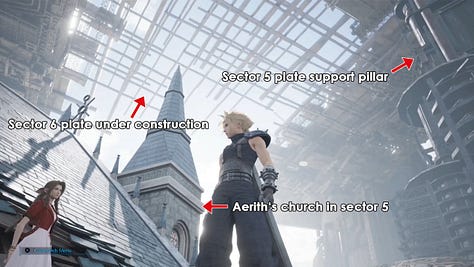
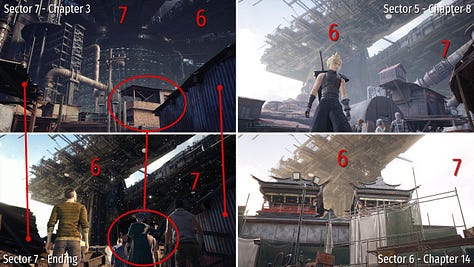
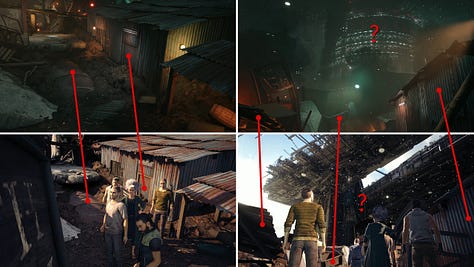
There’s a lone sunlamp floating around in the space of Sector 6’s broken plate but only during the night. Though it’s hard to see as it’s switched off. Probably the reason why it got through QA unnoticed.
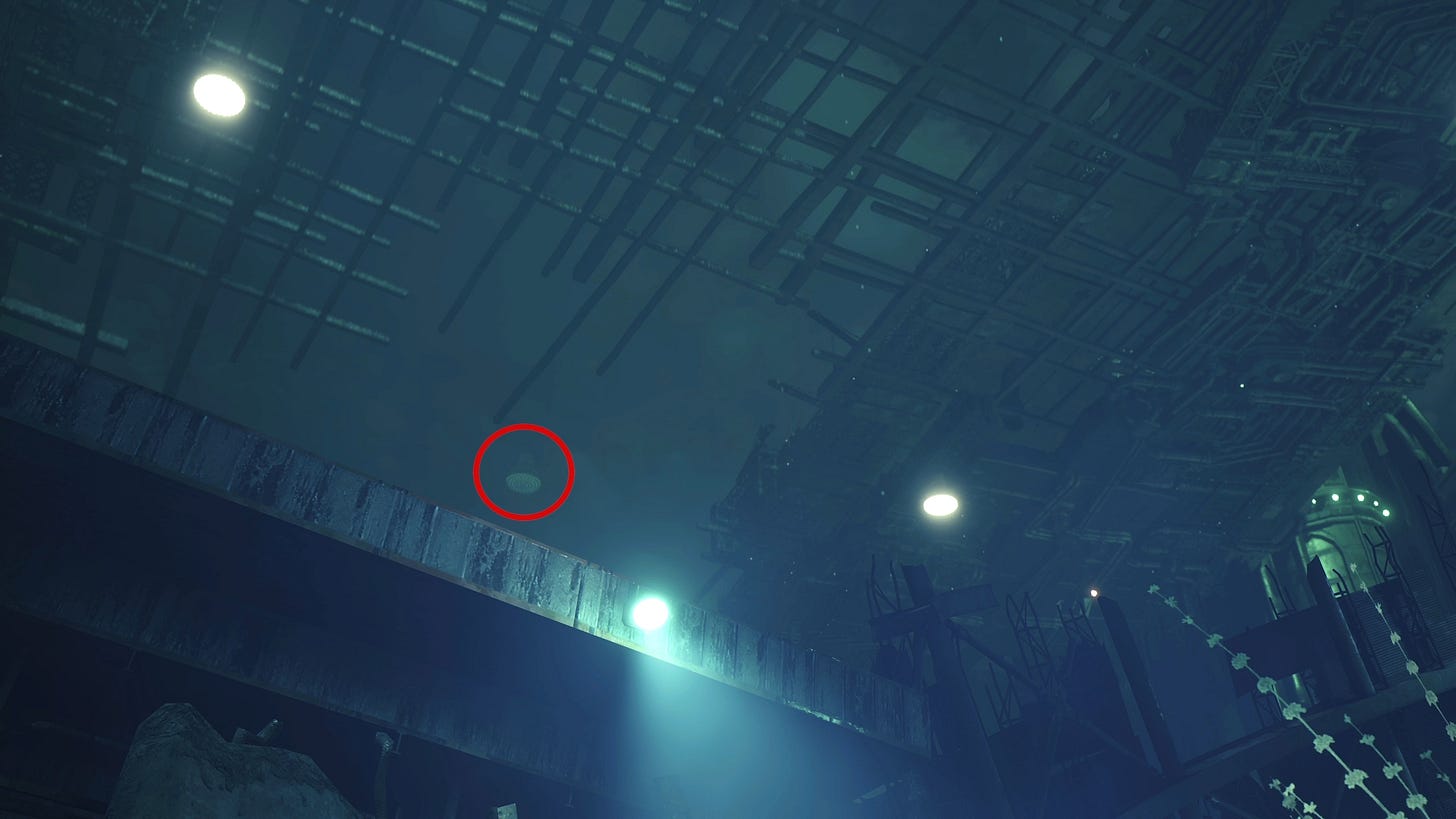
What about the infamous doors at Stargazer Heights? Fortunately, Intergrade now displays the correct texture when up close.
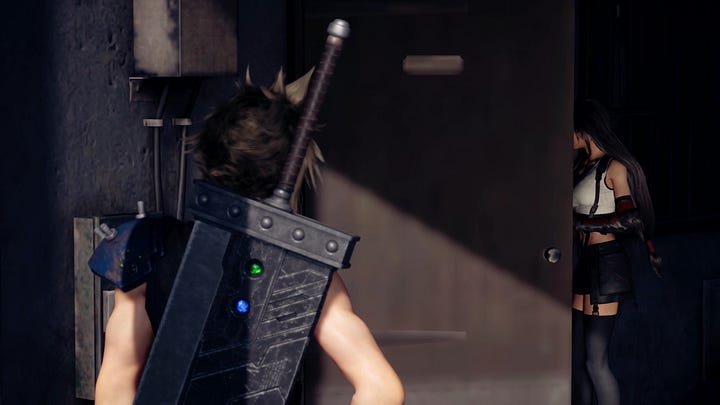
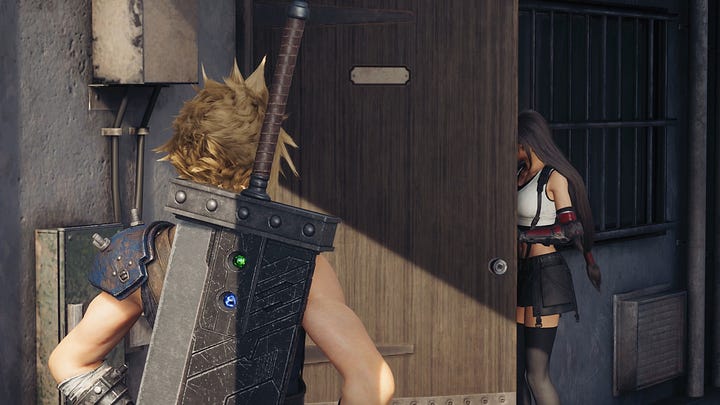
Left: Base Remake on PS4 — Right: Remake Intergrade on PS5 The destroyed Sector 7 is depicted very inconsistently. In chapter 12’s ending cinematic, plate border and unfinished outer plate are both still intact.
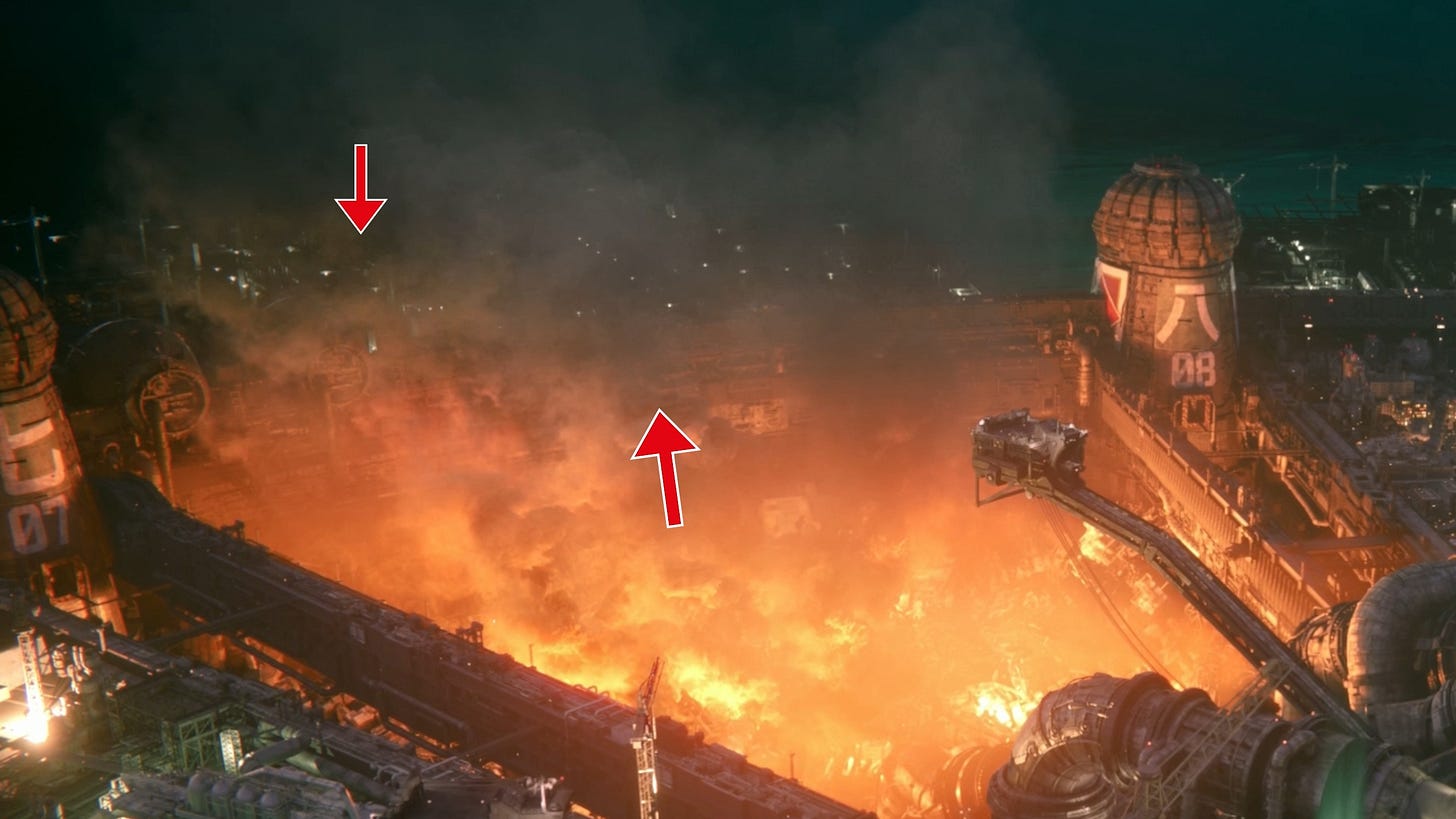
However, from below the slums as well as in chapter 15, everything from Sector 7 is gone and destroyed. Plate, slums, border, and unfinished outer plate.
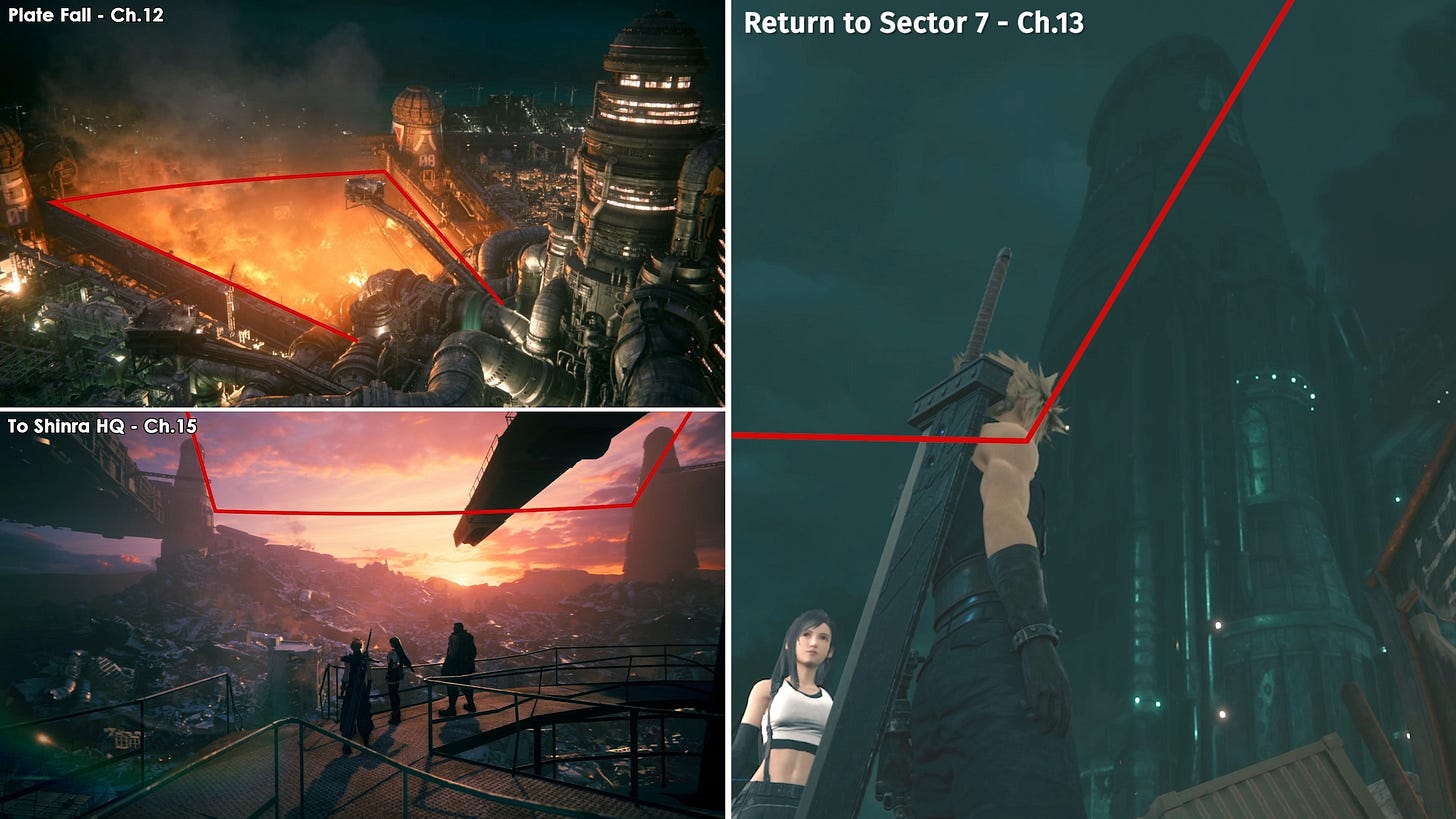
At least we’re able to see the small section of the slums which was miraculously spared.
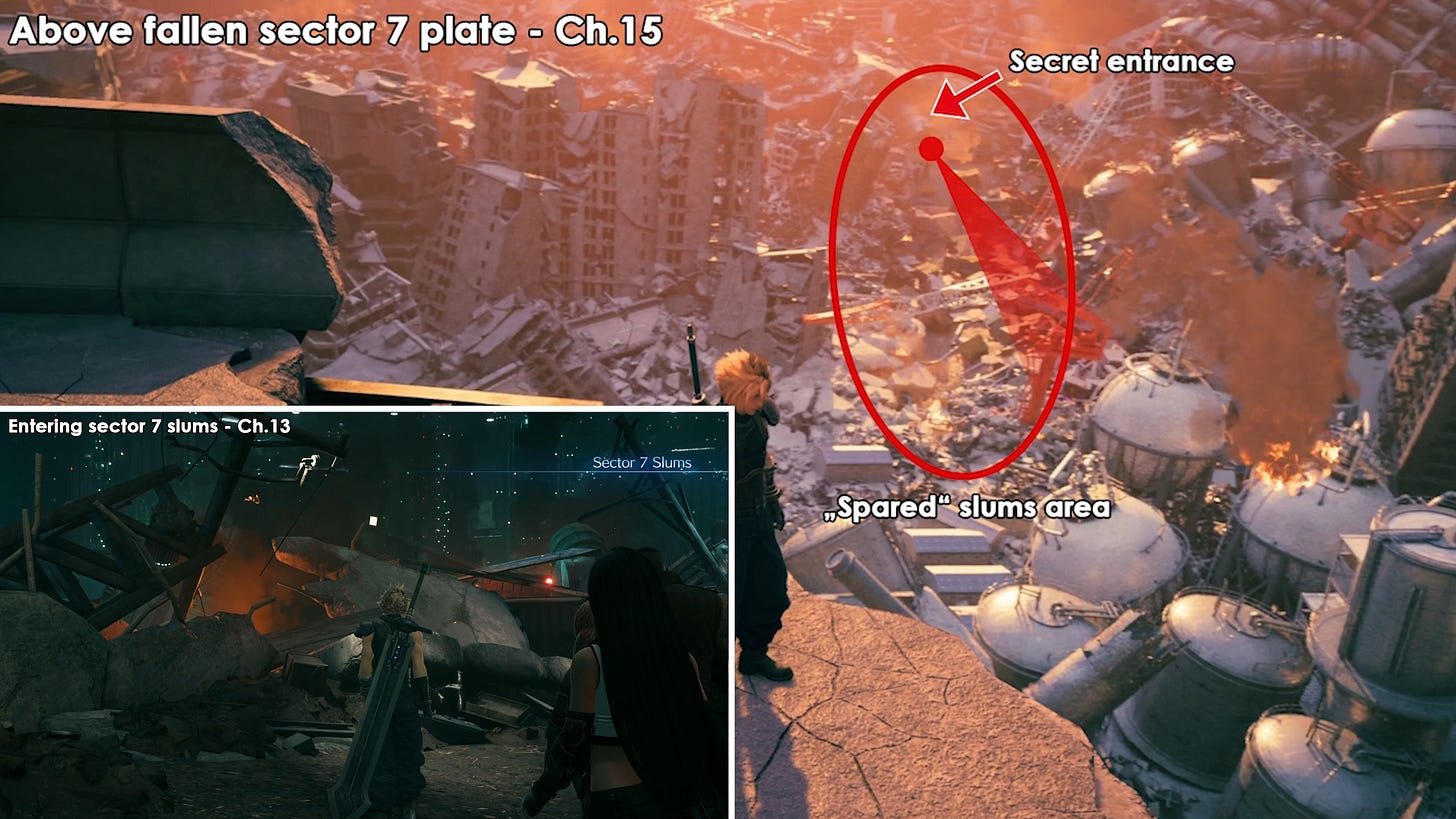
Although, when roaming the destroyed slums in chapter 13, none of the large buildings and plate debris seen in chapter 15 are visible.
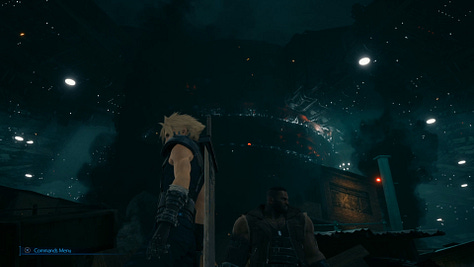
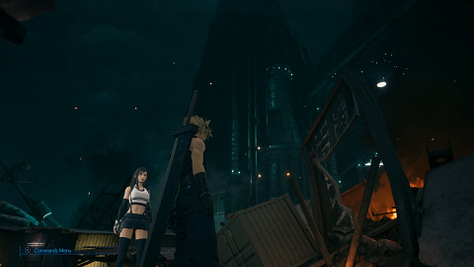
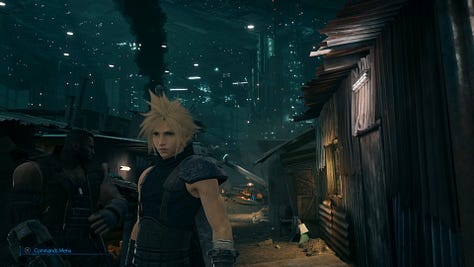
As if they merely rendered the walkable area and re-used the previous skybox minus the plate


There are more, but the mess-ups above should be enough to get our point across.
Like the floating lamp, the mistakes made for this specific model of Midgar are barely visible when watching the scene during QA. Add crunch and pressure under a looming deadline and you have the reason for this mess-up. Furthermore, both scenes with Zack, while looking like in-engine scenes, are actually pre-rendered videos as the PS4 wouldn’t be able to load in an entirely new area this fast. It’s a technique used in other places as well.9
With it being pre-rendered, making corrections is more complicated than just swapping out a skybox and thus most likely not worth it, even if somebody caught this blunder before release.
Also, why even change the design of Midgar anyway? For what purpose? There is an abundance of other details which can be changed that don’t mess with well-known and established imagery, like the lore-relevant Stamp which was designed and changed specifically for Remake.
Alright, enough rambling. Let’s return to the main subject of this analysis: Zack Fair.
Return to Midgar
The very last post-credit scenes at the end of Episode INTERmission provide a very juicy scene showing Zack returning to the church in Sector 5. Alone. There’s a lot to talk about so let’s quit the dilly-dallying.
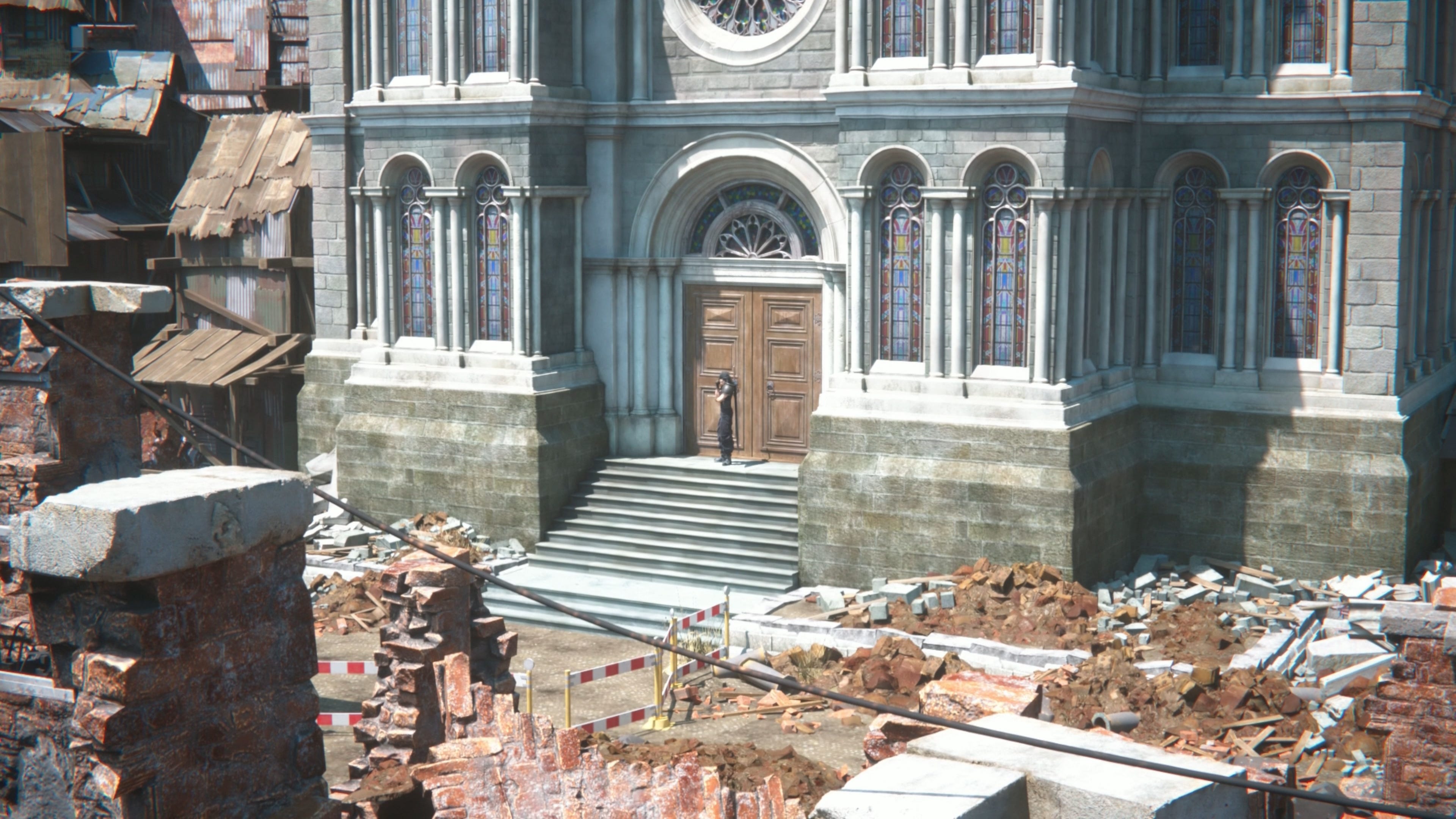
Observations
As mentioned, Zack is alone. He didn’t bring Cloud along. He most likely dropped Cloud off at the doctor in sector 5’s undercity after entering Midgar through the destroyed Sector 6, the closest one from the cliff.


Curiously, we don’t see any scratch on his armor pieces or clothing, he retained no scars from the battle and looks clean, as if he just exited the shower and made his hair.
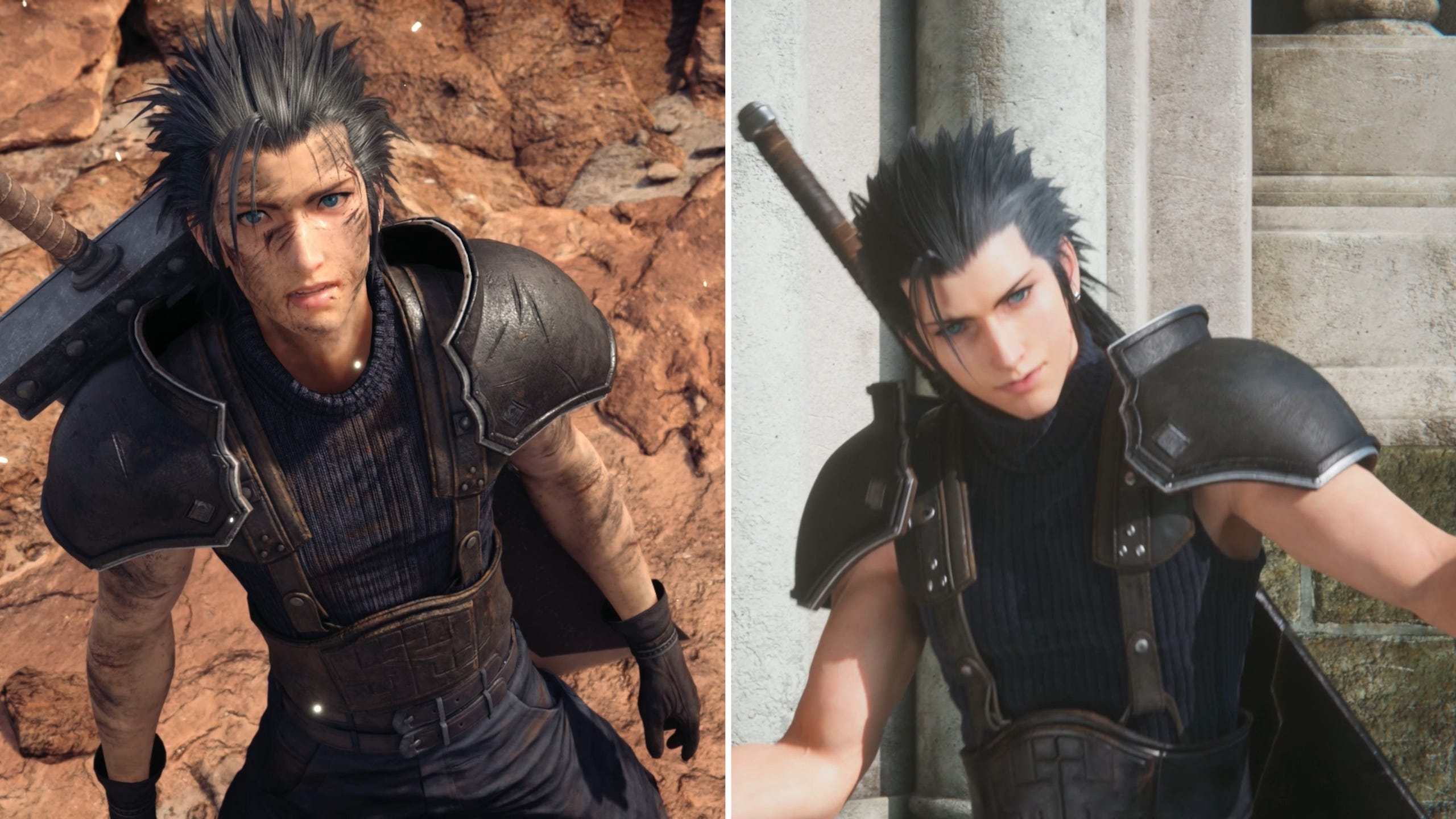
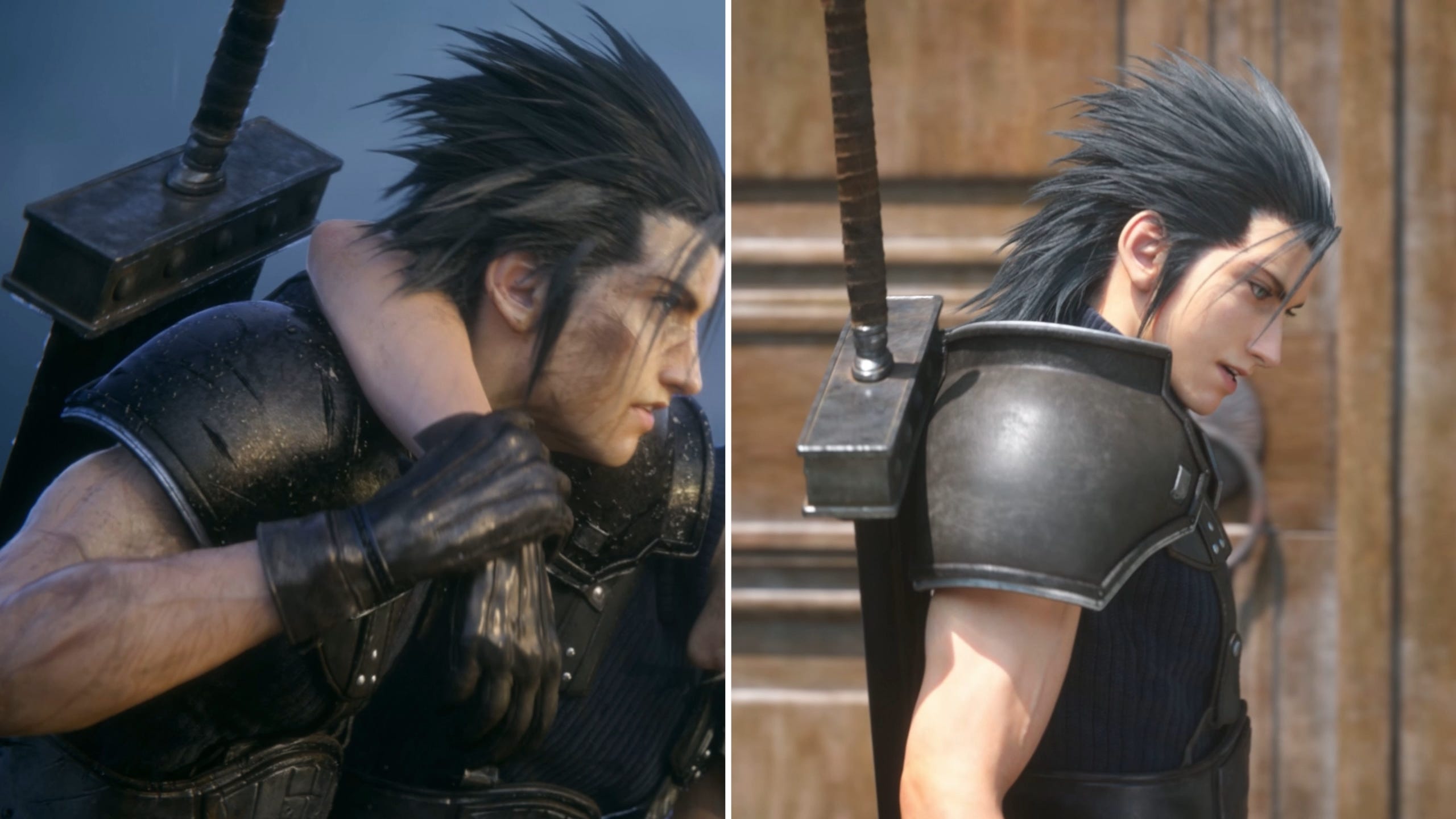
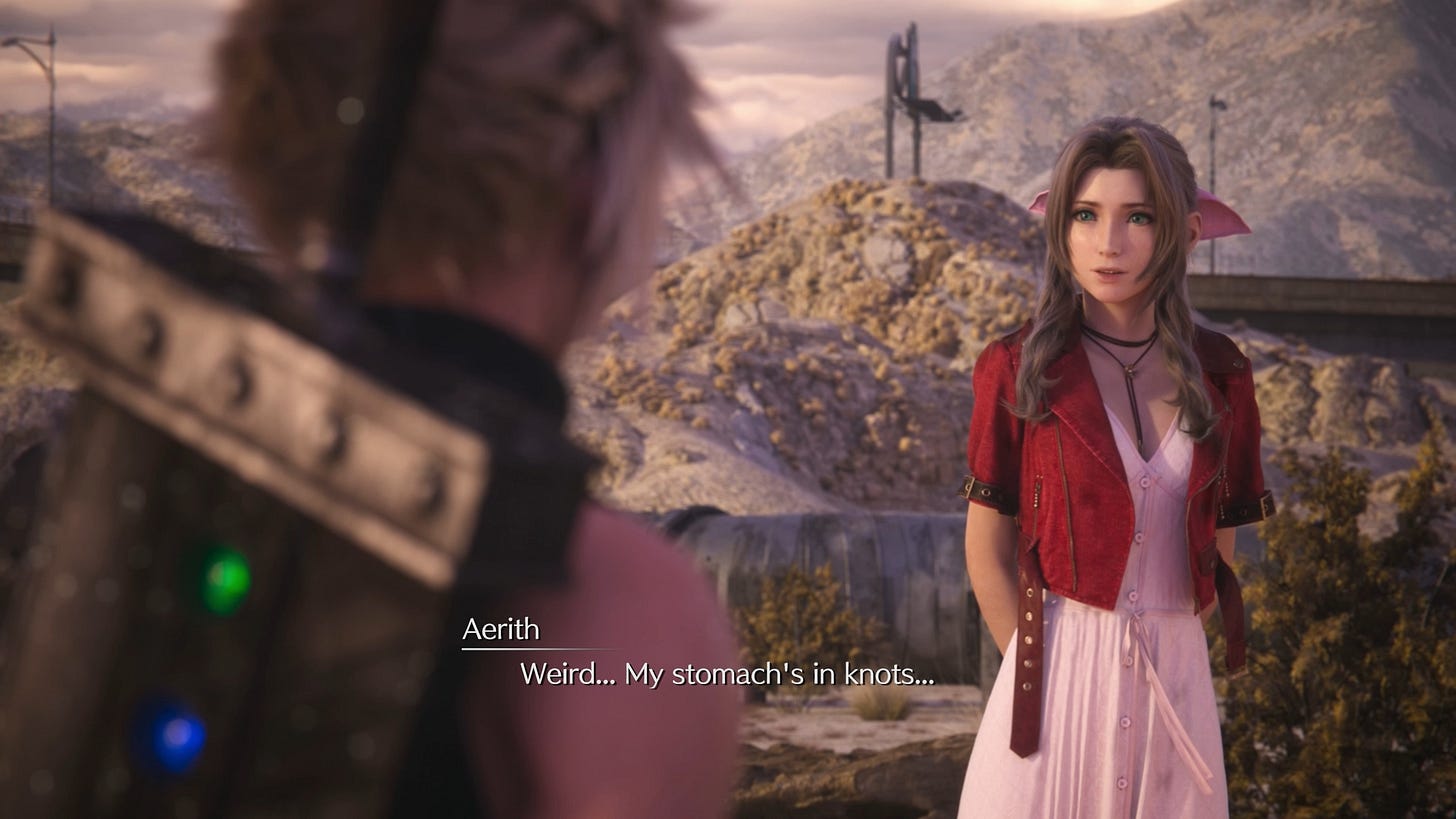
Which is possible, of course, but new shoulder pauldrons? And a fixed SOLDIER attire? It’s highly unlikely that anybody in the slums had one just lying around. Sure, we don’t know how much time has passed between surviving and approaching the church. However, showing this scene right after another one in which Aerith has her stomach in knots—or is “suddenly anxious” in Japanese—surely is no coincidence.
「あれ? 急に不安」
“Huh? I suddenly feel… anxious.”
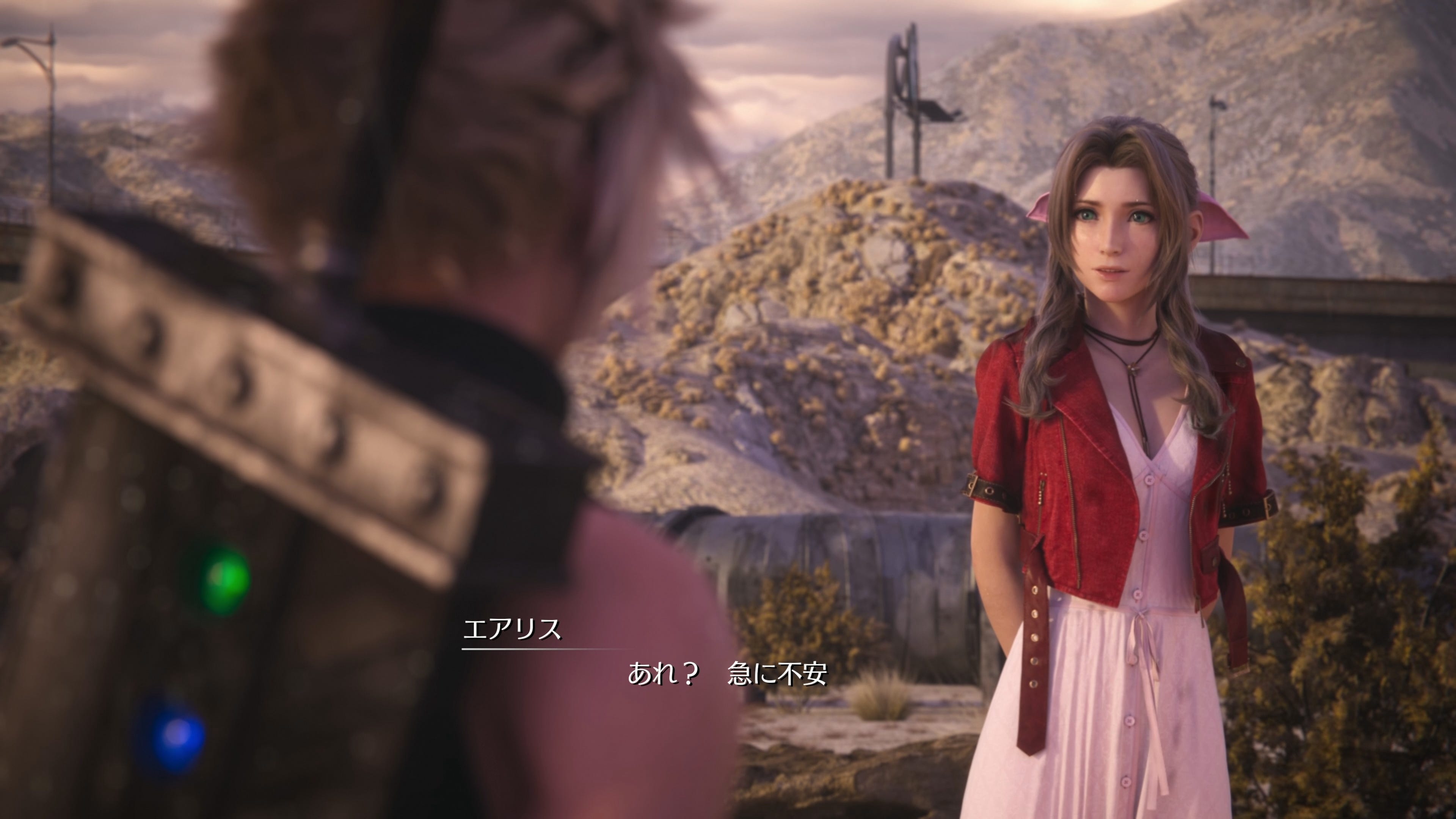
Especially since it just started raining, like in the main game’s ending where she was reminded of why she hates the sky. And what happened there? She felt a connection to Zack, too! It is therefore highly probable that Zack’s return to the church coincides with the group being dropped off near Kalm on a temporal level, which is at most one day after exiting the Singularity.
And there’s more: Remember Crisis Core’s ending? While talking to Cloud, Zack’s clothes, armor, and body are littered with scratches, cuts, and holes with blood everywhere. Not a pretty sight.
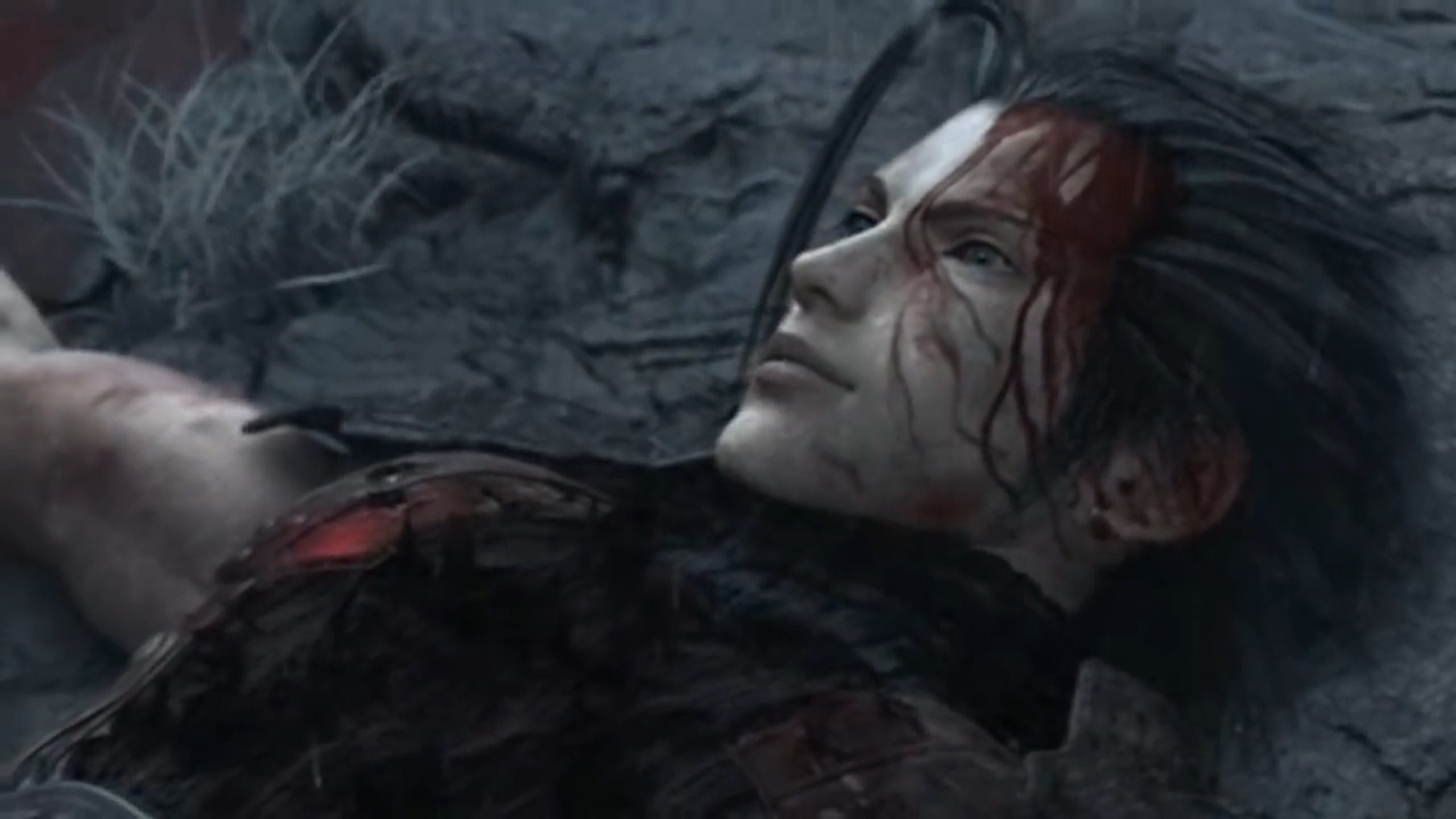
However, as soon as his soul ascends to the sky, he looks completely clean, just like in INTERmission’s secret ending scene. Worth keeping in mind.
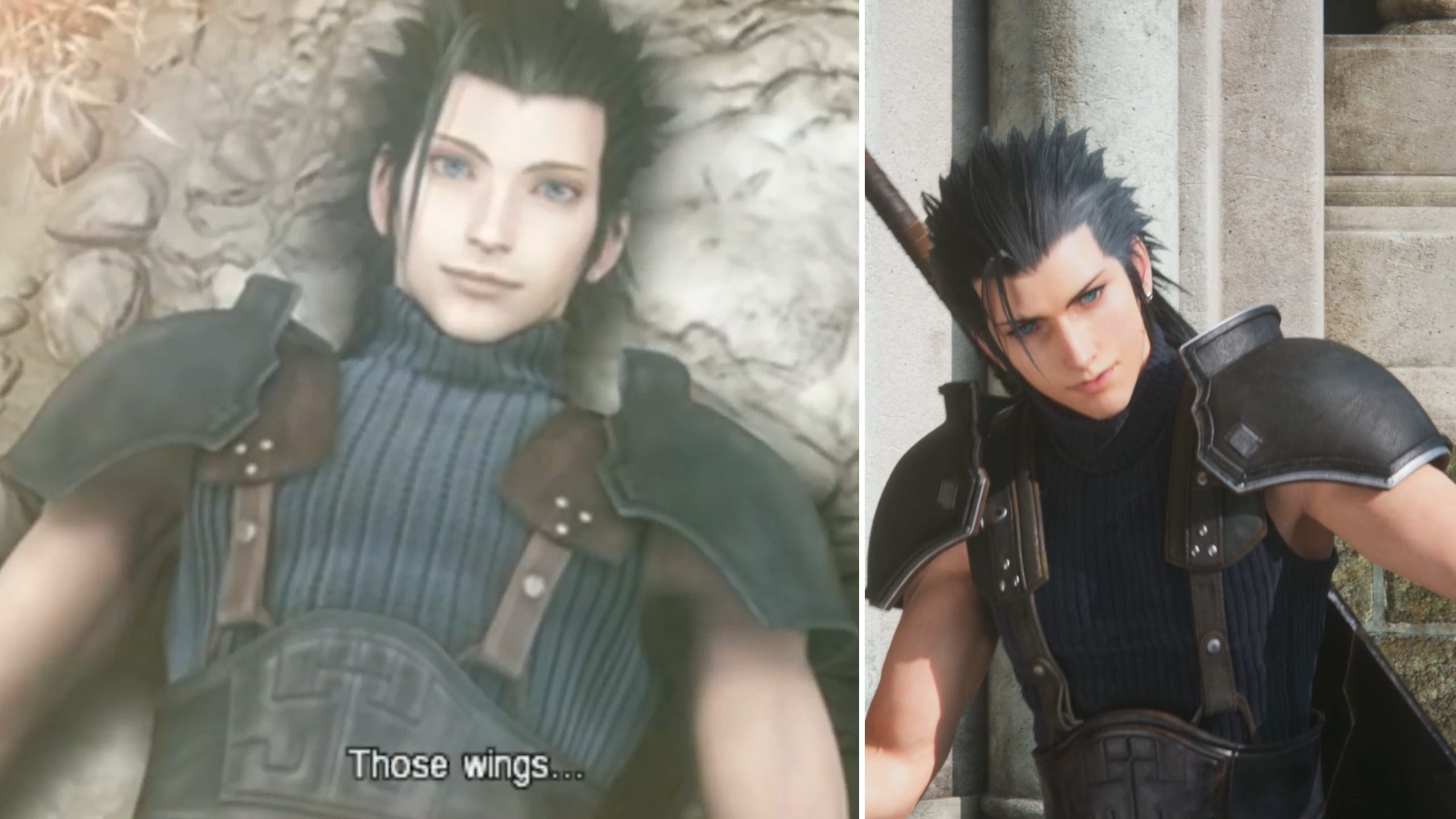
Before entering the church, Zack performs a few dry runs, trying to find the best way to greet Aerith after being away for five years. This feels very meta, as if he’s talking to the player. He even looks directly into the camera in one shot.,
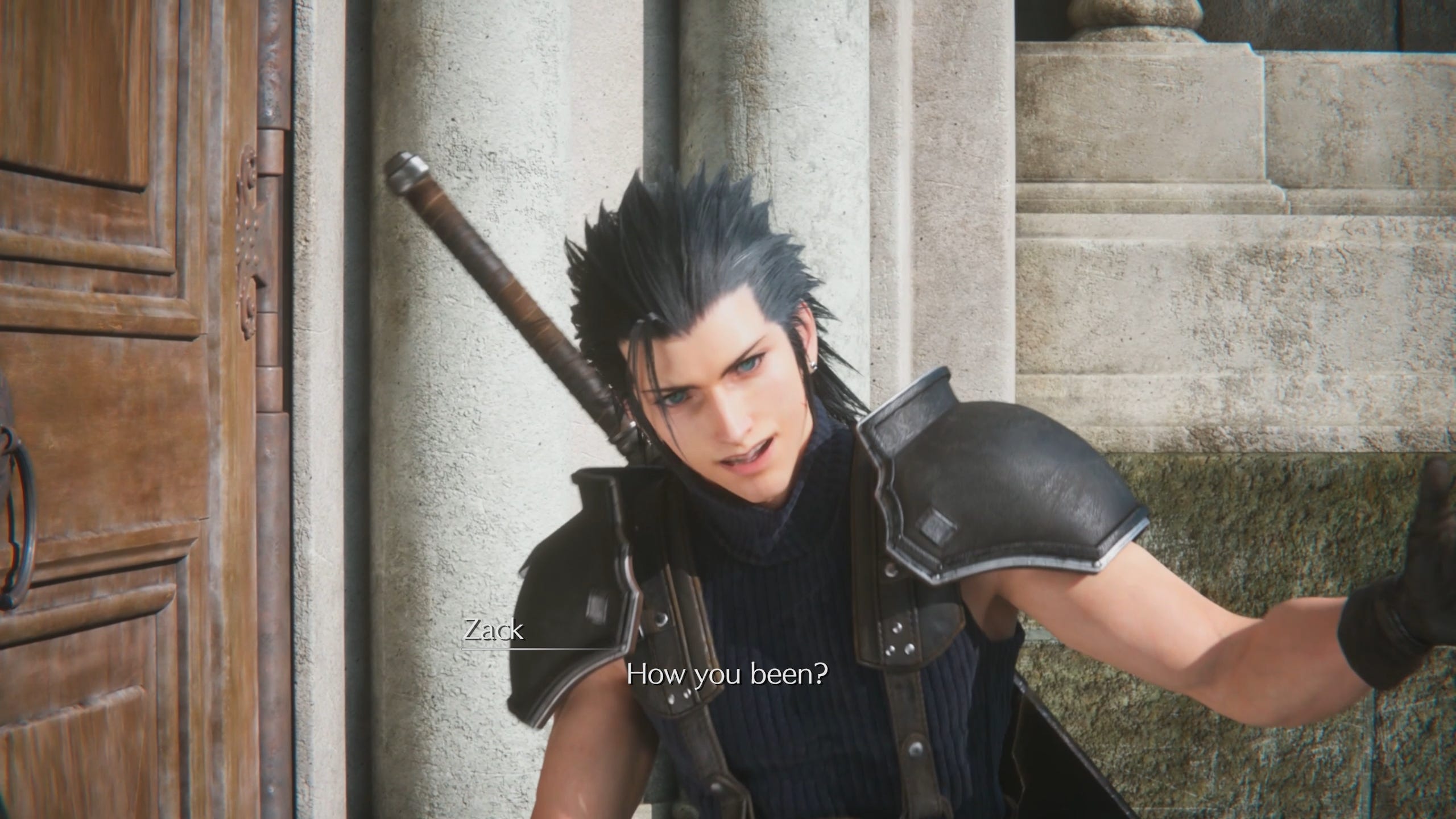
The last Compilation title featuring Zack was, after all, Crisis Core, which was released in September 2007 in Japan and in 2008 in the rest of the world, after Advent Children, Before Crisis and Last Order.
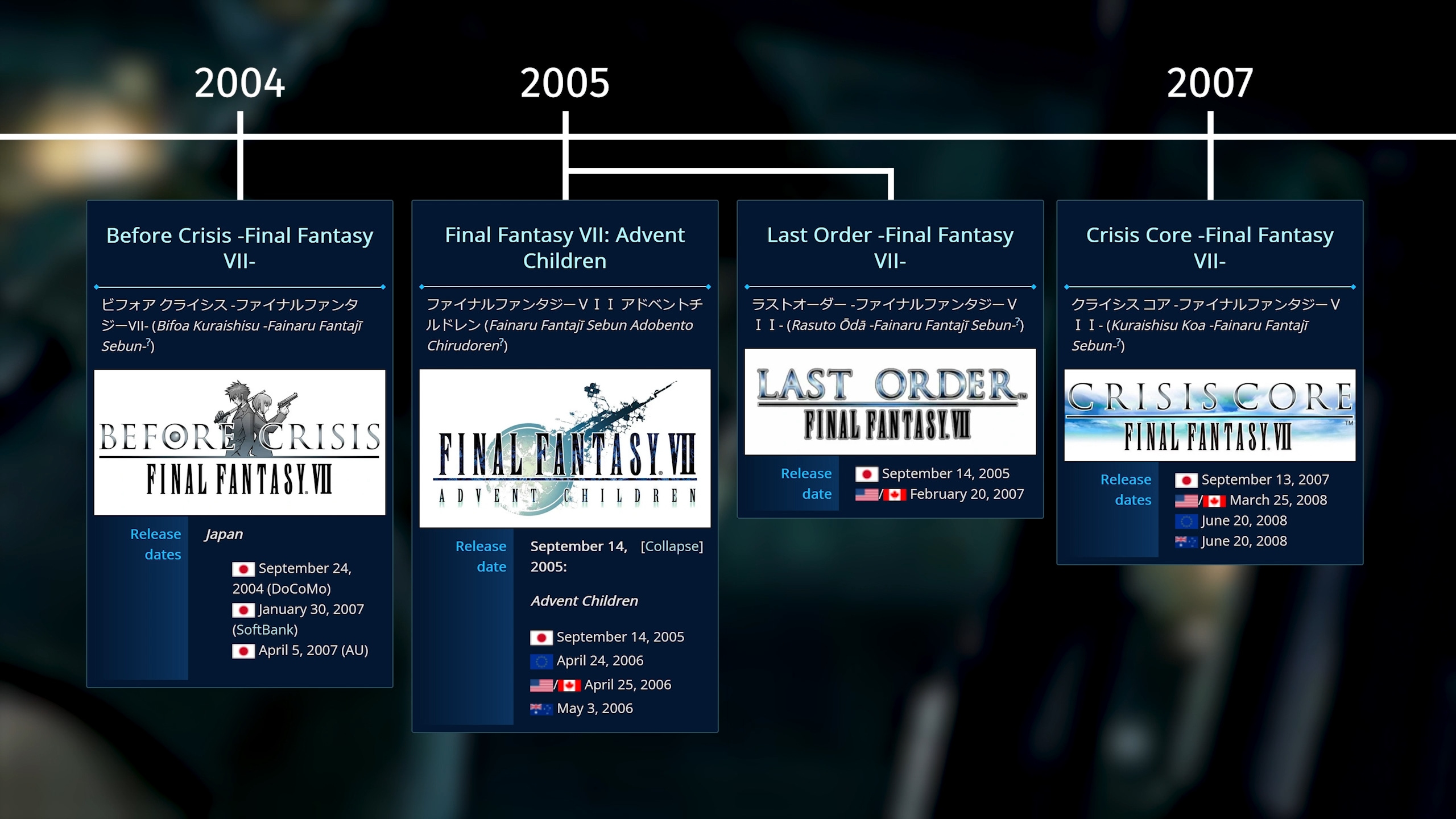
Inside, the church is full of people of all ages which are hurt, sad, crying, depressed, and the room is generally filled with despair. I guess they accepted Sephiroth’s offer…
Jokes aside: why are so many miserable NPCs taking refuge here? Zack must be very confused to find a bunch of sad people instead of only Aerith, hence his reaction at the end.
Zack: “Aerith…?“
Also curious, even though Zack bursts through the door all but quietly, nobody takes notice of him. As if they don’t even see anybody coming into the church.


This also feels quite meta as he’s literally back in the picture. In the story as well as for us players. Anyway, in the main game, the church never contains as many people. Aerith is alone, then Cloud comes crashing through the roof before Reno and his goons enter the scene. Afterwards, it’s basically empty until chapter 14 where first Kyrie and later her grandmother, Mireille, are standing in front of the flower patch.


This scene in INTERmission’s secret ending doesn’t fit into the timeline we experienced so far. Even if this happened weeks before Cloud meets Aerith again, nothing happens that would warrant dozens of depressed people gathering in a remote church. Though it’s worth noting that the very same NPC models found in the church here also appear in other pre-rendered cinematic scenes.


The simplest and most probable answer is “model re-usage.” Why create new high-definition models for this one scene when you can just re-use already existing ones and cut cost and time significantly? Furthermore, none of the other compilation entries contain even one scene showing such a crowded church. With one exception: Advent Children’s ending scene.
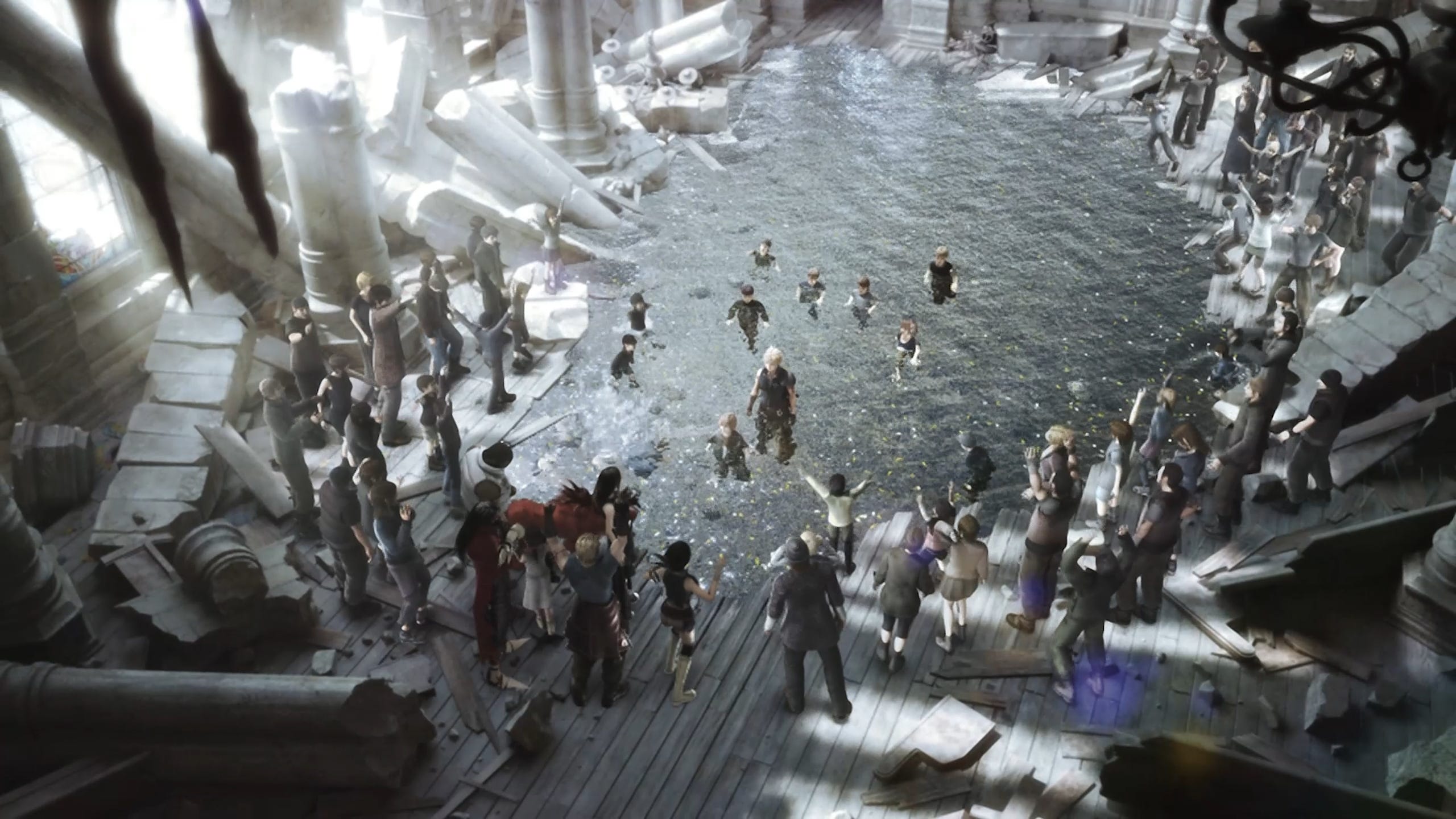
Remember the huge crowd consisting of main characters, children, and other random slum residents? The imagery in Zack’s secret ending eerily parallels the one from Advent Children, but in a weird inverse way.
The white light behind Zack filling the door frame is very reminiscent of the shot where Aerith’s spirit leaves and returns to the Lifestream together with Zack.
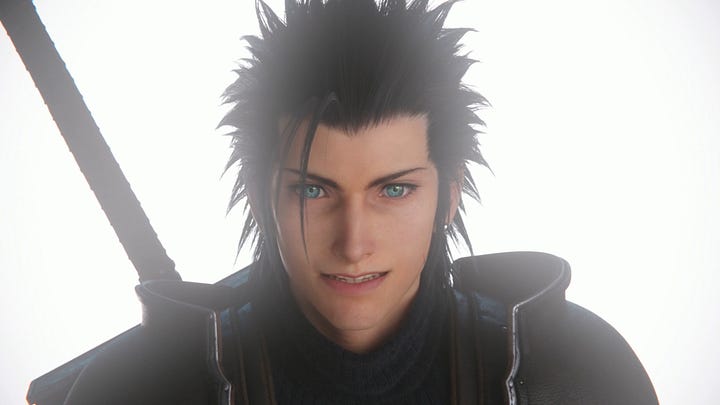
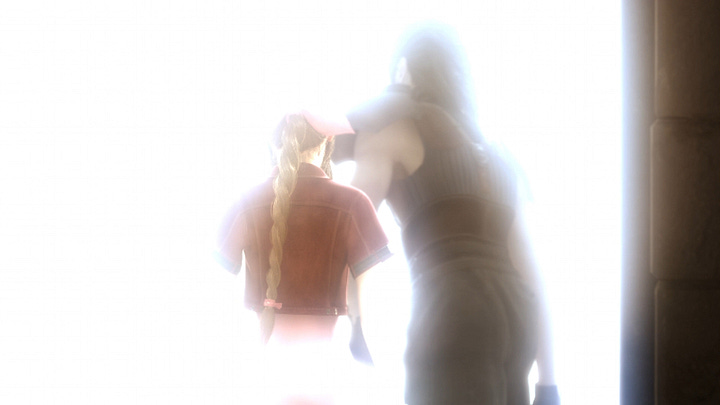
Did you notice the differences? The ending scene in Advent Children ends with Aerith and Zack leaving and then Cloud smiling. Here, it starts with Zack entering instead of leaving, and he’s alone.
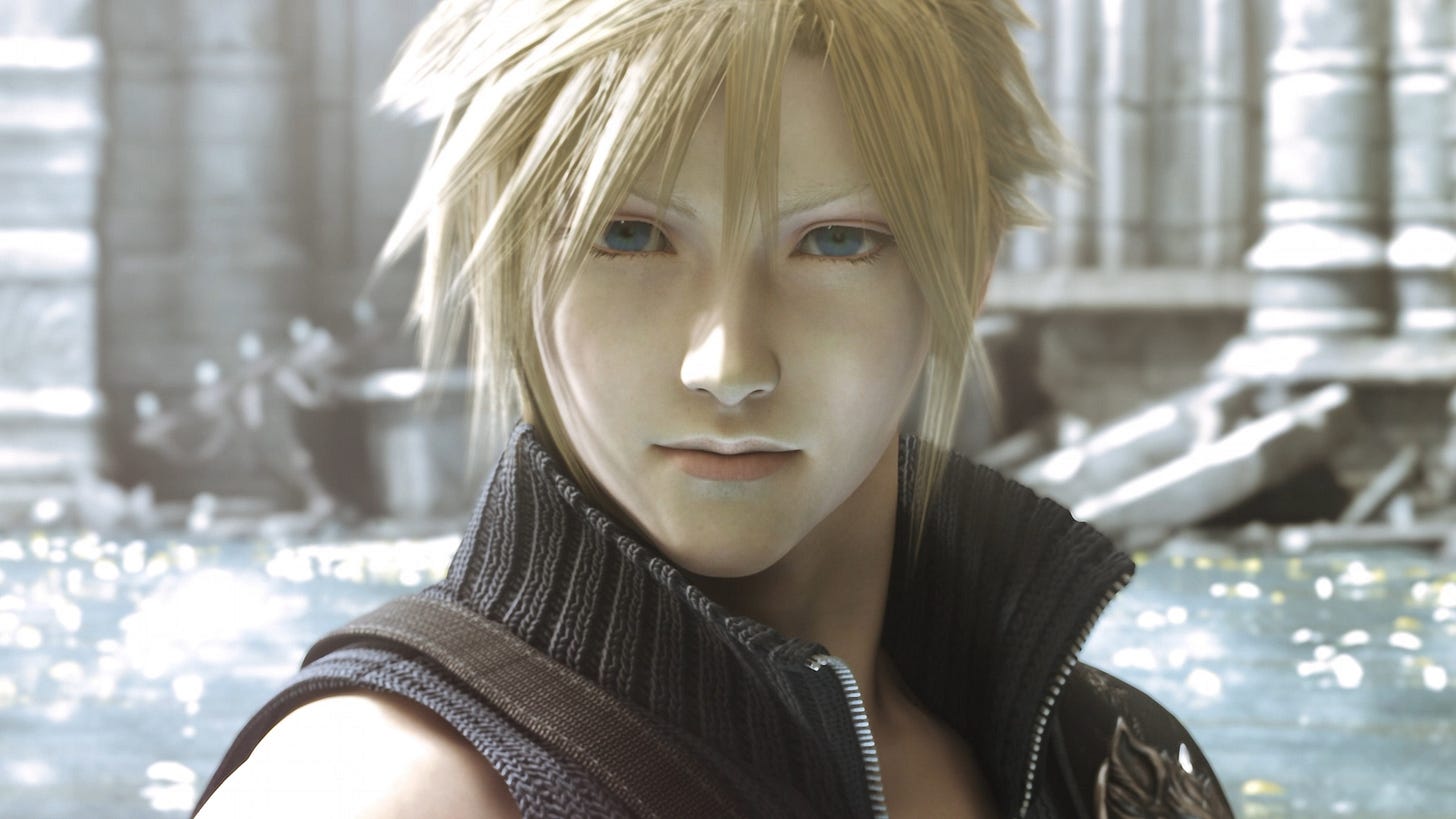
Zack looking at the inside reminds of the overview shot showing the people surrounding the pond and the children being cured within. However, things are different now. Instead of a happy atmosphere, Zack finds only despair.
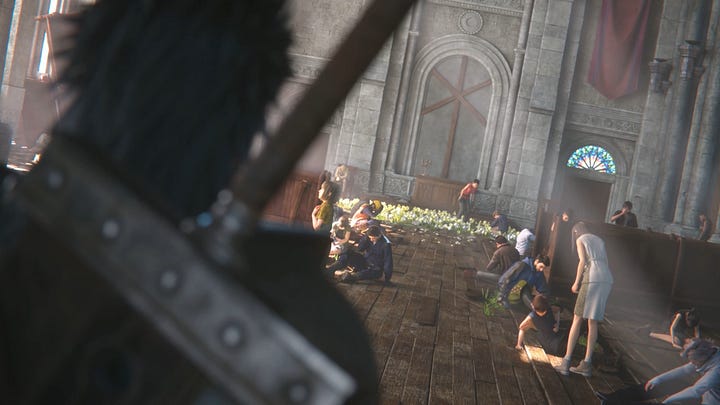
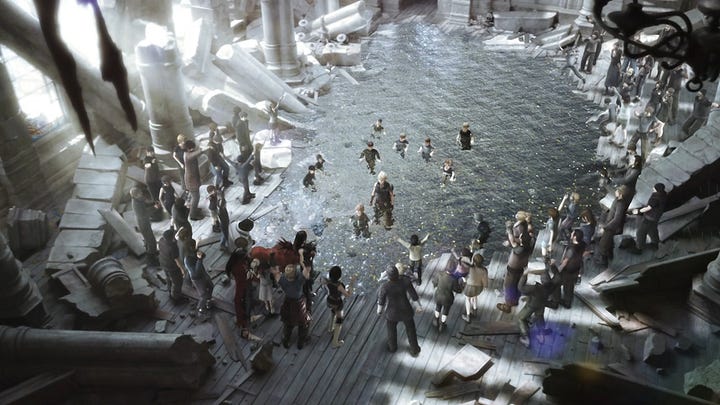
While the scene in Advent Children is shot at a pleasing and rather straight angle, the scene with Zack shows a very slanted view on the interior.
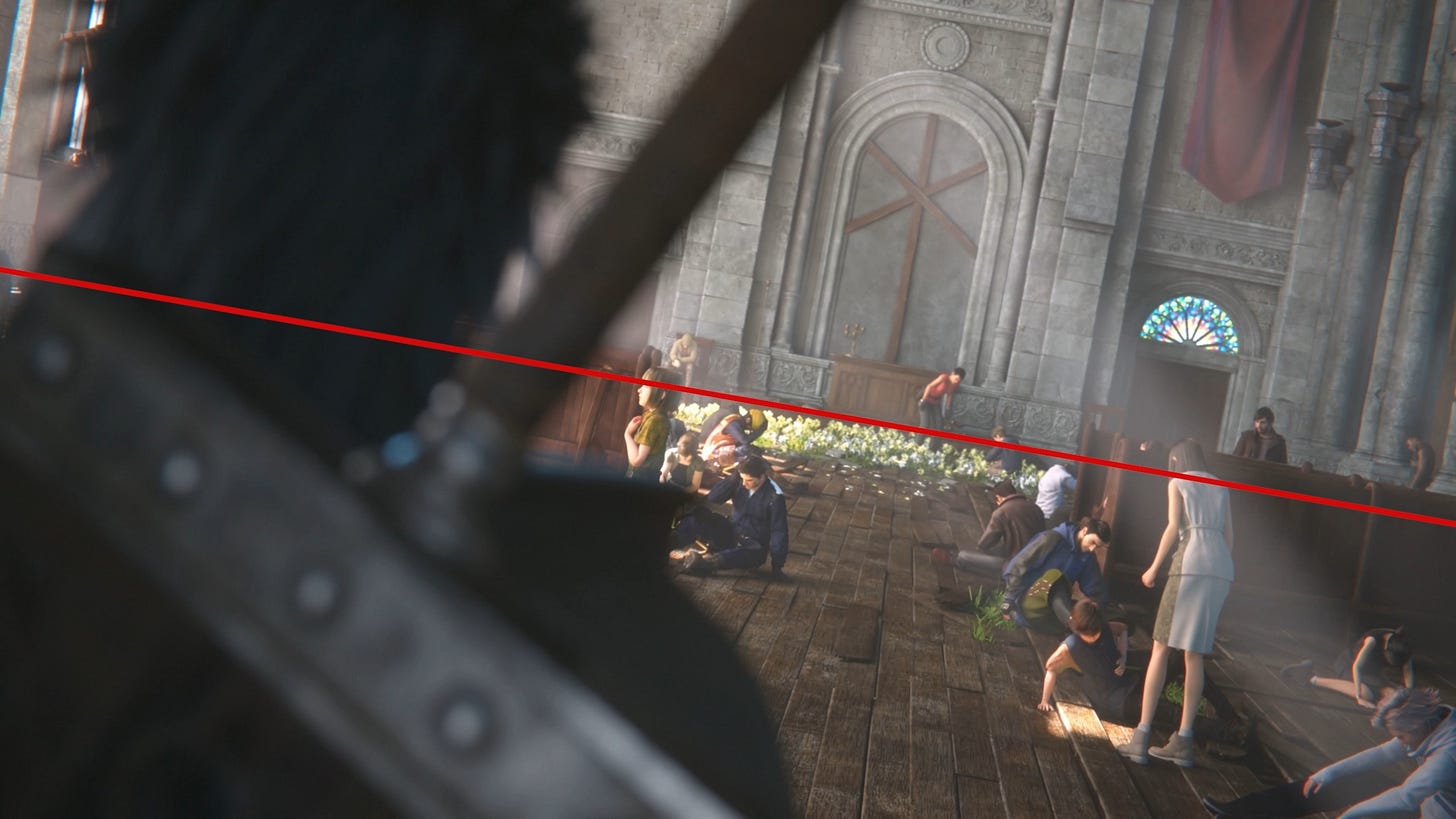
Lastly, the shot from the flower field parallels the shot in Advent Children where Cloud watches Aerith walking towards the open door where Zack is waiting.
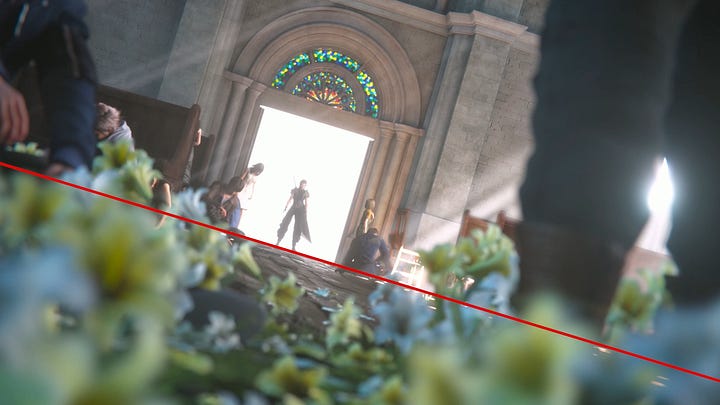
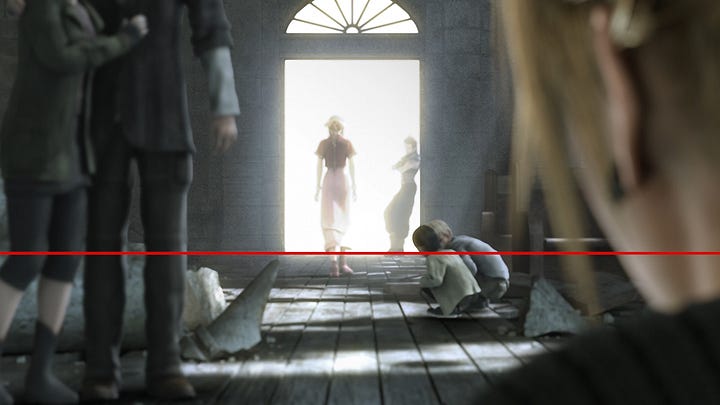
Again, the angle is way off in Zack’s scene while it’s horizontal in Advent Children.
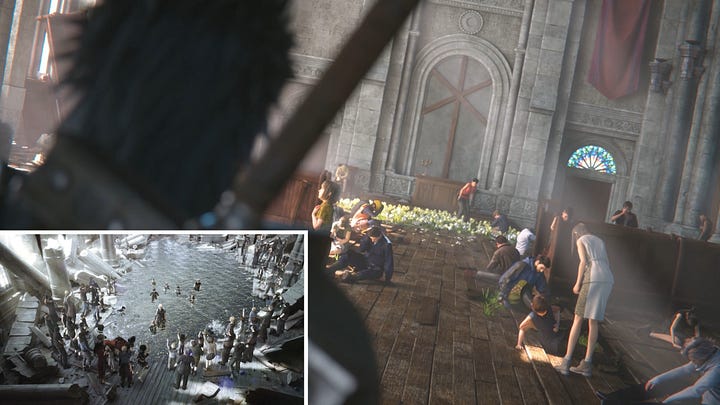
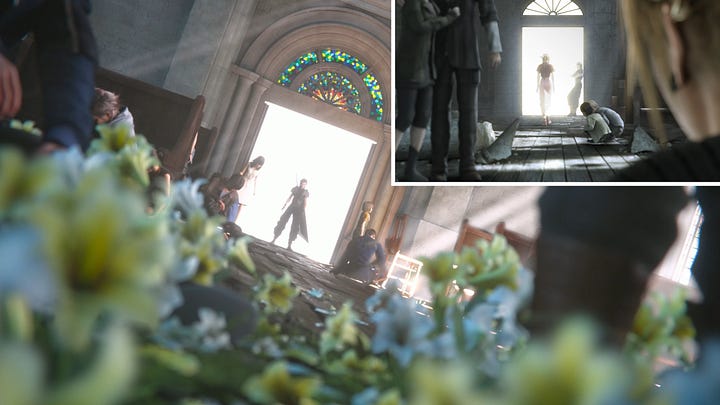


All those pieces of evidence point to something different than meets the eye.
Wooden Cross
“But what about the wooden cross?!” I hear you shout at the screen. Yes, it’s different than in the game itself, but that’s not even half the story.
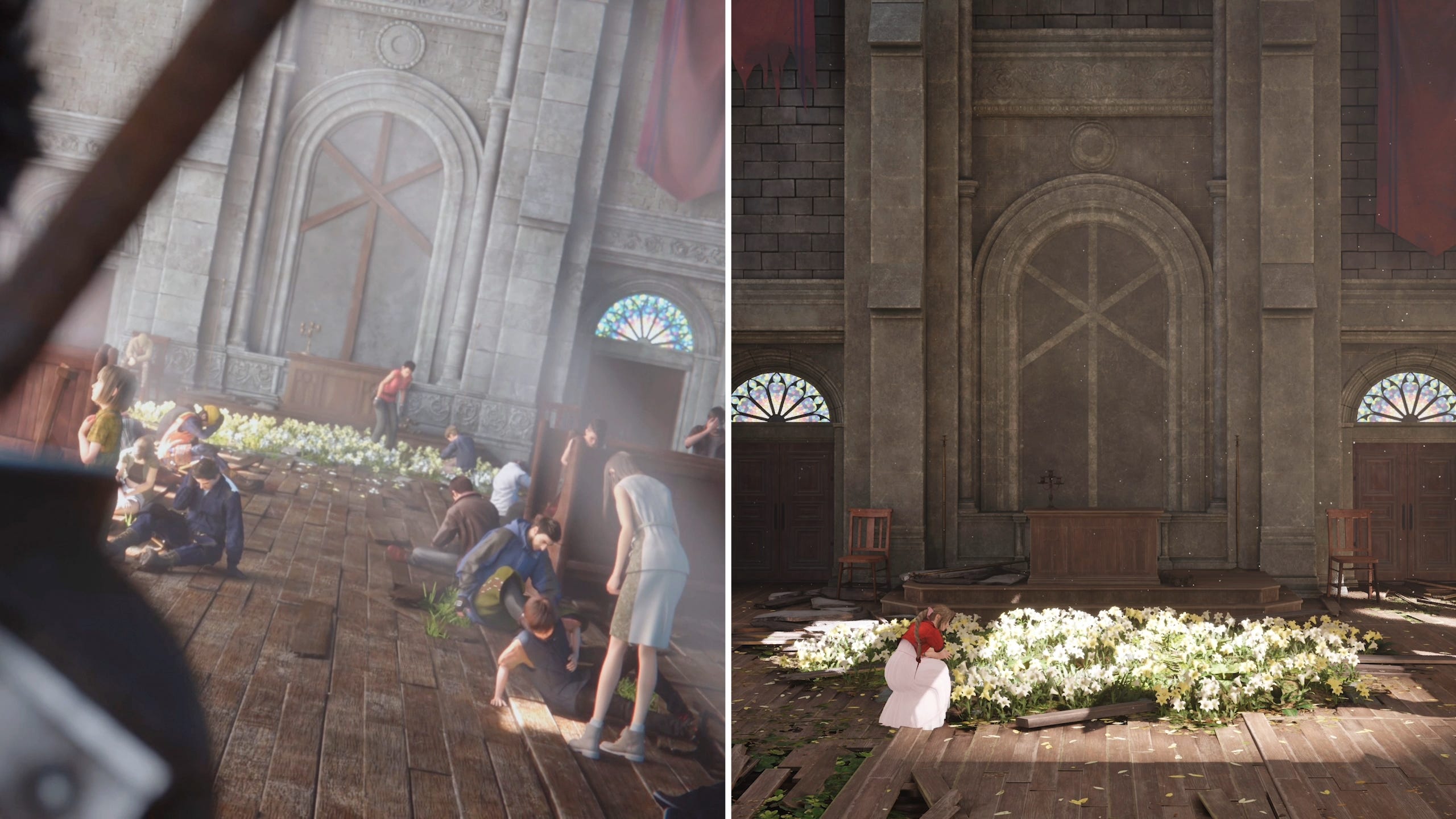
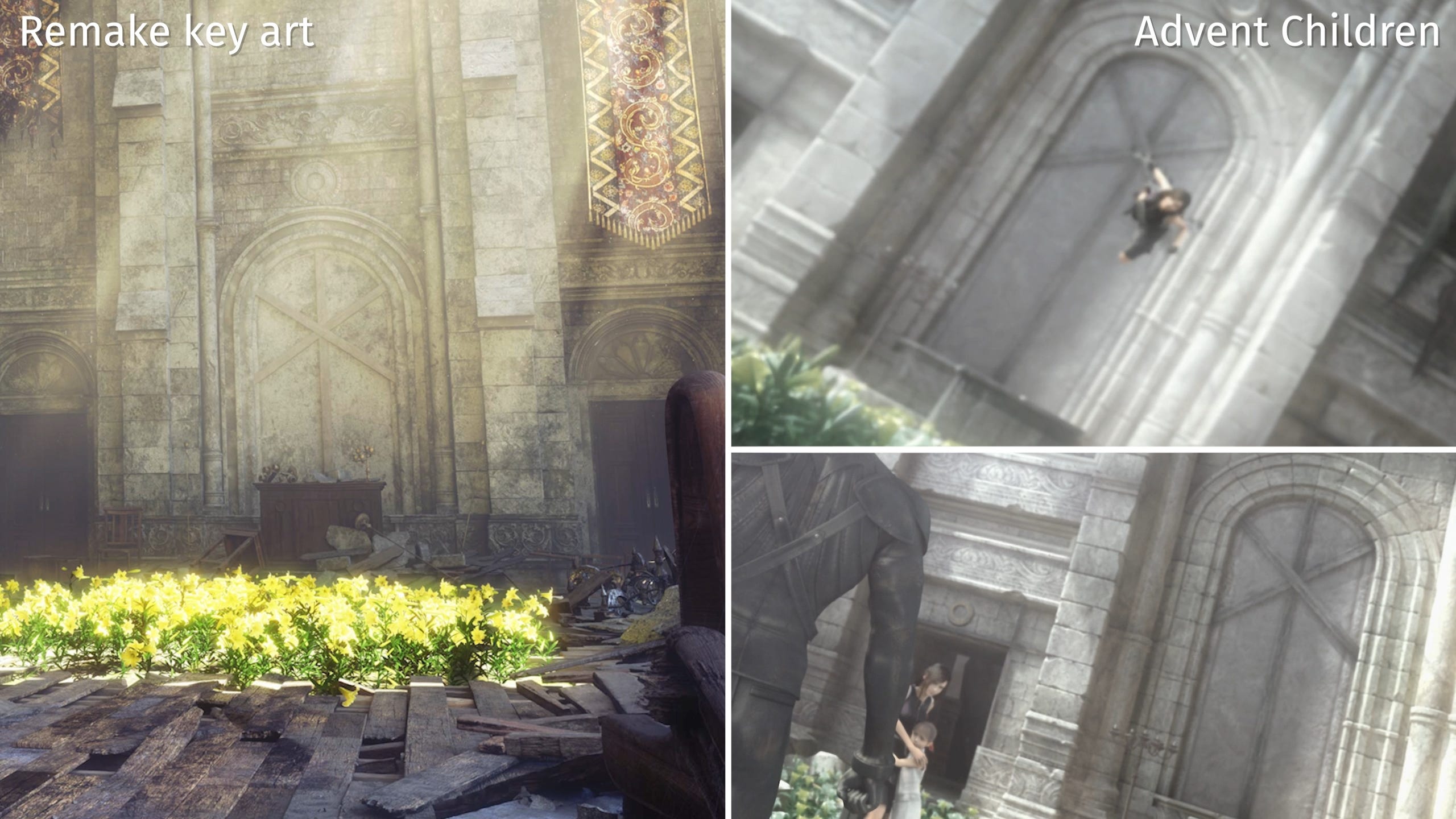
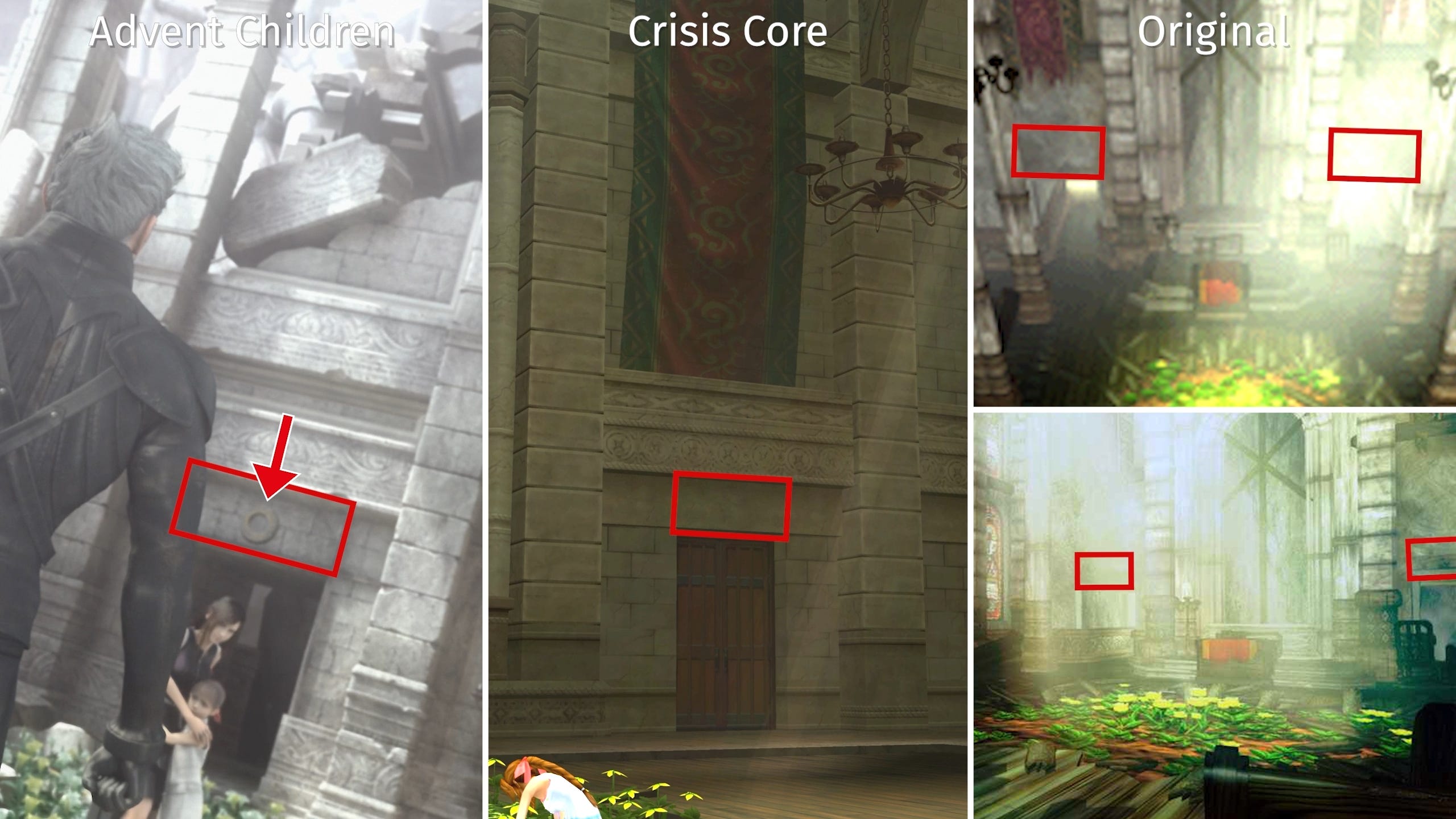
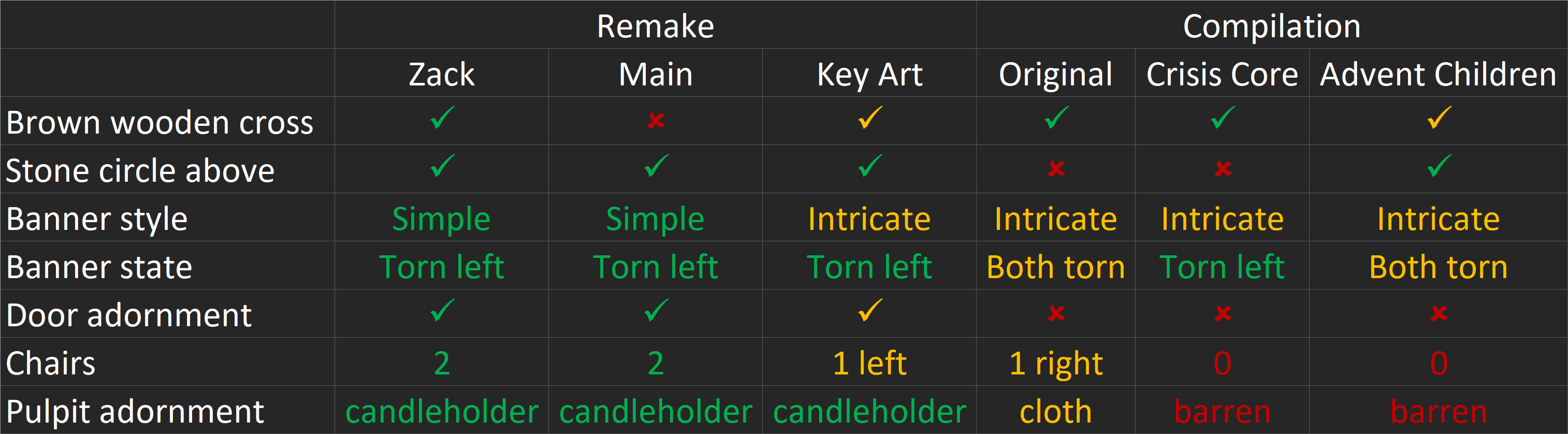
We must also look at all the other versions of the church including a few other elements. Like the circle above, the banners on the side, the doors beneath, the chairs nearby and the pulpit.
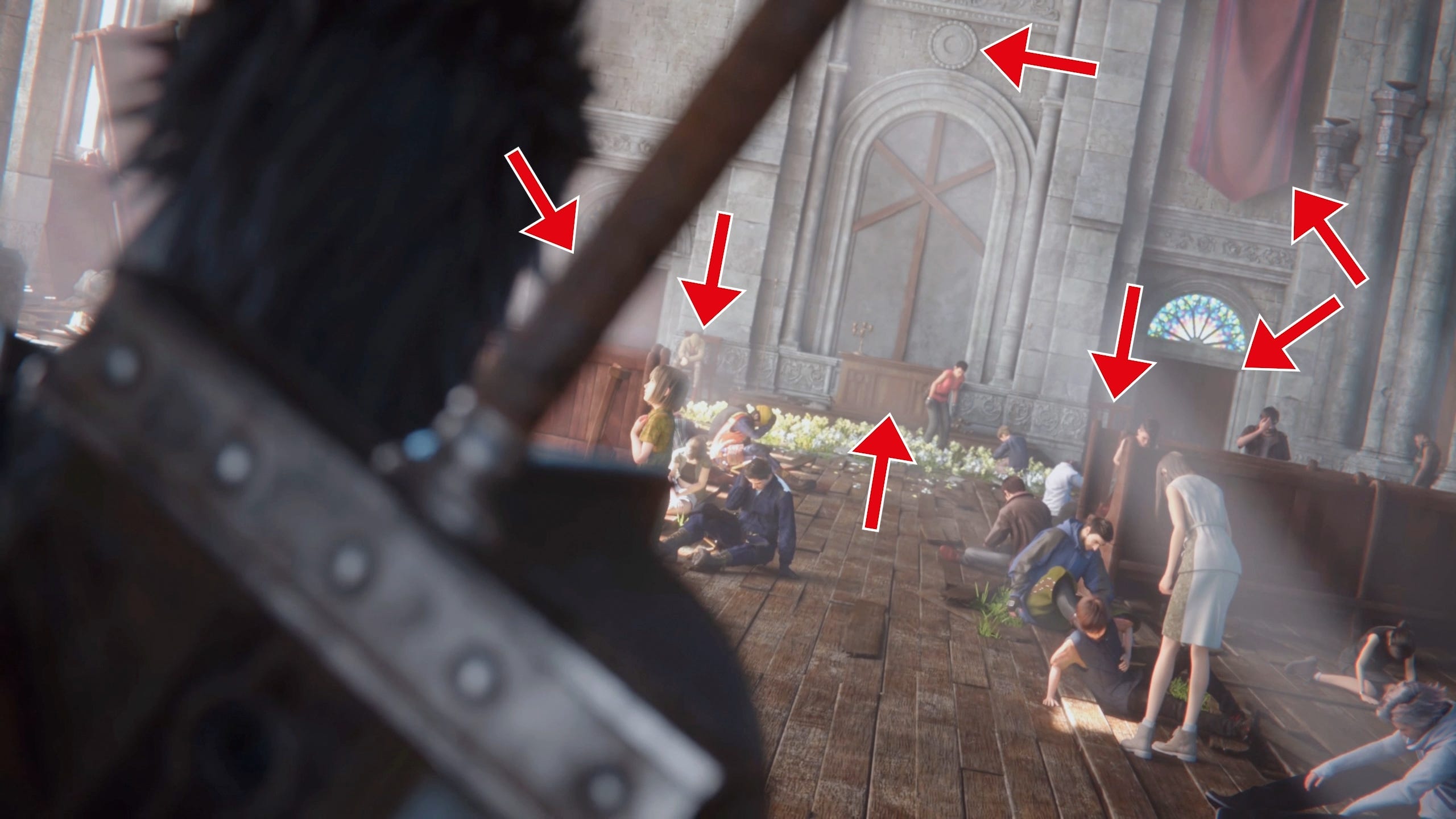
And if we do, we will notice that there are too many discrepancies all over the place and similarities between different iterations for this wooden cross in the scene with Zack to matter at all.
OK, so, the brown wooden cross is there in Zack’s scene but missing in the gameplay version, leaving bright lines among the weathered stonework, as if it had been stolen recently.


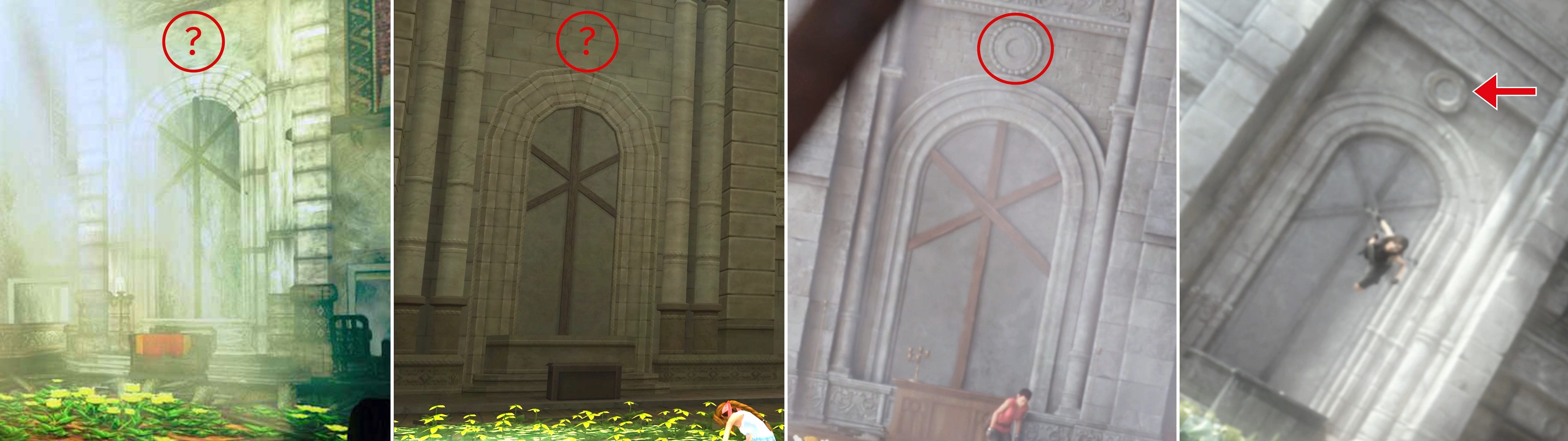
The original and Crisis Core contain a similar looking cross. In isolation, you could say that Zack’s church scene shows the original timeline, but we need to look further.
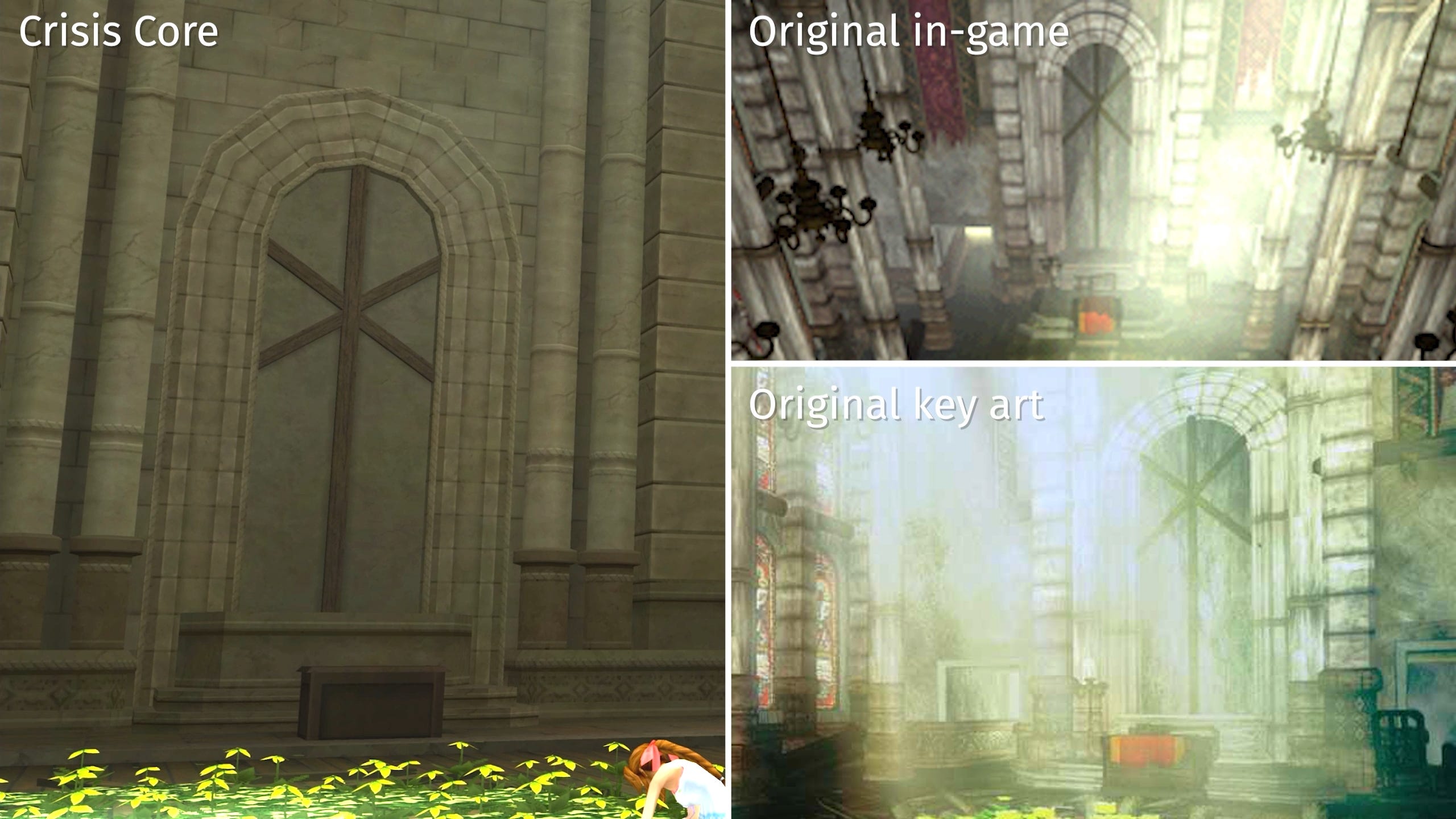
Advent Children and Barret’s Remake key art both show a rather gray looking wooden cross, basically combining Remake’s color scheme and the material in Zack’s church scene.
What about the circle above? The cross looks like its original counterpart, but why is the circle missing there? Just like Crisis Core, but it’s included again in Advent Children.
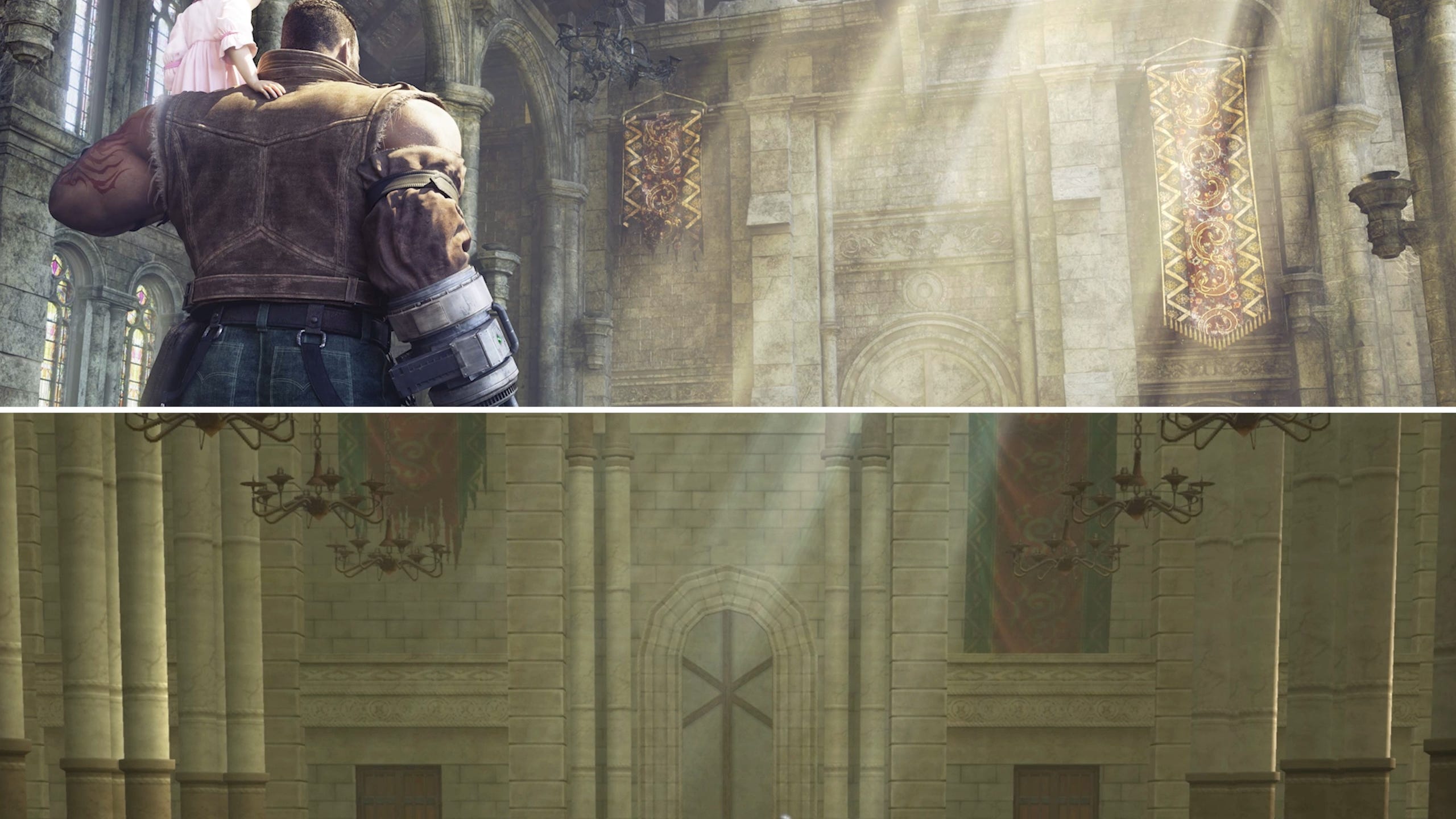
When looking at the banners, it gets even better. Zack’s church scene shows them in simple red cloth with two narrow double stripes and the right one is still intact, like in the main game. All other iterations bear an intricate pattern in the red middle area and a zig-zag line along the green stripes on each side. Quite the difference I must say.


In Crisis Core and Barret’s Remake key art, the right banner is still intact as well, contrary to the original and Advent Children.
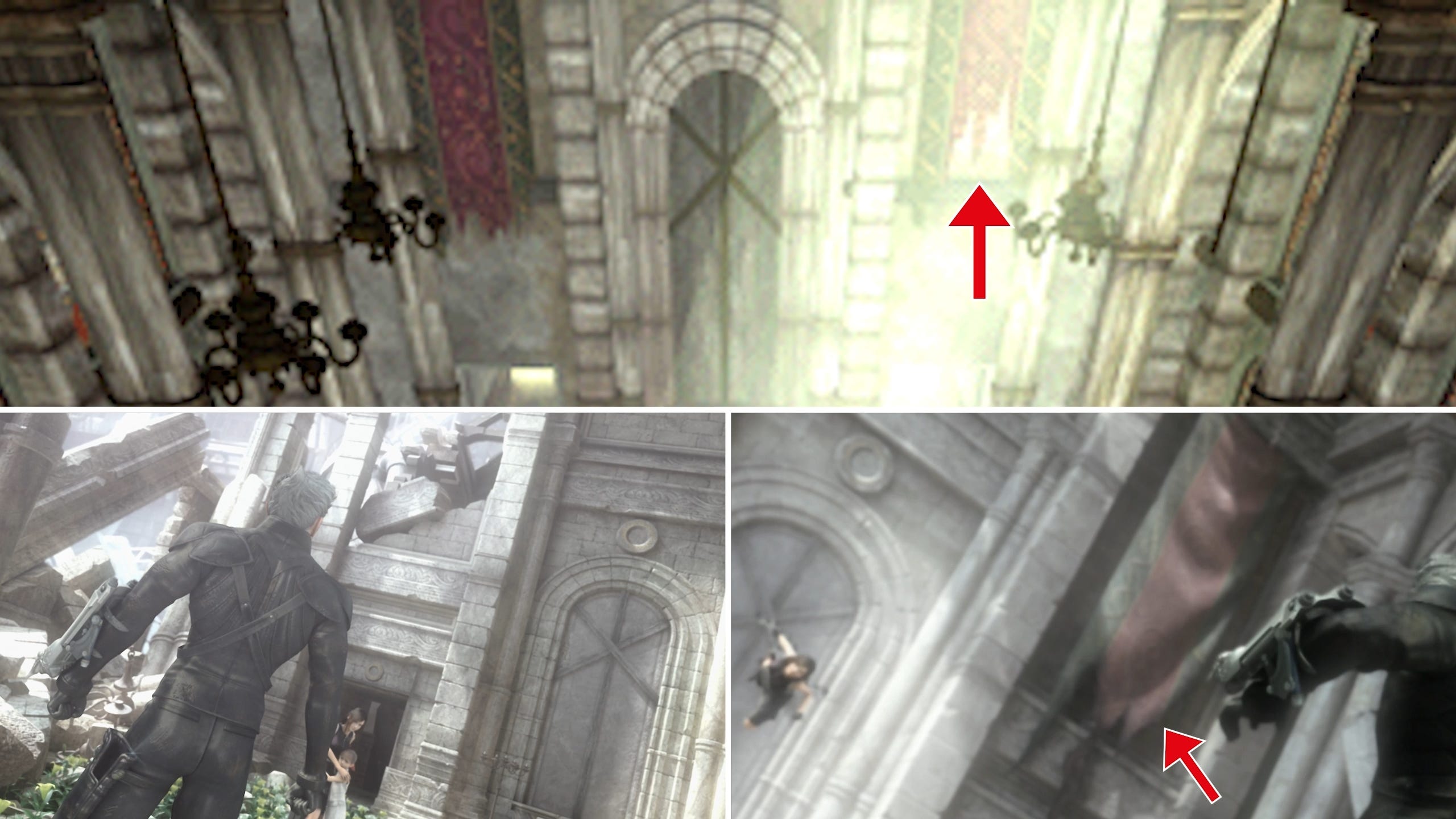
What about the arched adornment above the doors below? Zack’s church scene and the main game both decorate the doors with a beautiful stained-glass adornment. Barret’s Remake key art shows a similar pattern but entirely made of stone.
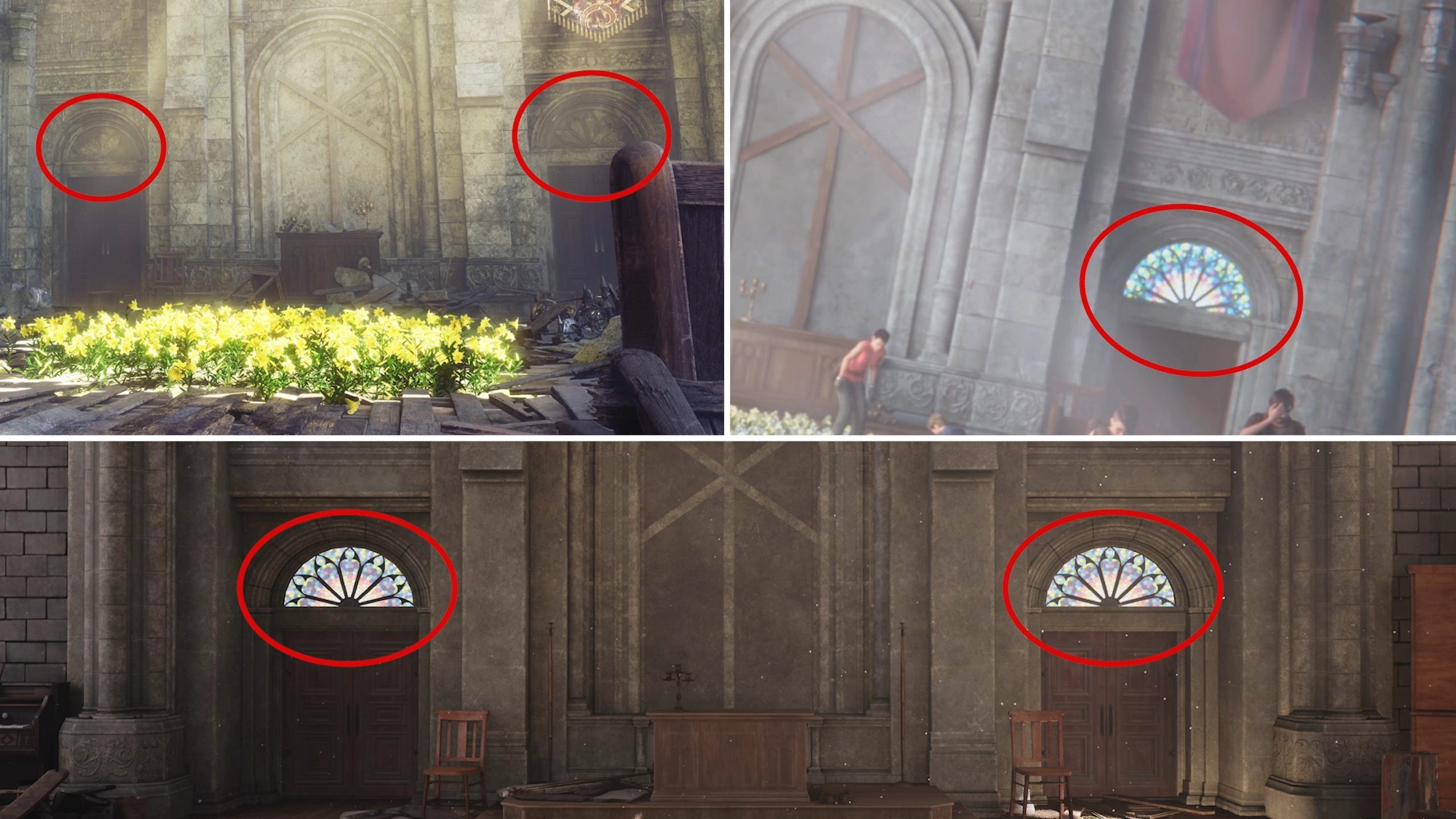
All other iterations lack such an adornment, unless you count the small stone circle in Advent Children.
We also see two chairs in Zack’s church scene, the same as in the main game.
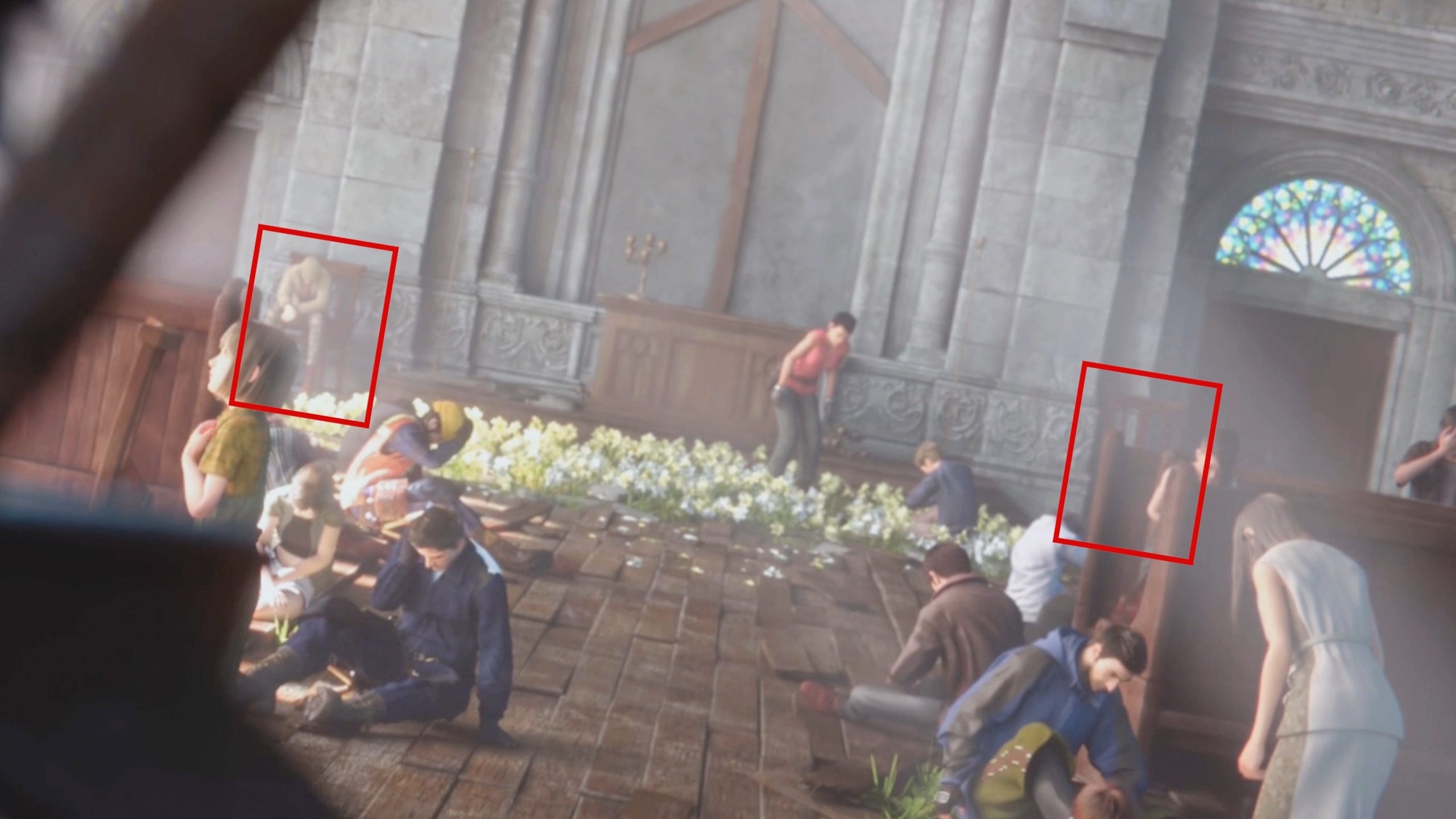
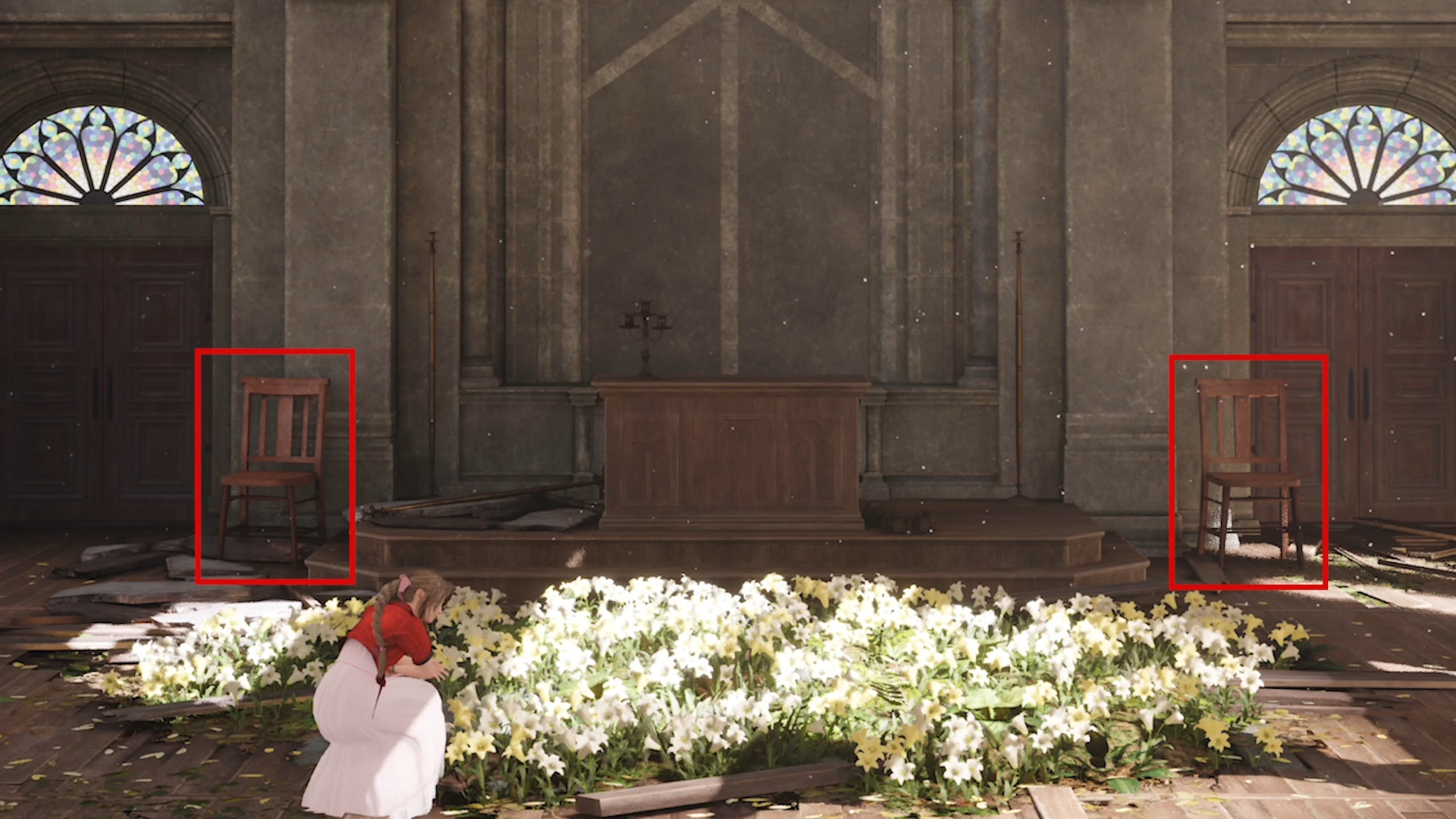
What about the other versions? Barret’s Remake key art has one standing on the left while the original shows one on the right.
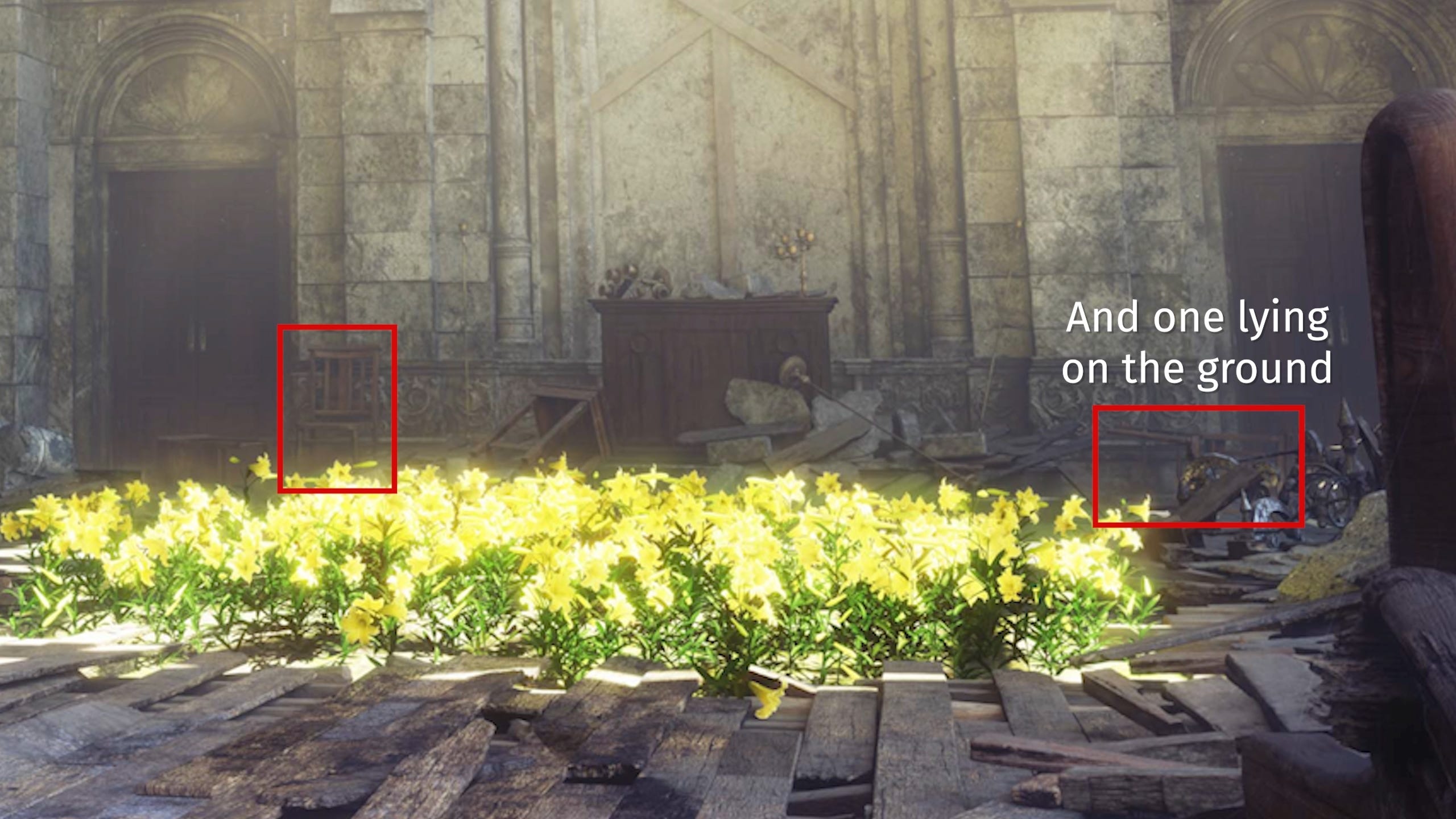
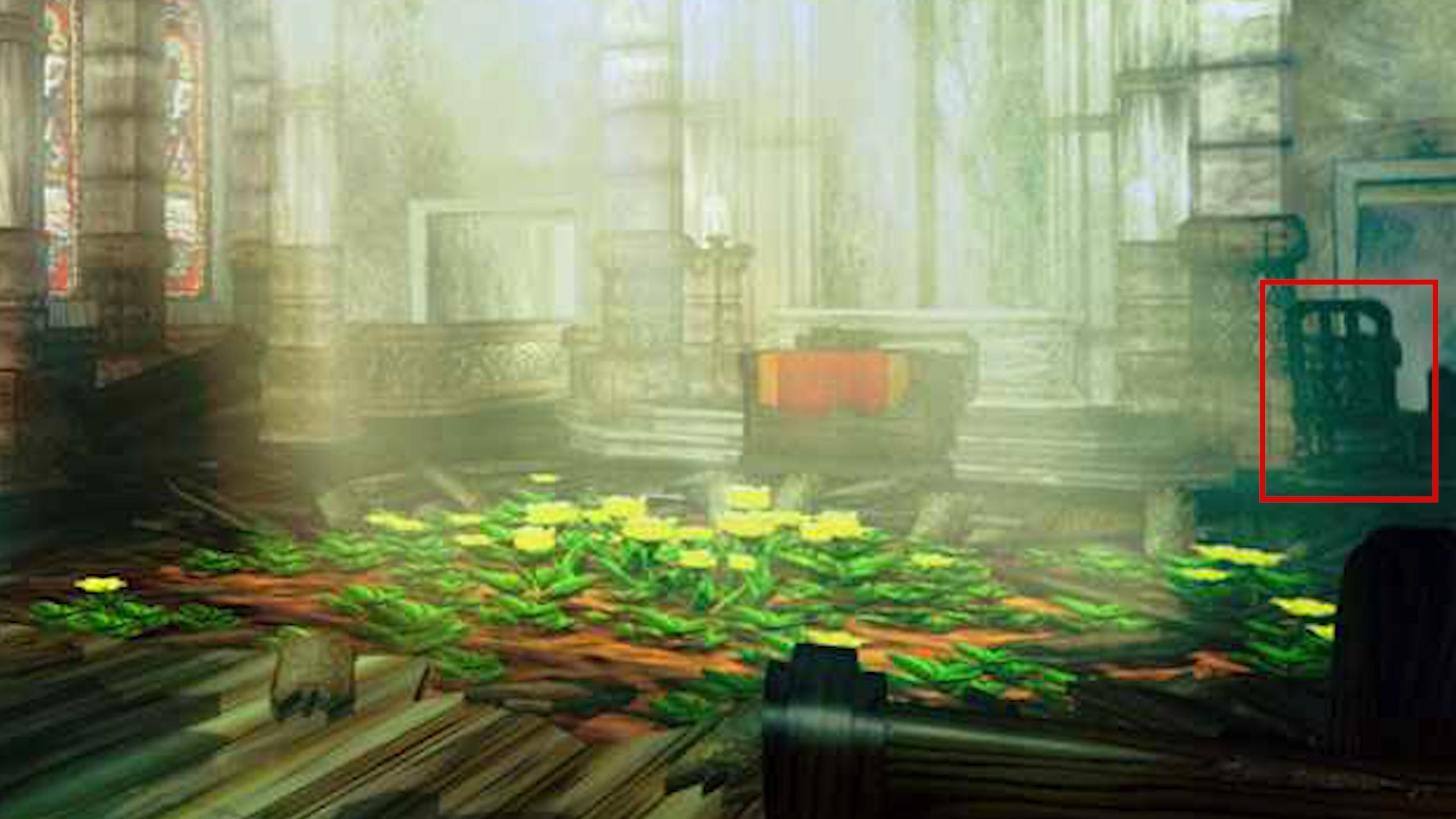
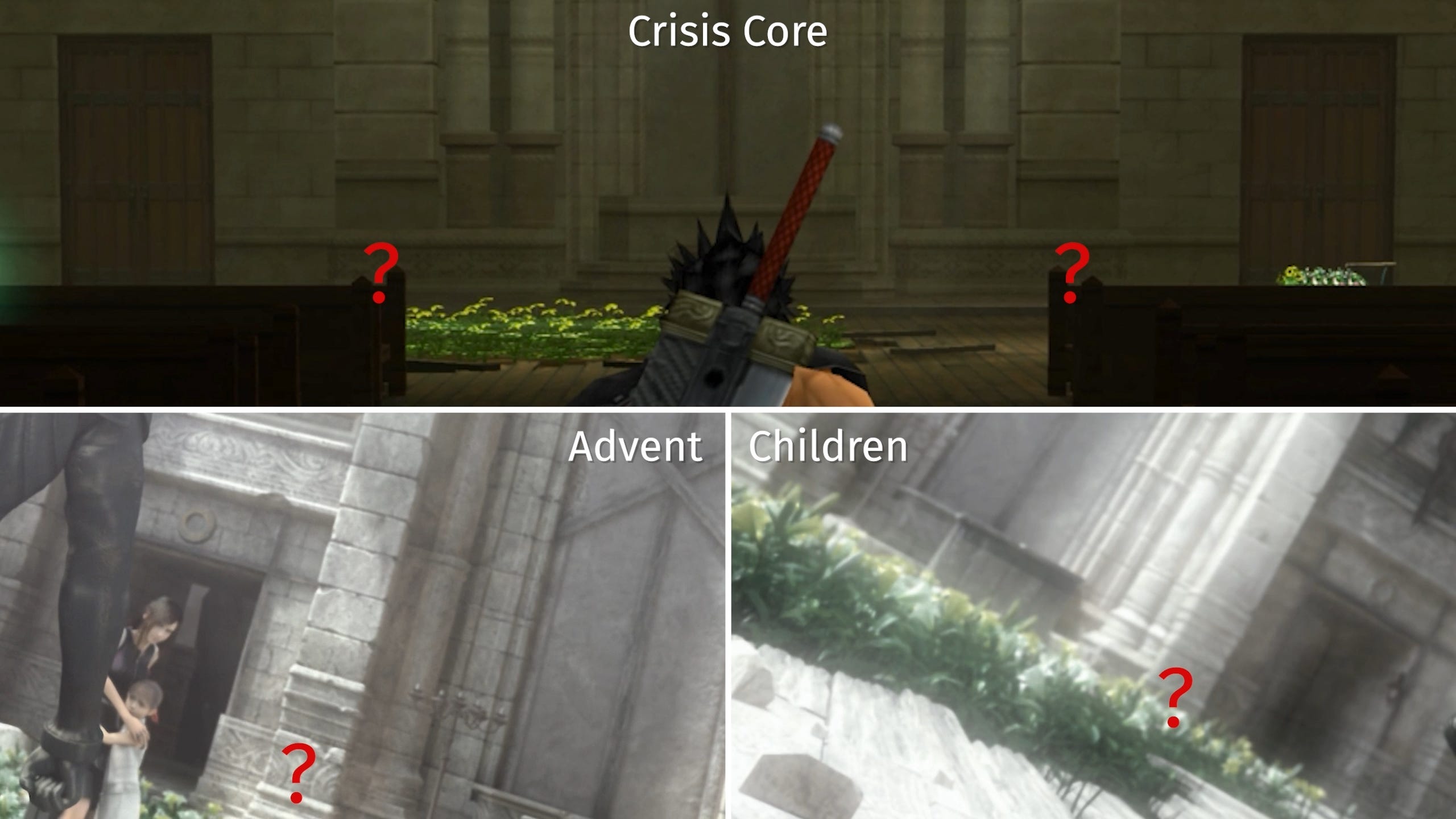
Interestingly, the first and last instances chronologically—Crisis Core and Advent Children—are barren of any seating opportunity.
Lastly, let’s check out the pulpit. In all Remake related versions, the designers decided to place a candle holder on top of it while leaving it empty in Crisis Core and Advent Children.
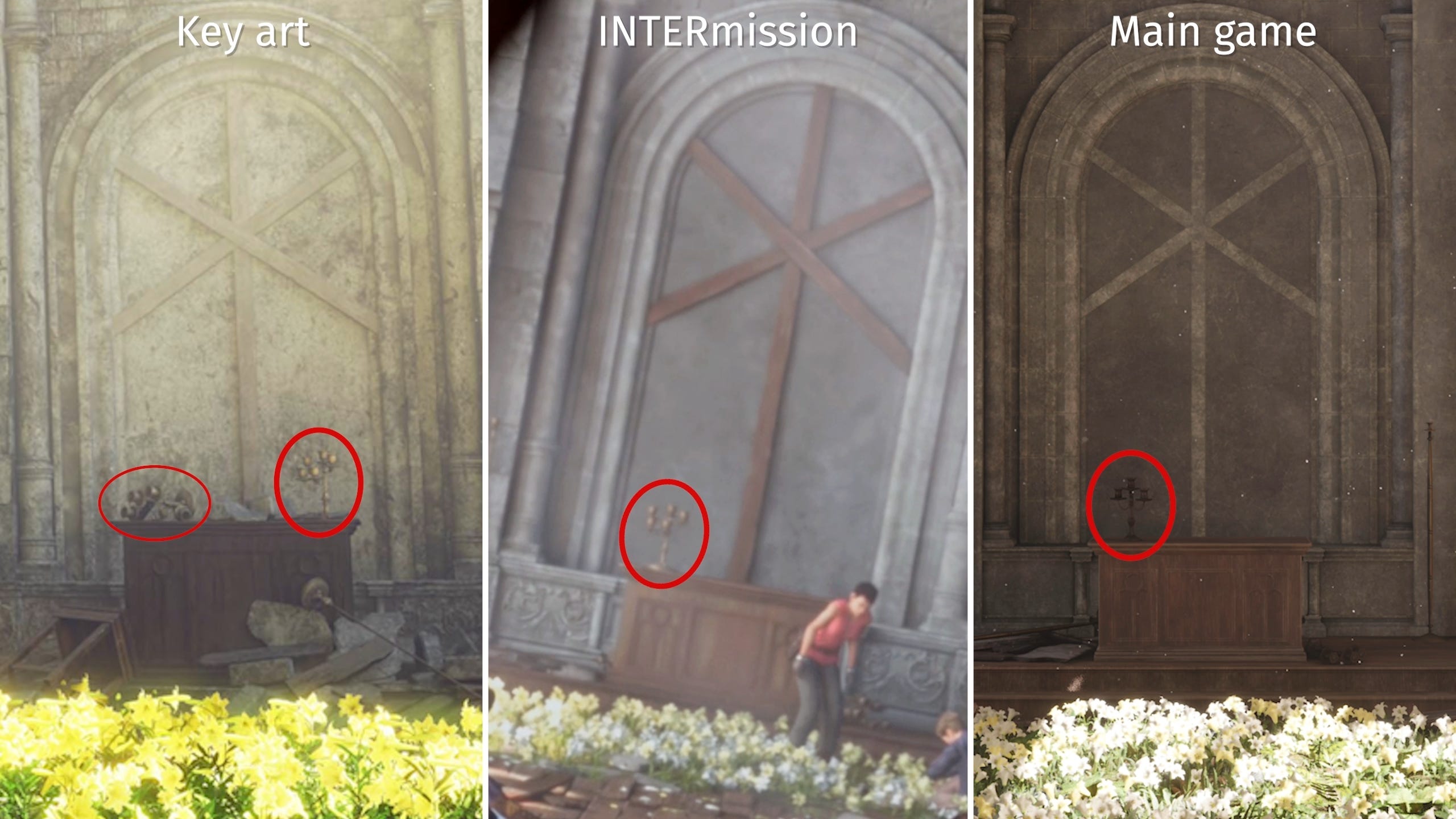
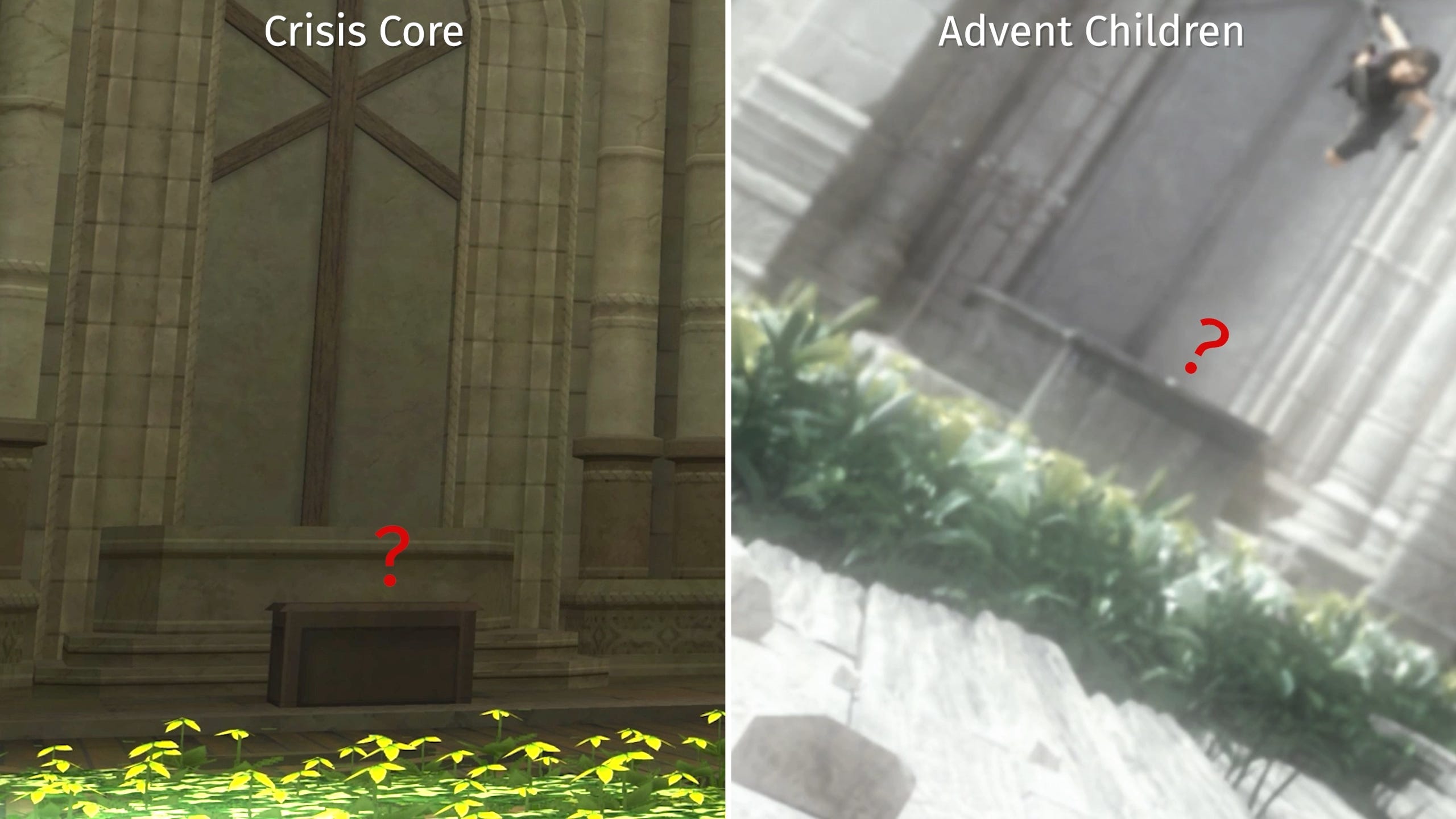
Like Remake is the only version lacking a cross, the original is the only version having a red cloth with yellow stripes thrown over the pulpit, beautifully complementing the banners above.
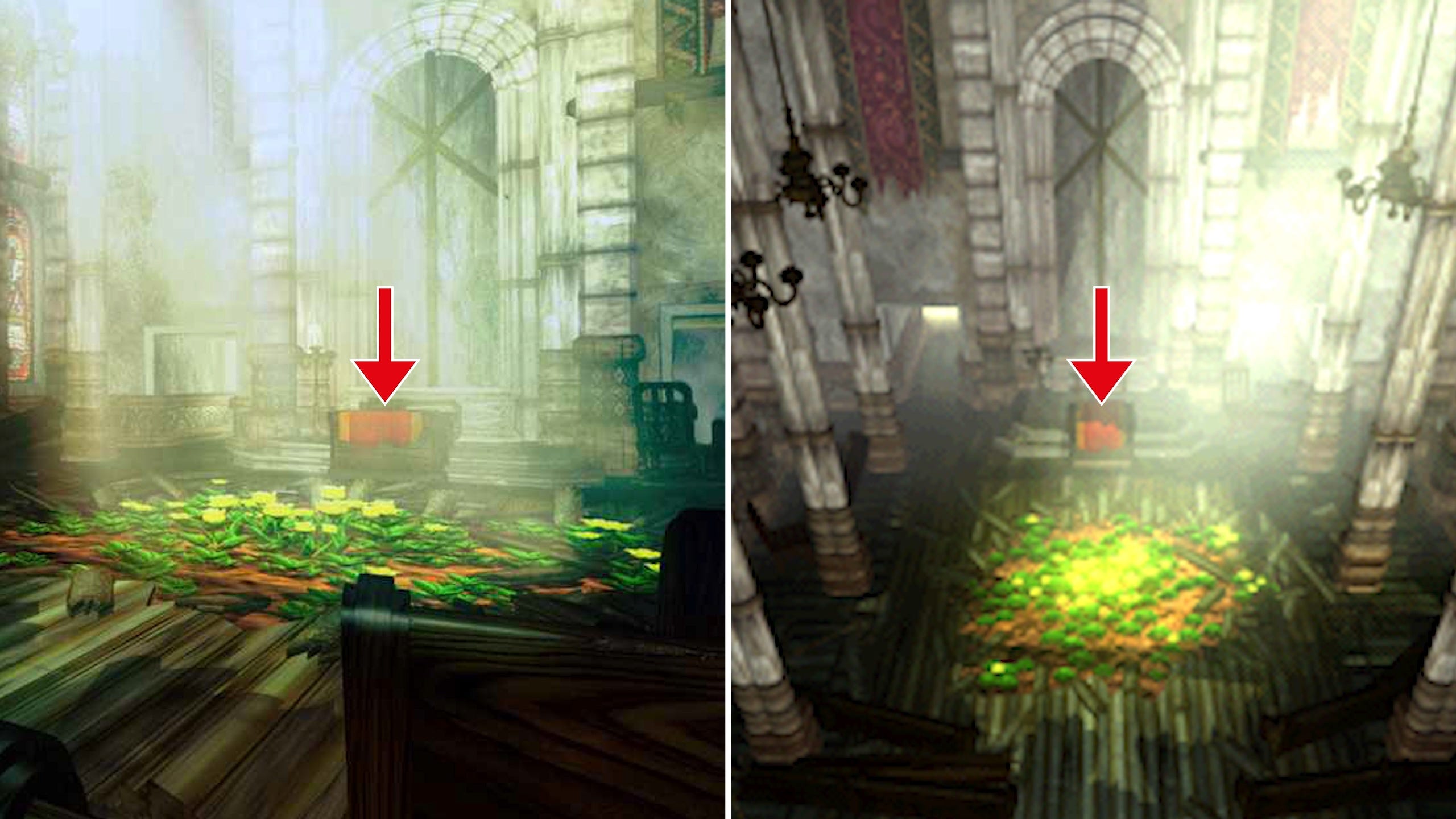
Now, if we look at the big picture, the church in Zack’s INTERmission scene looks identical to the one in the main game save for the cross the latter is missing. Many of the other details we’ve just gone over differ greatly from the original and compilation versions.
That being said, I can only see two possibilities: Either it’s purely a design choice by the team at Visual Works10 to make it pop more or the representation of this church stems from a time before the main story takes place. Which makes sense as Zack would likely have gone to visit Aerith long before December 9th, the day Avalanche bombed Mako reactor no. 1. Remember, his last stand took place late September.
In conclusion: nothing out of the ordinary. False alarm. A lot of fuss about nothing.
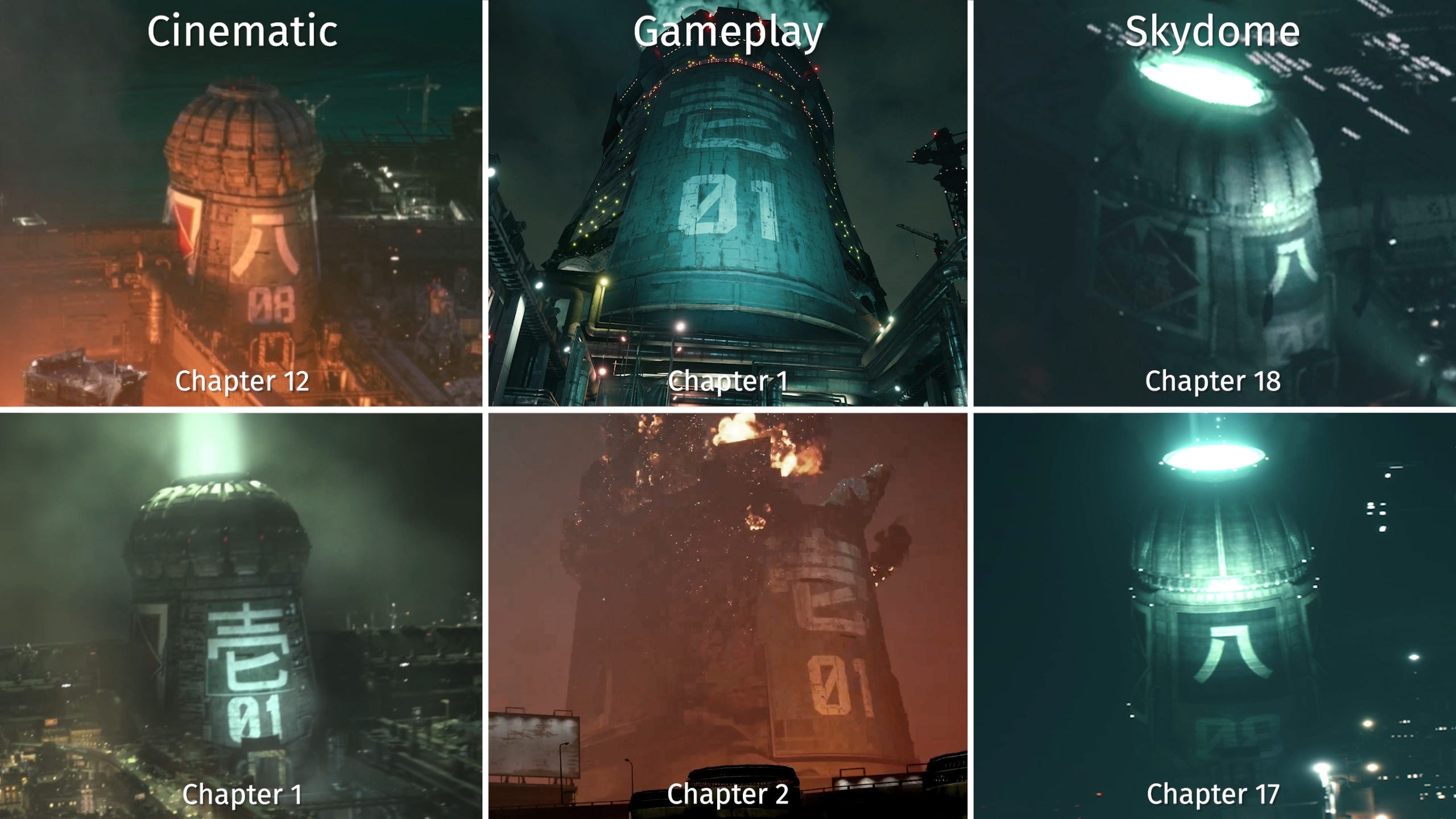
That’s why I initially didn’t want to talk about it, but eventually still felt the need to finally put it to rest. I should do the same for the different Mako reactors but that’s for another time.
Interpretations
With that settled, let’s return to our findings before this little excursion and recap the important details:
Cloud was still out of it in the main ending and not around at all in the INTERmission ending.
All evidence of a battle to the death has suddenly vanished from Zack’s body and clothing and he still has the Buster Sword on his back.
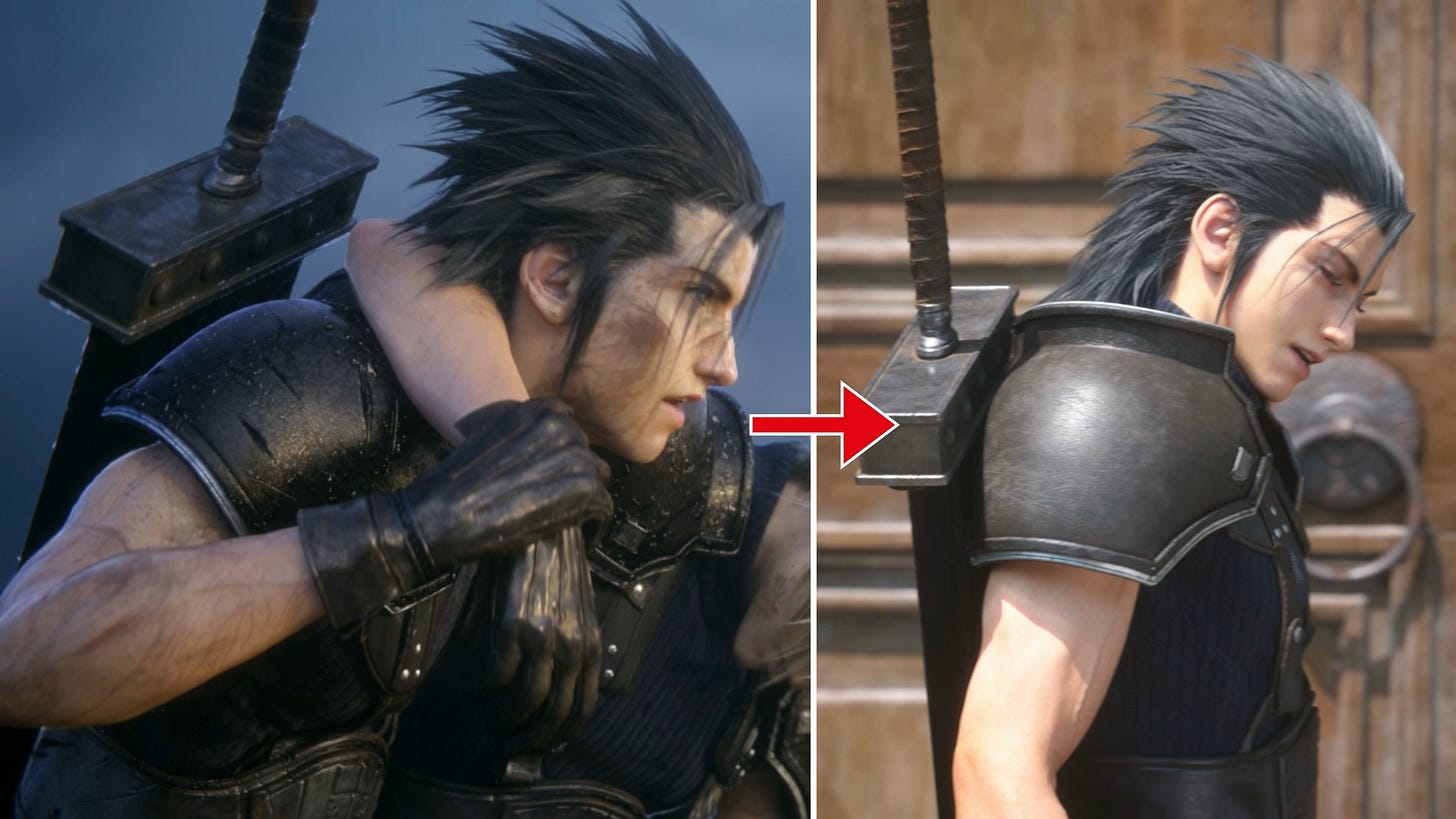
An unusual amount of people reside in the church which is now filled with despair and Aerith is notably absent. It’s the inverse of Advent Children’s ending. Plus, nobody takes note of Zack’s loud entrance.
Thanks to Aerith’s connection to the planet and the rain, she can feel in her stomach that something is amiss.


The only explanation we could come up with is that Zack currently resides in something akin to purgatory. Our conclusion of the crossing and possibility #1 in the Stamp segment seem to hold up and are currently the only fitting conclusions when including Zack’s secret ending from INTERmission in the equation. Zack is not alive, but became a separate entity in the afterlife, the part where tortured souls reside. Souls which do not recognize Zack as he’s neither part of their misery nor a tortured soul himself.
By now, seven seconds until the end, most souls are in a state of despair as the cleansing mechanism called Omega Protocol exists no more, trapping the Lifestream and its corruption on the planet as a result. With the church being a place of refuge, even in the Lifestream, those tortured souls probably sought it out intuitively. However, there’s no Aerith around to provide relief as described in Lifestream White chapter 2, even though it’s about souls filled with hate and rage contrary to the sadness and hurt in the church.
“She discovered there were many more spirits than before who resisted merging into the Lifestream’s eternal flow. They were not like him, but she sensed the same hate, the same anger in them that led him to reject the planet and its Lifestream. She believed this was due to the influence he exerted in the living world.
Whenever such souls entered the Lifestream, she tried to relieve them of their anger. Beneath the spite and rage would be the memories of an ordinary man or woman - memories with a common person’s share of hardships, to be sure, but not devoid of joys great and small. She contrived to free those memories so they could move on and melt into the stream, and soon enough, the empty shell of hate that remained would dissolve, too. She was pleased that she could help those souls, but she encountered more and more of them as time went on, and she found that she alone was not enough.”
— Lifestream White, from FINAL FANTASY VII: On the Way to a Smile
Next point: what’s up with Cloud? Is he turning into Marco’s fellow neighbor and taken care of by Tifa? Not quite. As Cloud’s essence is still in the world of the living, the Cloud we saw in Zack’s ending in the main game is very likely just made up and visualized by Zack’s own memories. After dropping off Cloud somewhere, the image of him most likely just disappears. Zack also still wears the Buster Sword on his back, which means that Cloud for sure does not have it. As a result, Zack cannot exist in the same reality as our Cloud which got hired by Avalanche and is now hunting down Sephiroth with his friends.
What is Zack’s new purpose?
Now, what does this mean for Zack? What is his new purpose? He does need to have one after all. But let’s tackle another question first.
Who is responsible for Zack’s renewed existence?
In light of all collected evidence, we can only see two possibilities: the planet, or Sephiroth. Why only those two? We clearly see four Whispers flying across the battlefield before Zack survives this seemingly unwinnable battle and there are only the two entities with control over the Whispers. Some people might already be screaming at us for forgetting about Minerva, but do not fret, we haven’t. However, Minerva and the planet are essentially interchangeable in this instance.
The following excerpt comes from the official Crisis Core Complete Guide’s Keyword Collection and describes Minerva as follows:
“She is interpreted to be the Goddess mentioned in LOVELESS, but in terms of substance she is similar to a summon, though it seems that the purpose behind her actions is to follow the intentions of the Lifestream.”
The last part therefore places her under the planet’s will.
What if it was the planet’s will to bring Zack into the picture?
We already talked about this in Game Analysis #23, Whispers Uncloaked, so we will keep this brief. With Sephiroth so close to making Cloud’s group free him from his prison, the Whisper Harbinger, and remove the Whispers from the equation, they need to install a failsafe, in case Sephiroth succeeds. This failsafe, Zack, represents a powerful ally in the fight against a spreading corruption in a world deviating from the original timeline of events. Where the Whispers have failed, Zack might succeed. The Whispers tried to keep history intact but failed. Zack’s new purpose would then encompass combating the corruption and prevent it from leaving the planet.
What if Sephiroth is behind it all?
He had more than enough time to come up with dozens of plans and layers of backup plans to achieve his ultimate goal: absorb and control the Lifestream, become a god, and shape the future himself. Zack could have been one of those plans, so he instructs four Whispers to make sure Zack survives and becomes an additional variable in this changed equation.
Though I am not fond of this idea as it places too much power into Sephiroth’s hands and robs a lot of the planet’s agency. On the other hand, this new conflict most likely represents a renewed battle between Jenova and the Cetra, represented by Sephiroth and Aerith, a battle—nay, war—waged over the planet and the cosmos. Sephiroth being able to bring Zack back into the picture would significantly up the stakes which Aerith and her friends need to overcome and provide the helpless child of a planet a helping hand.
Sephiroth’s plan
But how is Sephiroth able to do this and to what end? Where’s the evidence? Sephiroth seems to hold enough control over the Whispers already as he’s able to project himself into the planet’s memories to appear in front of everybody and then slice a portal into the wall of Whispers. What if Sephiroth is the one instructing the Whispers to circle the group and search for a specific memory? After all, he does tell the group to listen to the cries of destiny as if he knew what would happen.
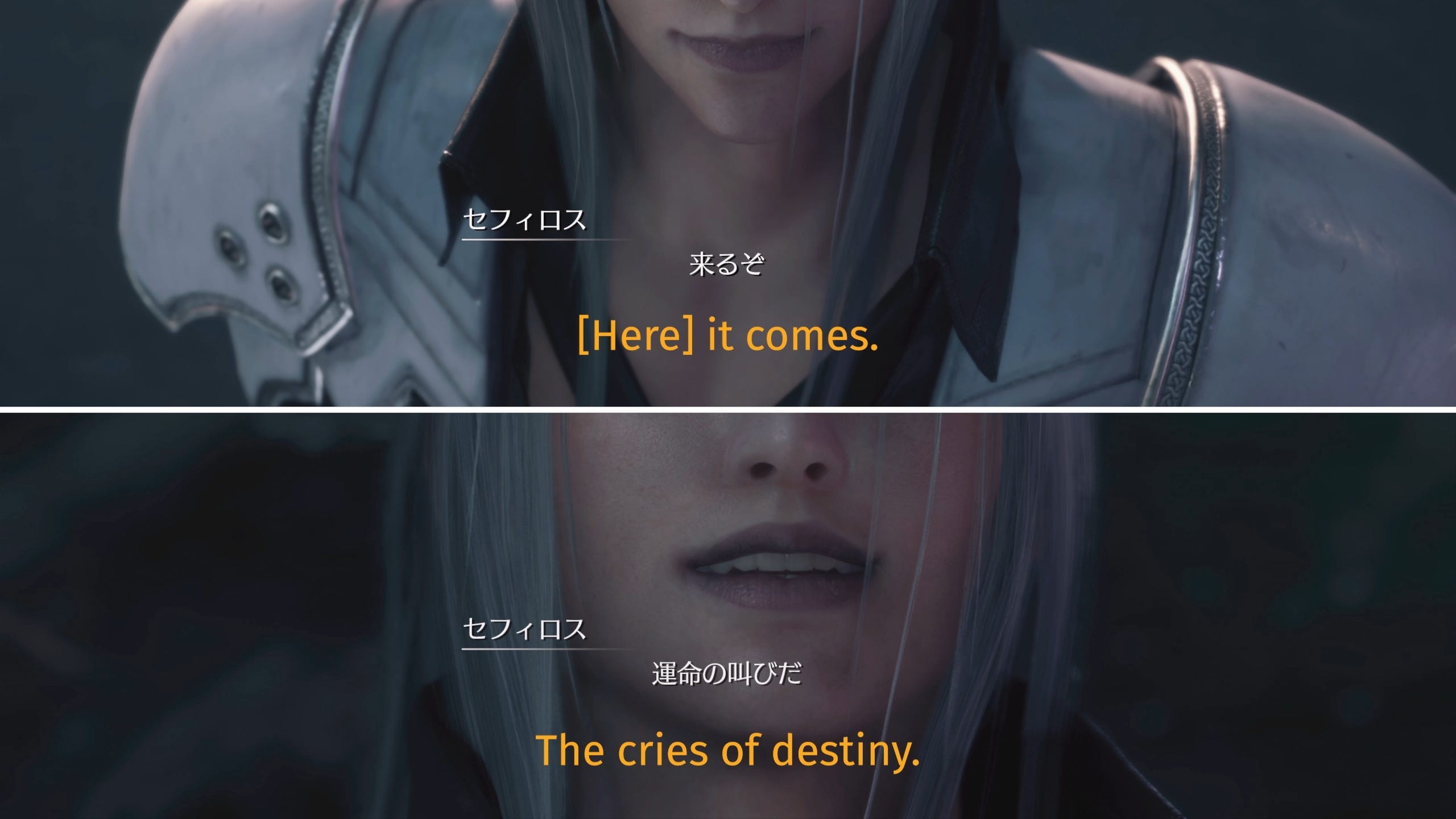
The Whispers find Zack in Cloud’s memories and after the scene, Aerith looks surprised toward Sephiroth, who knowingly turns around, satisfied, and opens the portal for the last step: defeating Fate. As if Aerith realized what he was doing. However, she never brings it up afterward. Most likely because it would mess with Cloud, Tifa, and the continuity. Or we’re just overanalyzing, yet again.
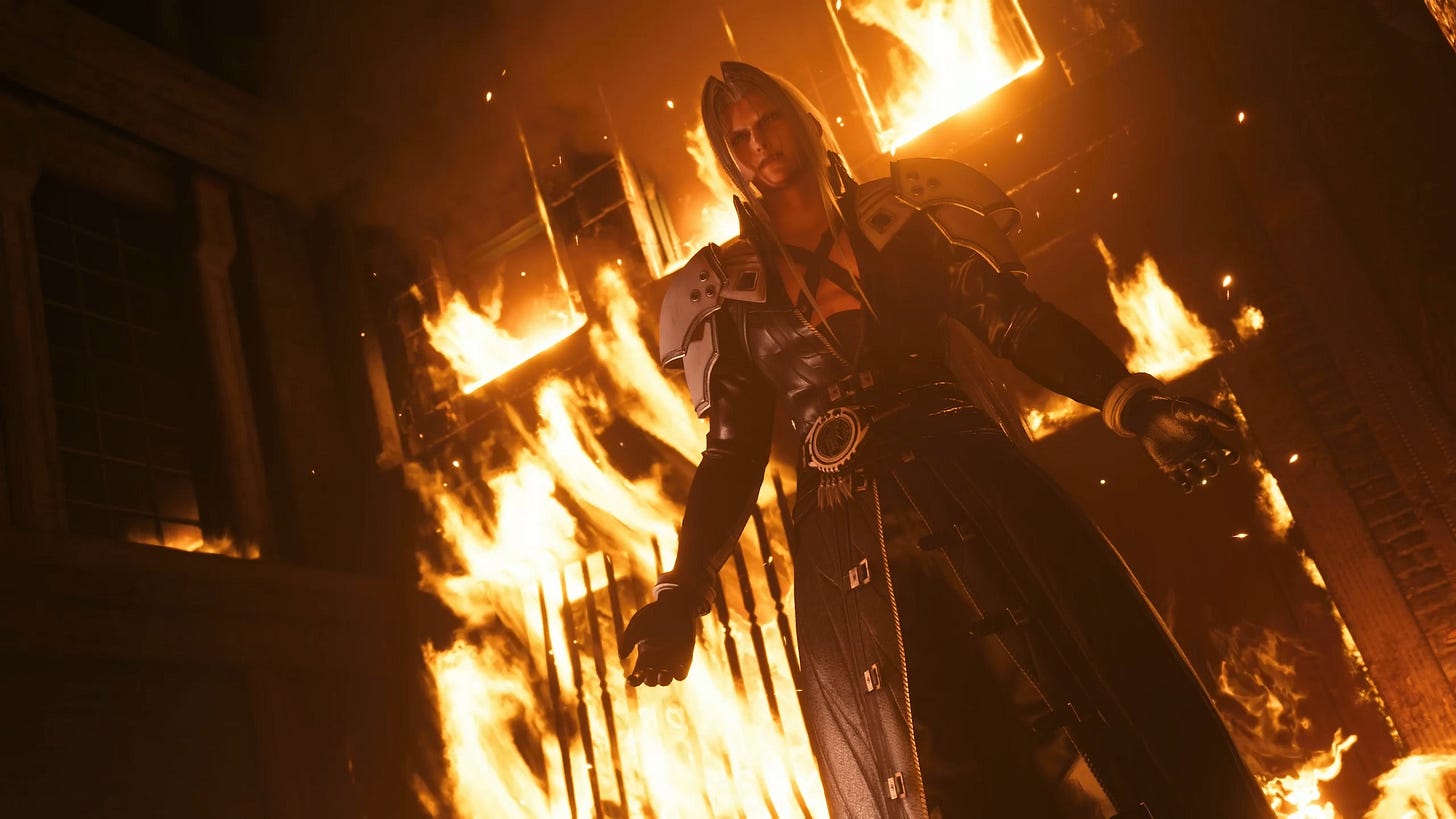
Another hint towards this theory is Sephiroth’s key art first presented at E3 2019 which depicts him standing in front of a burning Midgar with four Whispers swirling around among the flames.
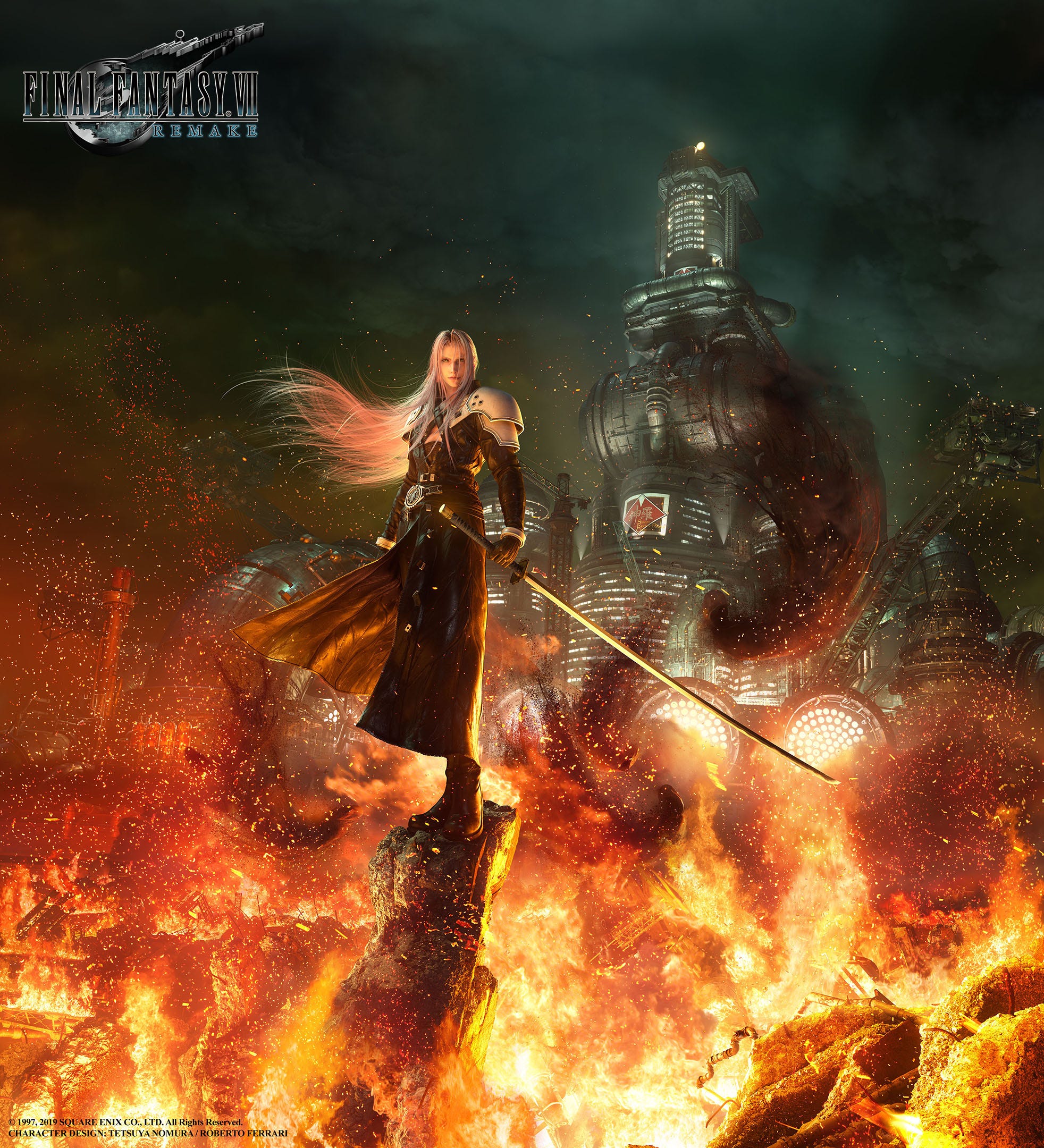
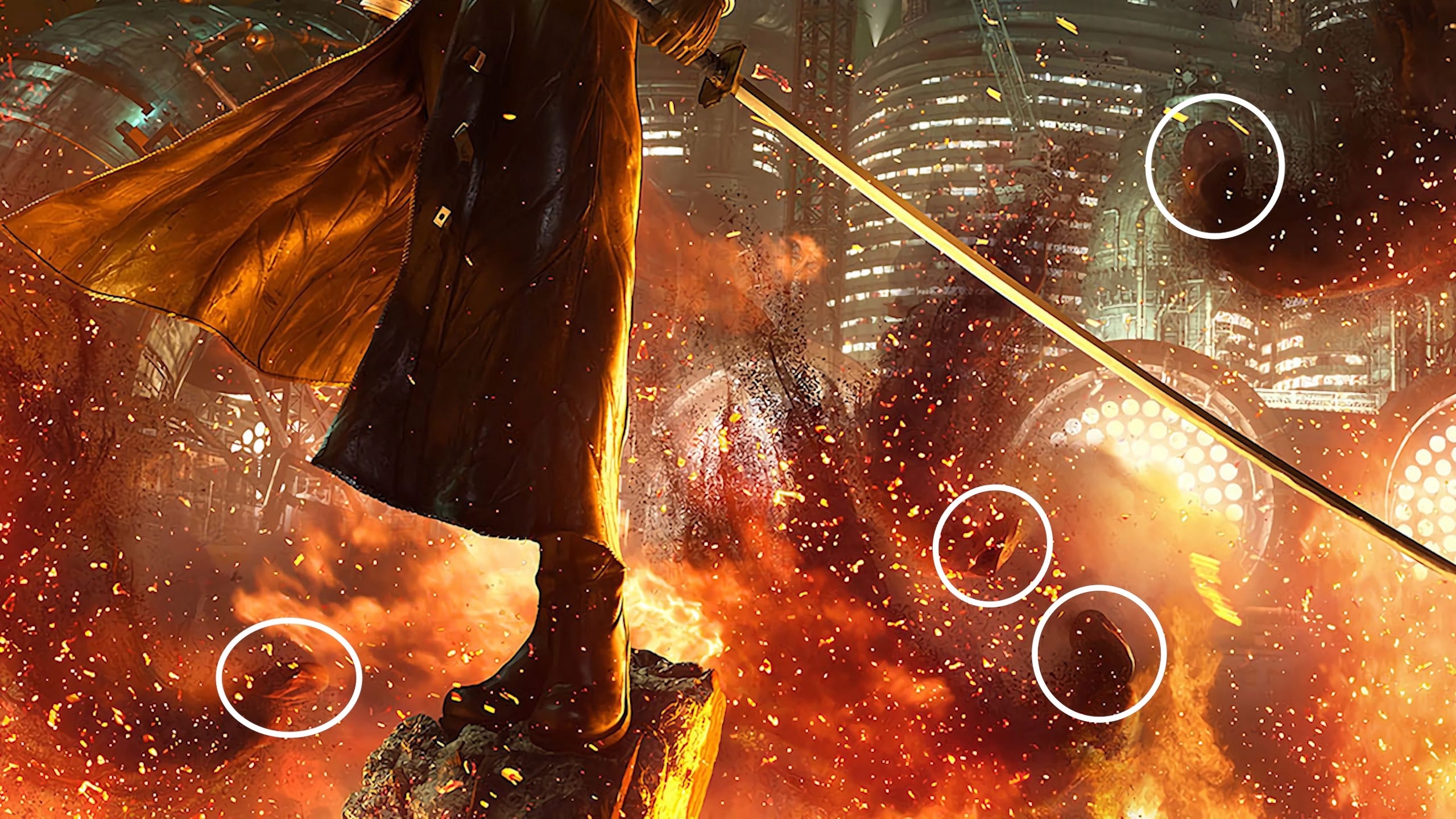
We also see exactly four Whispers in the remade scene from Crisis Core.
Coincidence? Hardly.
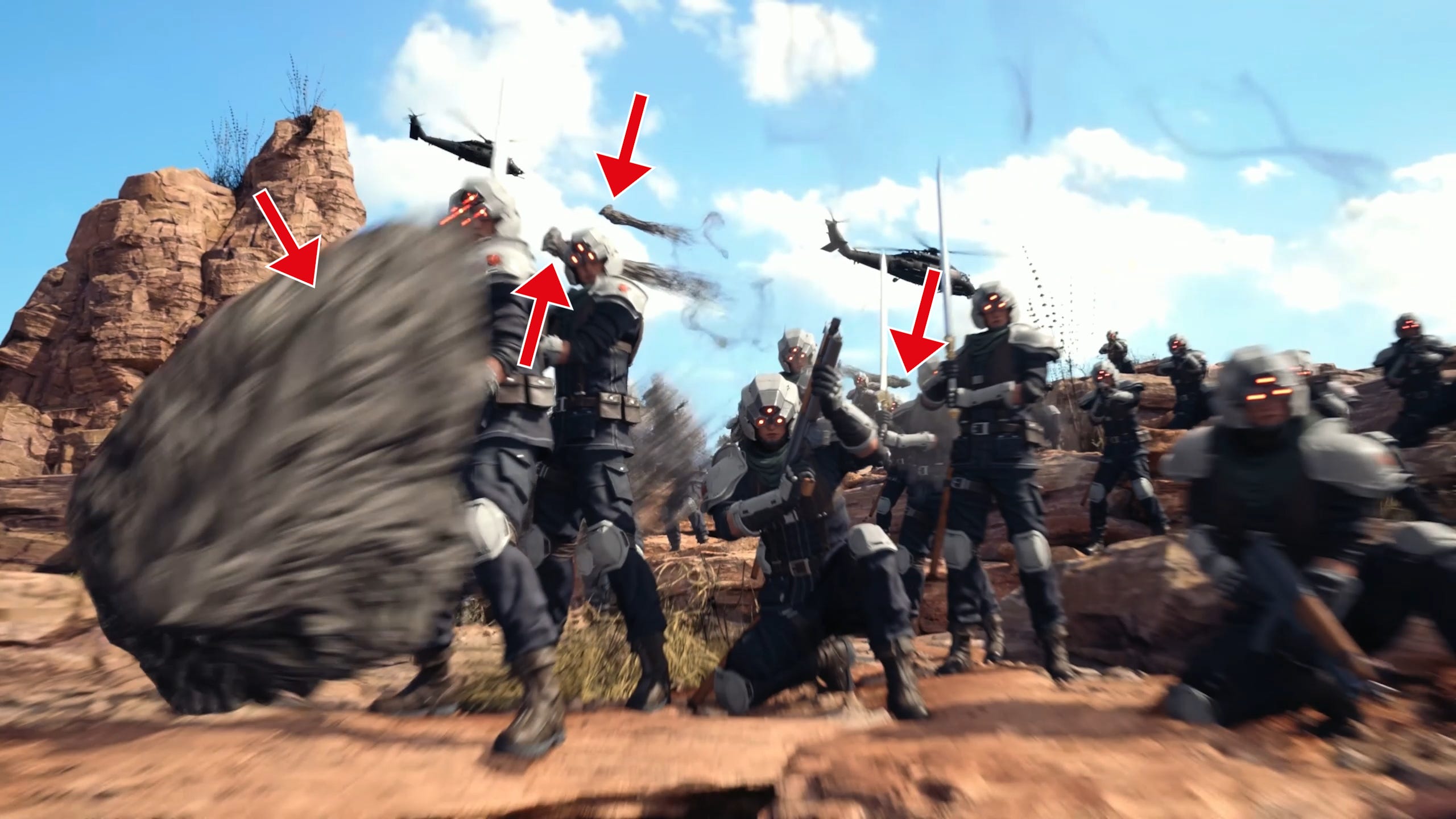
However, why Zack specifically? What’s the purpose of bringing him back as a memory only? He doesn’t exist in the same reality as Cloud after all, as discussed earlier in this video. While we could start making assumptions and throw around speculations, there’s one explanation which feels quite intriguing.
Fellow Scholar KickyPunchy posted his own interpretation of the Remake’s mysteries based on theories by several other content creators.
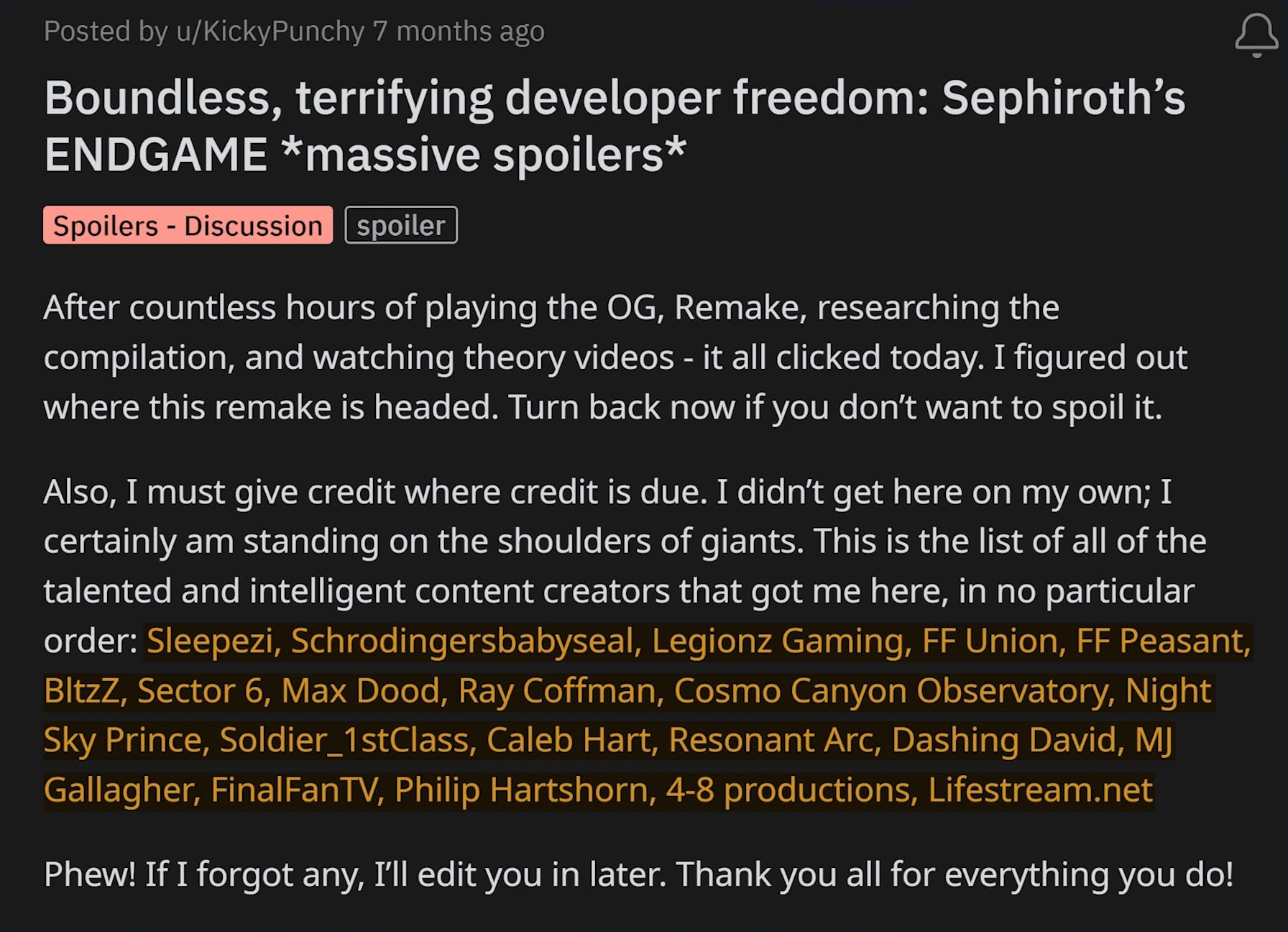
While I partially disagree with it, especially the main conclusion, one specific detail made my noggin’ joggin’ hard.
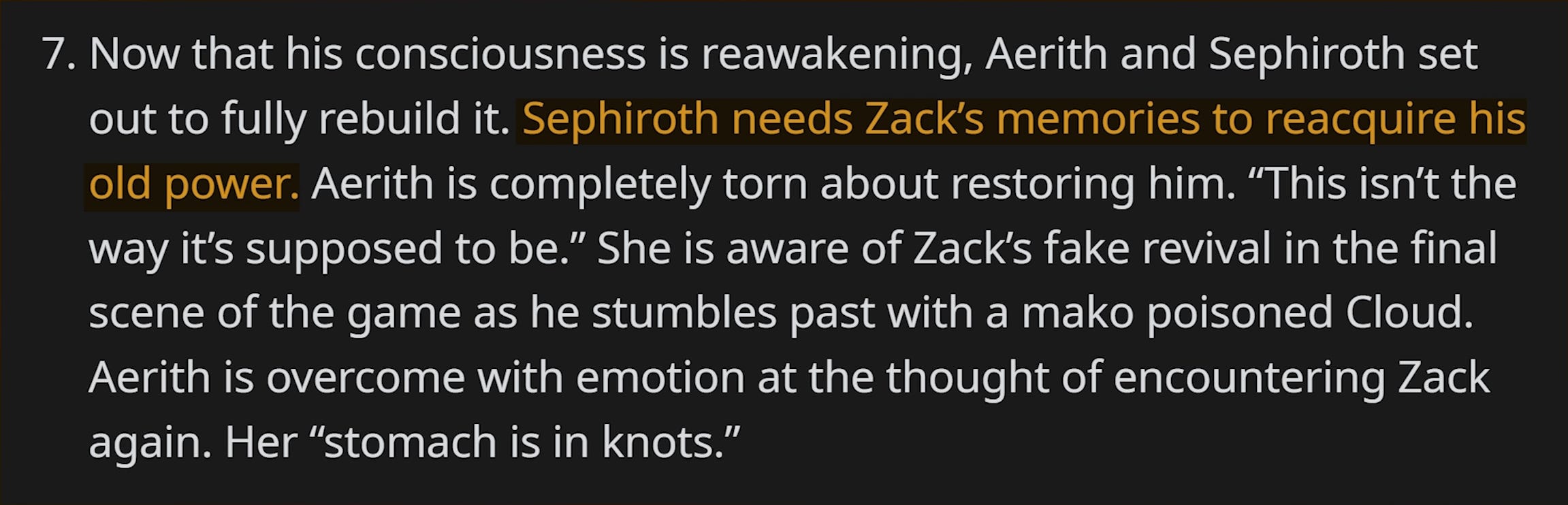
Not even a minute ago, we mentioned “…bringing him back as a memory only?”
The Compilation established that Sephiroth needs people—especially Cloud—to remember him in order to recall his being and his looks to eventually reshape himself. He needs to retrieve memories of his past—a life before the Nibelheim incident—memories he lost by travelling the Lifestream and spreading Geostigma.
“He could feel the Lifestream, incessantly trying to erode his spirit - his experiences, thoughts, emotions, and memories. If he gave himself over to the pull of the current, everything he was would be subsumed, his existence dissolved into the great spirit energy that circled through the planet.”
“When the Lifestream erupted from the earth, he let the planet have all those memories that no longer held any meaning. Memories of his boyhood, of his few-and-far-between friends, of battles he fought before knowing his true self, of his life in those bygone days—he let them join the rushing torrent and dash themselves against Meteor.”
— Lifestream Black, from FINAL FANTASY VII: On the Way to a Smile
Another important point revolves around Jenova’s corruption. It’s the reason why the planet traps Sephiroth in the first place, to prevent the corruption from leaving for the cosmos. So, to absorb and control the Lifestream, most likely with the help of Omega Weapon, and eventually sail the cosmos, Sephiroth needs to get rid of Jenova’s influence and become his own person again. And how would he achieve this? He needs to regain all memories from before the Nibelheim incident where Jenova’s will and influence completely took over and made Sephiroth into what he is now.
However, the memories of him which Cloud and other people harbor are marred by his post Nibelheim actions, an era where Jenova’s influence was palpable and overwhelming. They don’t remember a humane version of him, one who respected his peers and even became friends with some.
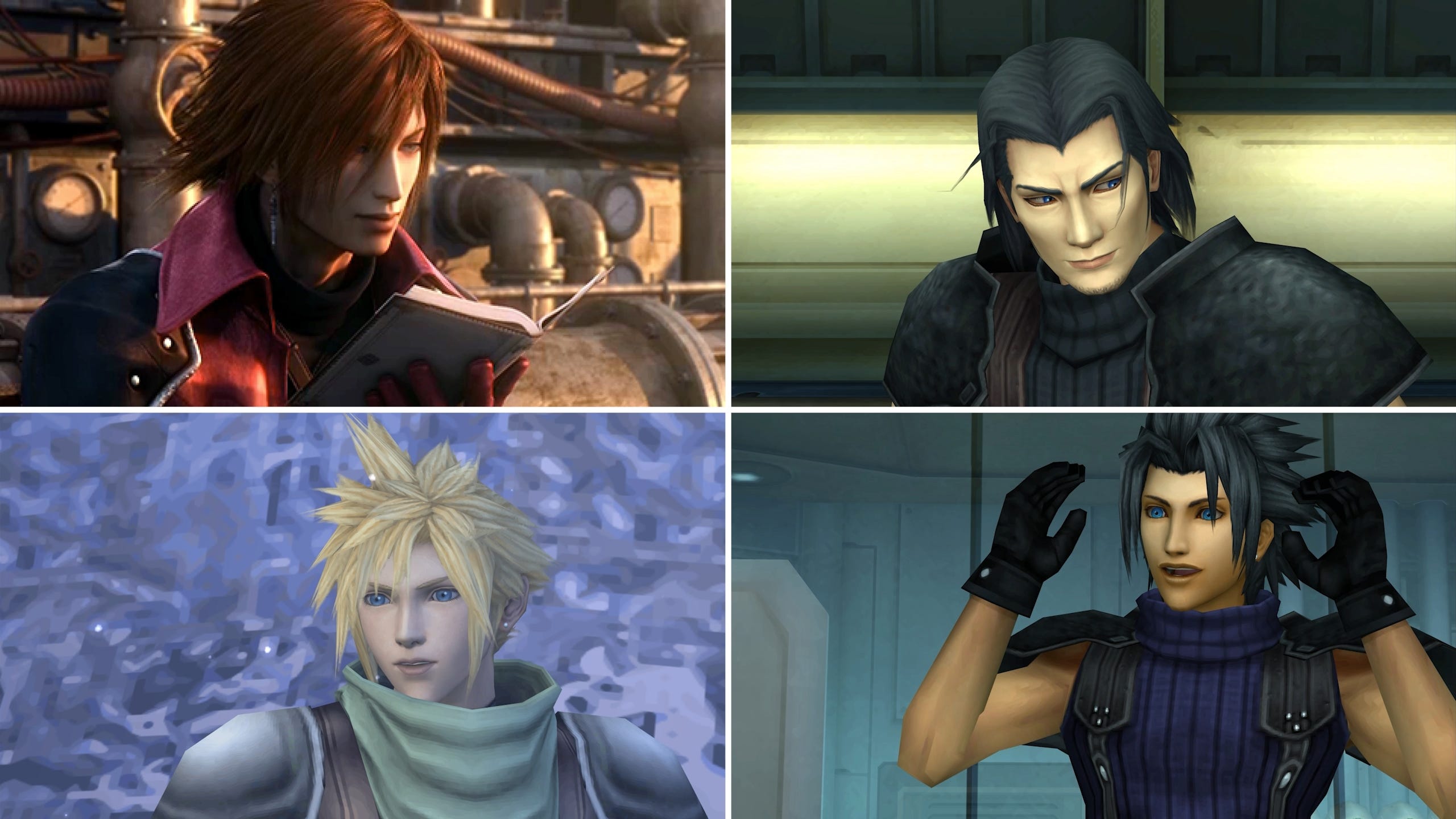
Which means he needs the memories of one of those friends who knew and respected him, but also didn’t succumb to Jenova’s corruption. One who retained his own person until his death and beyond.
This person is: Zack Fair.
Which leads us to a third possibility.
Sephiroth is searching for strong memories of himself from before he went mad which he can then use to reconstitute his original persona after being set free from destiny’s clutches. Not to save Zack per se. However, by doing so, he provides the Whispers an opportunity to change Zack’s fate and install a failsafe, as proposed earlier. Seeing the Whisper dome explode after Zack’s victory suggests that the memory of Zack was still connected to Cloud’s consciousness until after their victory over Sephiroth and the Whispers.
Sephiroth’s smile before the Whisper explosion in the Singularity tells us that he wanted the group to defeat him and the Whispers, as this allows him to be set free. However, thanks to Zack’s memories, which he most likely kept syphoning through Cloud during their fight, he’s now whole again. This also explains his behavior and manner of speech at the Edge of Creation. Thanks to the Japanese version, we know that he talks the same way as he did before he went crazy and got corrupted by Jenova’s will five years ago. Instead of Jenova’s “Watashi” pronoun, he uses “Ore” again.
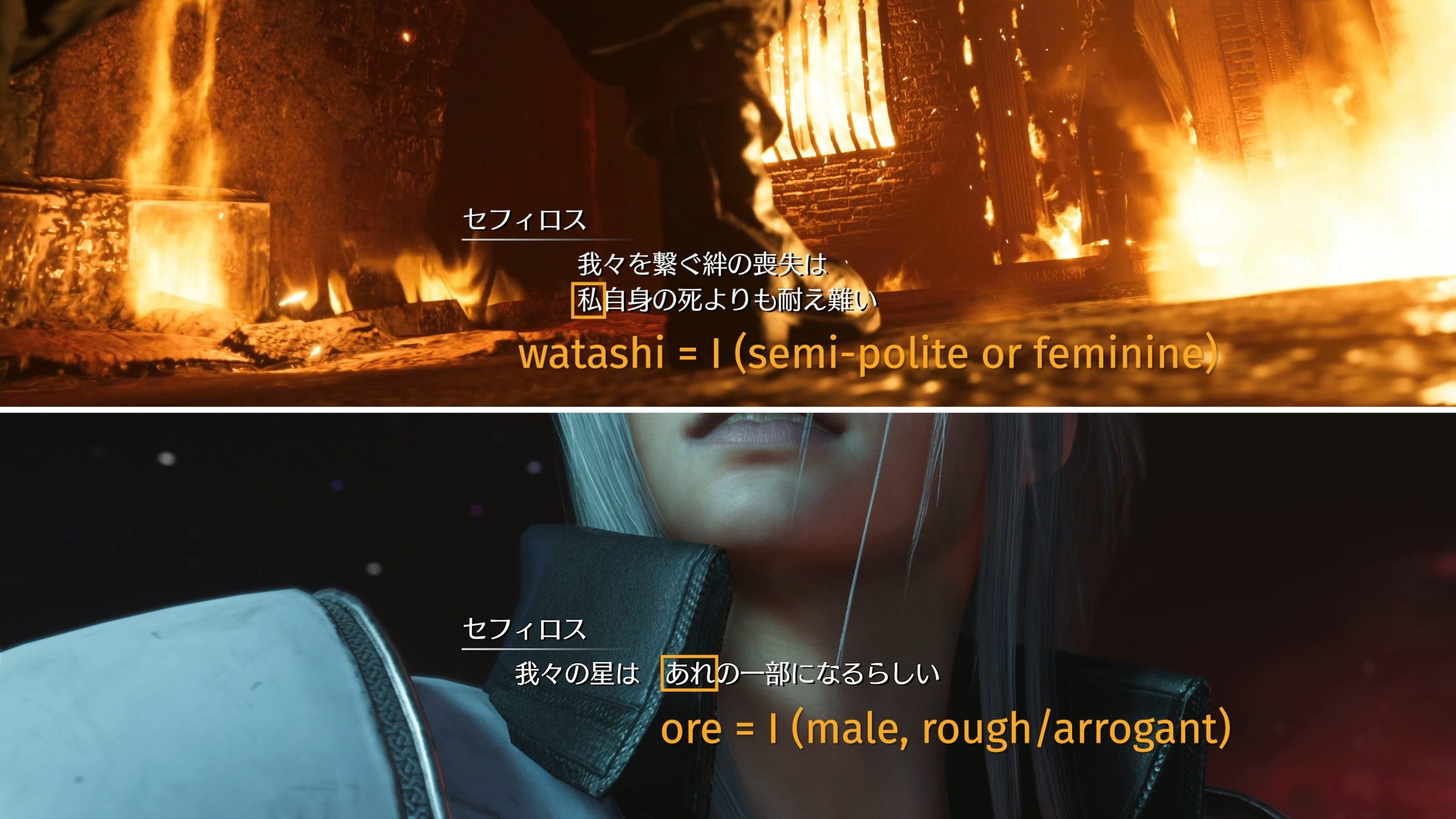
This means his essence at the end of the world is now free of Jenova’s influence just like Cloud became free of Sephiroth’s influence after regaining his true self with Tifa’s invaluable help.
But one point remains.
Was connecting to Zack’s memories through Cloud enough or does Sephiroth need Zack to keep existing as a separate entity within the realm of memories? It’s too early to tell, so both versions are viable. However, I lean more towards Sephiroth already having achieved what he wanted. Which means that Zack’s continued existence is a mere byproduct or in fact the Whispers’ failsafe.
Regaining memories
While all of this sounds like wild speculation, Remake’s first instalment does indeed contain several pieces of evidence for how Sephiroth slowly regains his lost memories. We already talked about one of them in Game Analysis #26: Sephiroth absorbing lost memories in the form of Meteor made of negative Lifestream; memories he used to corrupt the world with Geostigma. Constantly reminding Cloud of his presence certainly contributed as well, plus spreading the “news” of his return in the Shinra building through Palmer.
But there’s more!
And not in a place you’d think. Remember Jenova Dreamweaver’s battle track J-E-N-O-V-A Quickening? Its progression perfectly encapsulates the concept of regaining memories.
Phase 1 only contains fragments of the original piece floating in a sea of an orchestral arrangement.
Phase 2 then incorporates full segments but still feels incomplete.
Then phase 3 kicks in as a perfect remake of the original track! The only true change is the additional incorporation of a short segment taken from One-Winged Angel.
Feel free to listen to the above segment in the video version (timestamped).
Speaking of which, its Rebirth version in Remake follows the same concept.
Phase 1 contains many known fragments but has been rearranged significantly. Even the famous chorus is missing.
Phase 2 includes more of the intro as well as parts of the chorus, but the arrangement is still all over the place and individual segments feel randomly thrown together.
In phase 3, Sephiroth sprouts his signature wing which fittingly prompts another music change. This time to an arrangement very close to the Advent Children version. Even the famous choir now sings along the chorus. Just the metal band addition is missing. He finally remembers everything.
In the fourth and last phase, he summons Meteor, which is a memory from the original game. He even uses Shadow Flare and Heartless Angel here, just like he did in the original game!11 However, he seems desperate if the music is any indication. It got reduced to the choir segment during the song’s climax and the famous chorus. All other segments are gone. Even the Sephiroth chant is missing. Instead, we hear elements from Let the Battles Begin!, Whispers Theme and Fight On! in between. But we already covered that in a previous analysis.
Again, the video version showcases the musical segments detailed above.
Foil to Jenova
This being said, retrieving his lost memories seems to be Sephiroth’s biggest step and even prerequisite for a new goal. And Zack’s memories seem to be key. However, thanks to Sephiroth connecting Cloud to the memory of Zack’s last stand, the Whispers were able to use Zack as their failsafe and gave him a new purpose. But which purpose? Zack will do what Zack does. His fair-weathered nature can and will bring positivity to everybody he meets. He will make friends, help people in need, and thus bring back joy to the desolate afterlife.


This sentiment is underlined by the imagery in Zack’s ending scene and the ones following afterward. We see the partially cloudy but beautiful blue sky twice. In Crisis Core’s Complete Guide Keyword Collection, the developers have the following to say about Zack’s mental image:
“The blue sky symbolises Zack, the white feather Angeal, and the water Aerith.”
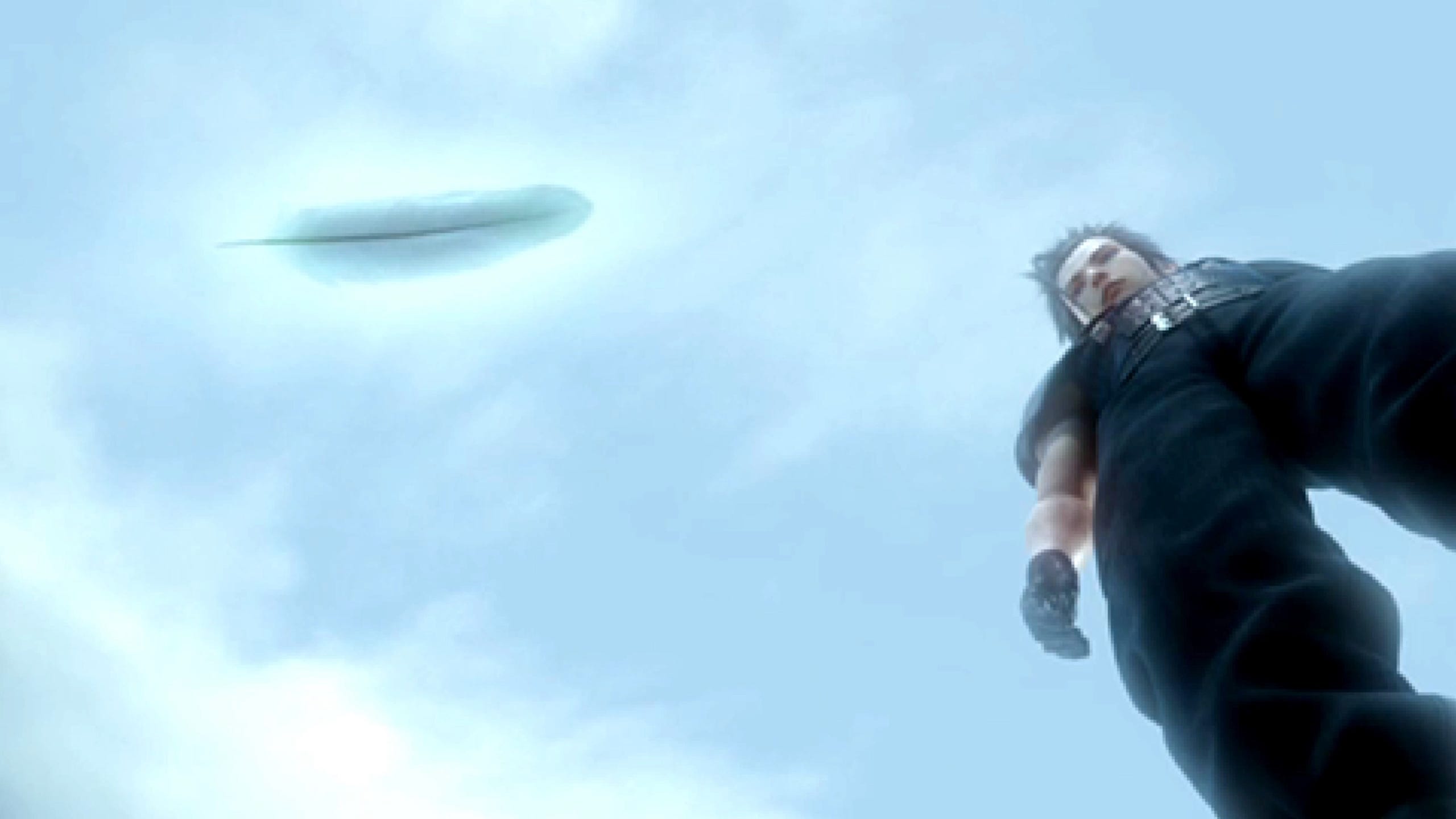
Right after Zack’s ending scene, we are shown several scenes full of happiness and joy: people are fed, children play, the slums are being rebuilt, children dance to the shimmering particles, Biggs wakes up, Marlene happily tends to the yellow flowers and feels her daddy calling out to her.


When Aerith passes away in a future instalment, she might meet Zack again and both of them should be able to weaken Jenova’s influence over the Lifestream and the planet and contain and defeat it once and for all. It’s worth noting that the scene preceding Zack’s survival shows Hojo being overjoyed by Jenova’s escape. Though this could just be coincidence by showing Shinra ending scenes first.
Whatever the case, we believe that this is Zack’s new purpose. Being the deciding factor laying the groundwork for and helping to achieve the cleansing of Jenova, the planet’s enemy number one.
Outro
But will Zack fulfill his new purpose? What can we expect from the remaining installments in the Final Fantasy VII Remake project? Find out in the third and last part! In the meantime, feel free to drop a comment or join us on our Discord server.
Thank you, dear Scholars, for reading this analysis and sticking with us to the end. Stay safe and take care!
Vyzzuvazzadth, signing off.
FFVII Rebirth confirms that it was indeed the Whispers who prevented Zack’s demise. Not by hindering his firing squad directly, but by slightly redirecting lethal bullets so that they merely graze his skin instead of piercing his chest and skull.
Kind of, since Zack’s new story is not done yet. However, we do learn that he’s one of those few who is able to create new alternate worlds—each showing an alternate version of the Shinra mascot Stamp (different breed, adornment and star count)—when confronted with a choice.
See Crisis Core Complete Guide Keyword Collection, translated by TheLifestream.net.
The ‘water’ which reflects and envelopes the ‘blue sky’ symbolises Aerith. From the interpretation that when Aerith hears the voice of the planet, she is accessing the Lifestream, we have the image of Aerith’s consciousness travelling through the water, which is reminiscent of the Lifestream. Or it is a symbol of the Lifestream itself, something like the planet’s will.
Also notice the Fata Morgana effect on Zack and Cloud in the background

Or it fell out of one of Zack’s pockets during the fight. Who knows…
It’s meant to be taken symbolically anyway, not literally.
Technically three, but the third one’s placed right next to the first one, so we can count those two as one.
Though possibility #1 ended up being confirmed true by FFVII Rebirth.
Source for all Beagle characteristics: canna-pet.com
Like Tseng’s transmission from inside the Shinra building on the service pillar, other transmissions seen on screens, Cloud’s short flashback of a young Tifa in reactor no. 1 etc.

Now named Image Studio Division. For more information, check out its Wikipedia entry.
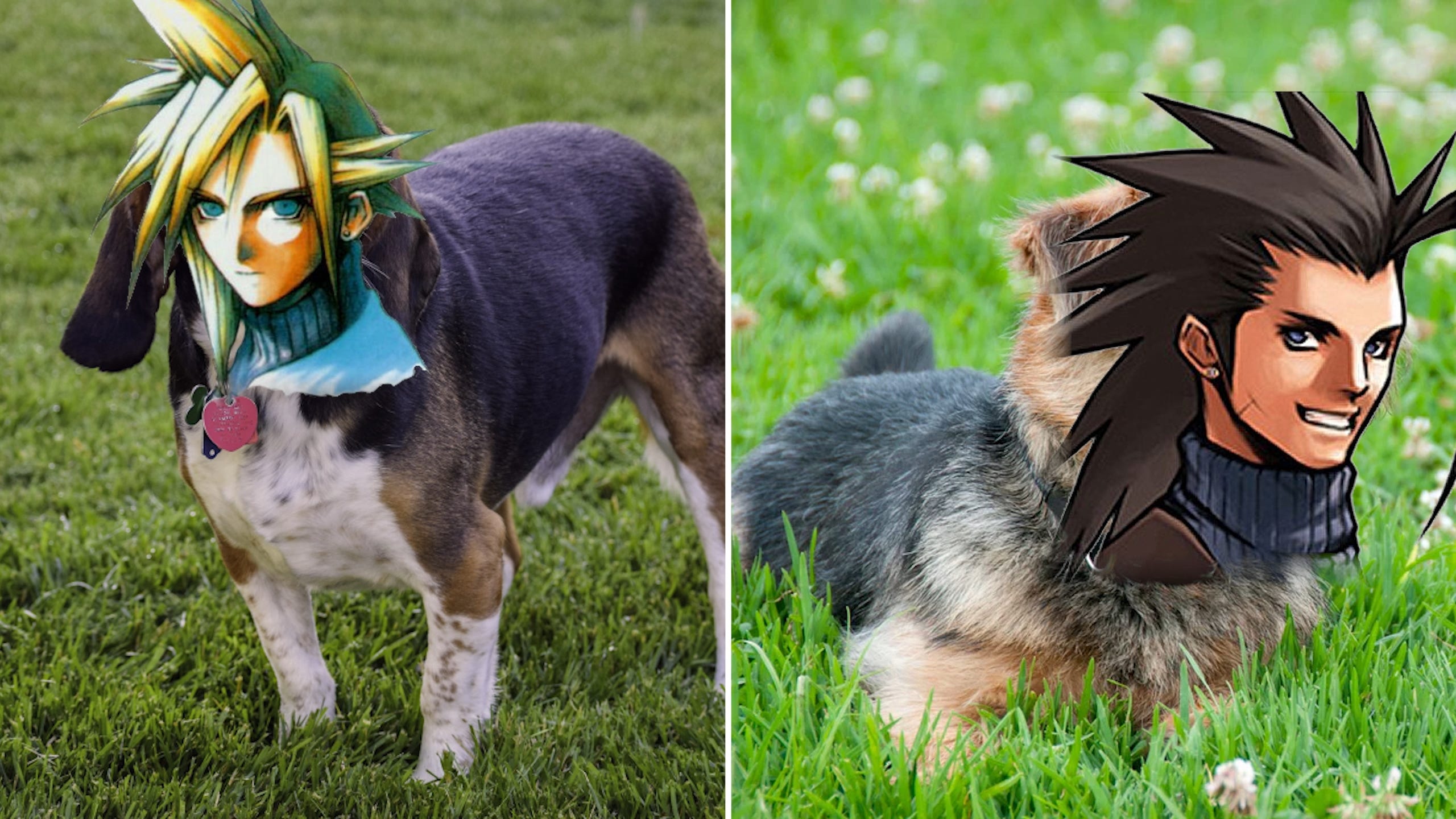
Reference images are presented here in a footnote to prevent taking away attention from the main point being made.

